
I used to assume a spotless bathtub came from a cabinet full of sprays and a longer Saturday. Then I read a Southern Living piece about a grandmother whose white porcelain tub was somehow always spotless. No ring. No water spots.
No soap scum line. The reveal was almost embarrassing in its simplicity. Her only tool was a dedicated toilet brush hanging from the faucet, and her only cleaner was warm water.
That’s it. That’s the whole trick, and it’s the fastest way to clean a dirty bathtub I know: you never actually let it get dirty in the first place. I stole the idea immediately. There’s a brush hanging from my faucet right now, and it’s not because I’m a cleaning evangelist. It’s because a one-minute rinse-and-scrub after a bath beats scrubbing a ring off on a Tuesday night when you have zero time for it.
Key Takeaways
Keep a dedicated toilet brush, one that never touches the toilet, and clean with it using nothing but warm water after every bath. The whole habit takes under a minute and keeps soap scum from ever setting.
For a tub that’s already dirty: gloves, foaming cleaner with a 5-minute dwell time, a scrub, a rinse, and a microfiber wipe-down. A full tub runs about 15 to 20 minutes.
After bleach, wait a full 24 hours before using any other cleaner. Bleach with vinegar makes chlorine gas; bleach with ammonia makes toxic chloramine vapors; peroxide with vinegar makes corrosive peracetic acid.
Table of Contents
The Grandmother’s Water-Only Method
The key player is the brush. And before you picture anything gross: it’s a separate one, cheap, kept only for the tub, never the one from the toilet. When it’s not in your hand, it hangs from the faucet. That’s the setup, and it works like this.
- Drain the tub.
- Run warm to hot water.
- Scrub with the brush, letting the soft bristles loosen whatever soap scum is sitting there.
- Swish the water around and let it sweep the loosened gunk toward the drain as the water goes out.
- Repeat until the water runs clean.
No soap. No cleaner. The bristles do the mechanical work and the water carries it away. The Southern Living writer called it ecologically and economically friendly, which is true and also beside the point, because the real reason to do it is speed.
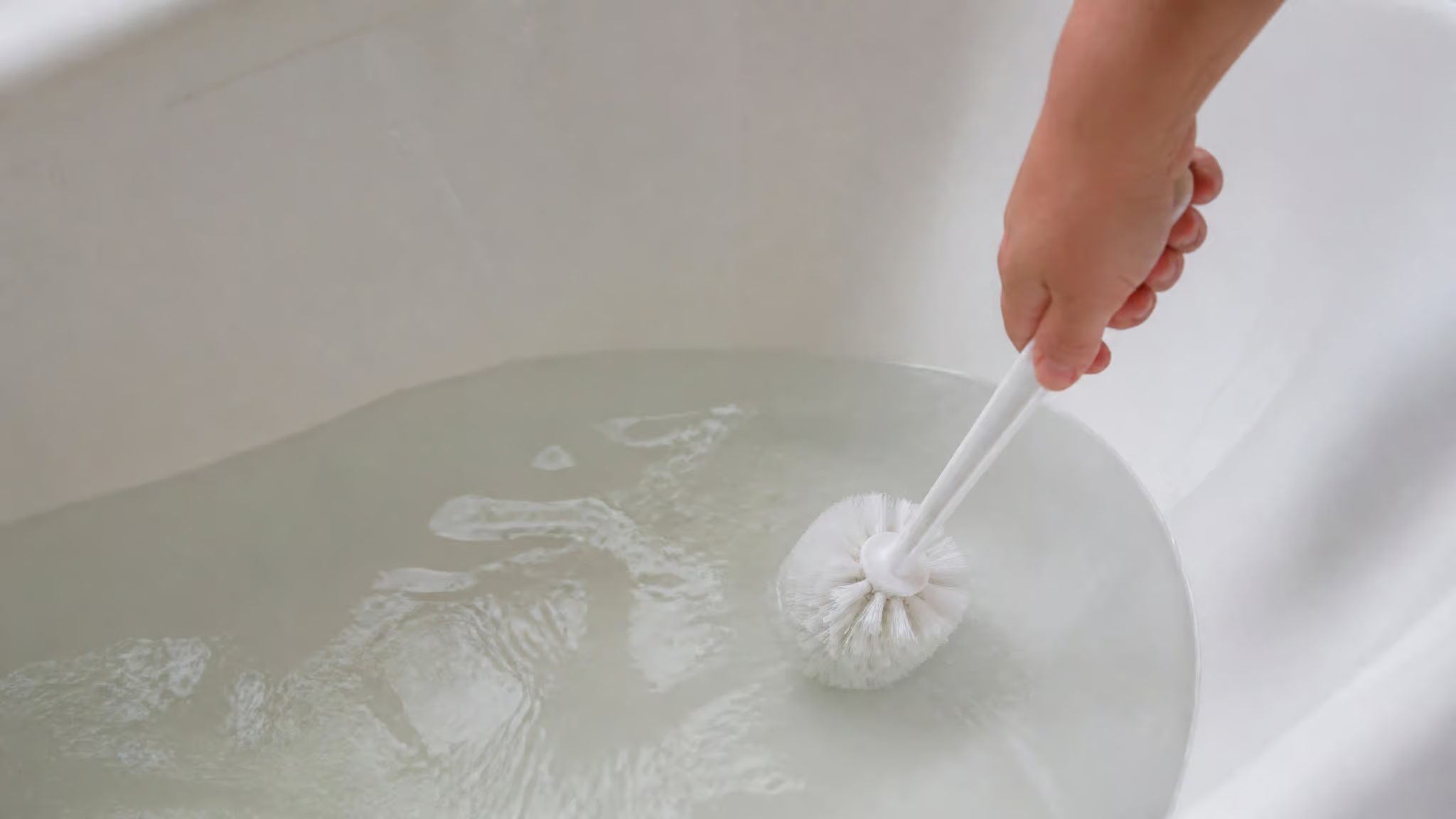
Catch the tub right after a bath and the soap scum hasn’t had the chance to harden into a stain. It’s a habit, not a chore.
This is the kind of tidbit that gets passed down, and honestly, it belongs in everyone’s bathroom drawer. But let’s be honest about what it isn’t. It’s maintenance, not magic, and it was documented on a white porcelain tub. That grandmother’s tub probably saw its grimy days too, like any family bathroom.
The point is that by rinsing it down after every bath, the grime never gets a chance to become your problem. If there’s already a serious ring of buildup in your tub, warm water and bristles alone won’t fix it. That’s what the rest of this is for.
Why Your Bathtub Looks Dirty (and How to Speed It Up)
Soap scum isn’t mysterious. It’s leftover soap residue mixed with body oils, and when your water is hard enough to leave minerals behind, you get spots, and when everything stays wet, you get mildew. That’s the whole roster. Soap scum starts soft and dries hard.
Caught within a day, hot water and a brush barely notice it. Left to build for a week, you’re reaching for chemicals and wondering why your shoulder hurts.
So think of prevention as speed. The tell of a good tub habit is that it takes under a minute, because the moment you actually have is the one right after the bath, before the ring sets. The five-minute routine below is for when you missed that window.
The 5-Minute Clean, Step by Step
This is the “guest is coming in 20 minutes” protocol, and it’s for a tub that’s dirty, not one that’s been ignored for months. Everything here is stuff you probably already own.
- Put on the gloves first. Latex or nitrile works fine, because cleaning solvents are genuinely rough on skin. Mr. Clean’s reusable latex pair runs about $9.45 if you want a name.
- Spray the whole tub with a foaming cleaner and let it sit. Check the label, but usually around 5 minutes. The foam matters: it clings to vertical surfaces instead of running off like thinner sprays.
- Scrub with a brush. Give the drain and the fixtures the most attention, and go easy around the silicone caulk so you don’t tear it.
- Rinse with water and wipe dry with a microfiber cloth. Fixsmith’s are a solid, cheap pick, but any soft cloth works.
- For anything still lingering, use a melamine sponge, a Magic Eraser or similar, in circles. Golden rule with those: test a small spot first and keep them off shiny or delicate surfaces like stainless steel and non-stick. Then rinse and wipe dry.
That’s a full tub in 15 to 20 minutes. The dwell time is doing most of the work, so this is the part where you go empty the dishwasher.
The no-spray DIY
If the cleaner’s out or you don’t want the smell, the vinegar route is the honest alternative. Equal parts white vinegar and warm water in a spray bottle, plus a few drops of peppermint essential oil if you can’t stand the vinegar smell. Put about 2 inches of warm water in the tub first, spray the whole surface, and let it sit for 20 to 30 minutes. Go fold the laundry.
Then wipe it down with a paper towel, rinse with warm water, and drain. Done.
For crevices and stubborn spots, mix baking soda with a little dish soap into a paste and scrub with that. Match the method to the stain: vinegar wants dwell time, the paste wants some elbow grease. If you want more ways to put baking soda to work on another greasy cleanup, the barbecue cleaning method has you covered.
Daily Habits That Prevent Buildup
The whole pitch is that you barely deep clean at all, and it’s a stack of one-minute habits.
- Run the grandmother’s rinse-and-scrub after each bath. Drain, warm water, five swipes, done. That’s sixty seconds.
- Squeegee after showering. A basic one runs about $12, and it pulls mineral-rich standing water off the walls before it dries into hard-water spots.
- Wipe down the sinks, faucets, and counters before you walk away. Thirty seconds of a cloth now beats a scrubbing Saturday later.
- Vacuum the bathroom floors and rugs once a day to clear hair and debris. It takes no time and keeps everything looking less like a locker room.
- Put a hair catcher or nylon netting over the drain. Hair tangles with soap residue and skin oils, and that combination becomes the clog you eventually pay a plumber to fix.
- Run the bathroom fan up to 30 minutes after use, or crack a window. Airflow pulls moisture down, and moisture is what mildew needs.
None of these should feel like an intimidating chore roster. They’re the shortcuts that make the deep clean an occasional event instead of a monthly penance.

When You Need More Power: Heavy-Duty Cleaners
Sometimes the five-minute routine is not enough. Months of neglect. A hard-water ring that has essentially become geology. A yellow line of rust and lime that no amount of vinegar will touch.
This is the section for that, and the trick is to match the cleaner to the stain so you don’t waste an afternoon on the wrong bottle. If you’re battling one stubborn stain in particular, the stain-by-stain guide is worth a read before you buy anything.
| What you’re fighting | Reach for | The useful part |
|---|---|---|
| Soap scum and mildew | Tilex Mold & Mildew | Claims to remove stains without scrubbing. About $5.76 at Walmart, $5.79 at Target. |
| Rust and lime buildup | Bar Keepers Friend spray foam | Built for rust and lime. About $23.99 at Amazon. |
| Limescale, calcium, old buildup | Zep foam cleaner | Dissolves limescale and old buildup. Multipurpose: sinks, toilets, tubs, tiles. |
| Everyday grime, mildew, soap scum | Scrubbing Bubbles | The household staple. The foam goes liquid fast, so scrub right away and spray plenty. |
| Everything, plus disinfecting | Lysol | Tested highest of the commercial cleaners at 4.6 out of 5. Pleasant scent, reliable, lifts stains with a gentle scrub. |
| Heavy gunk that needs a paste | The Pink Stuff | The TikTok favorite. Works immediately, doesn’t irritate skin, but turns liquid if left sitting. 4.3 out of 5. About $6. |
| Zero elbow grease, please | Wet & Forget | A weekly spray that cuts the scrubbing. About $19.99 at Amazon, $20.98 at Home Depot. |
If your whole aversion is scrubbing, Tilex is the no-scrub promise and Wet & Forget is the set-and-forget route. If someone in the house can’t do fragrance, look for a fragrance-free, non-toxic cleaner with no bleach or ammonia. Spray it on, leave it 6 to 8 hours, then rinse. Spray at night, rinse in the morning.
Safety Rules: What Never to Mix
This is the one part where I won’t be casual.
Never mix bleach with vinegar or any acidic cleaner. That releases chlorine gas. Never mix bleach and ammonia. That makes toxic chloramine vapors, which can cause respiratory issues and, at high concentrations, be deadly.
Don’t mix hydrogen peroxide with vinegar, either; it creates corrosive peracetic acid. And don’t combine different drain cleaners.
The takeaway is simple: if you’ve used bleach, wait at least 24 hours before you bring any other cleaner into that tub.
There’s one workaround that involves no mixing at all. For hard-water buildup on a faucet, soak a bag in vinegar, rubber-band it around the faucet, and leave it 30 to 60 minutes. Time does the work, and you’re not running a chemistry experiment.
The Bottom Line
The fastest way to clean a dirty bathtub is to not have a dirty bathtub. The grandmother’s one-minute rinse handles the day to day. The five-minute routine, gloves, foaming cleaner, five-minute sit, scrub, microfiber wipe, handles a tub that’s actually dirty. And for the months that got away from you, the heavy-duty matching guide and the safety rules get you there. For every tub type and material, the complete bathtub cleaning guide covers the rest.
One last distinction worth knowing. Cleaning and disinfecting are not the same thing. A sparkling tub isn’t automatically disinfected, and a disinfected tub isn’t automatically clean. Soap scum and hard-water marks need a cleaner; killing germs needs a disinfectant.
The routine above is mostly cleaning, so if you want both, pick a product that does both. Most people do one, skip the other, and wonder why the grime “comes back.” It never left. That’s the answer.
For real-world frequency: a family tub that does nightly duty deserves a deeper clean at least once a week. A rarely used guest tub can go every two weeks. Toilets, sinks, floors, and counters get the weekly pass, and high-touch surfaces get wiped every two or three days. The daily habits are what let you get away with less, and that’s the entire point.
There’s still a brush hanging from my faucet. It might be the cheapest thing in my bathroom, and it does the most work. The trick was never a better cleaner. It’s remembering that one rinse after every bath is a tidbit worth keeping, because it’s the difference between a five-minute clean and a whole lost Saturday.
Frequently Asked Questions
How do I get my bathtub back white?
Start with a foaming cleaner and a 5-minute dwell time, then scrub with a brush and rinse. For lingering stains, use a melamine sponge in circular motions, but test a small spot first. If hard-water minerals are the culprit, a vinegar soak or a dedicated rust-and-lime remover will help restore the white finish.
Can you mix bleach and vinegar to clean a bathtub?
No, never mix bleach with vinegar or any acidic cleaner—it releases toxic chlorine gas. Also avoid mixing bleach with ammonia, which creates dangerous chloramine vapors. If you’ve used bleach, wait at least 24 hours before using any other cleaner in the tub.