When you’ve got a serious pile of savings and you’re looking at houses, everyone has an opinion. “Pay cash – no mortgage, no stress!” says your uncle. “You’re crazy not to invest that money,” says your coworker who listens to finance podcasts. And you’re stuck in the middle, trying to figure out who’s right.
32% of homebuyers paid cash in 2024 – the highest share since 2014. Meanwhile, the median monthly mortgage payment is now about $2,225, up 20% since 2021. That’s pressure to write a check and be done.
This article walks through both sides with real numbers – no vague platitudes, just the tradeoff you’re facing: saving about $224,000 in interest vs. potentially giving up over $1.4 million in investment growth.
Key Takeaways
Paying cash for a $300,000 home with 20% down saves roughly $224,000 in interest over 30 years at a 5% rate.
That same $240,000 down payment, invested at a conservative 6% annual return, could grow to more than $1.4 million over the same period.
A hybrid approach – putting 50% down and financing the rest – offers a middle ground that many buyers never consider.
Table of Contents
The pros of buying a house with cash
Buying a home without a mortgage eliminates the lender from the transaction entirely, which brings several clear financial and practical advantages.
No mortgage interest payments
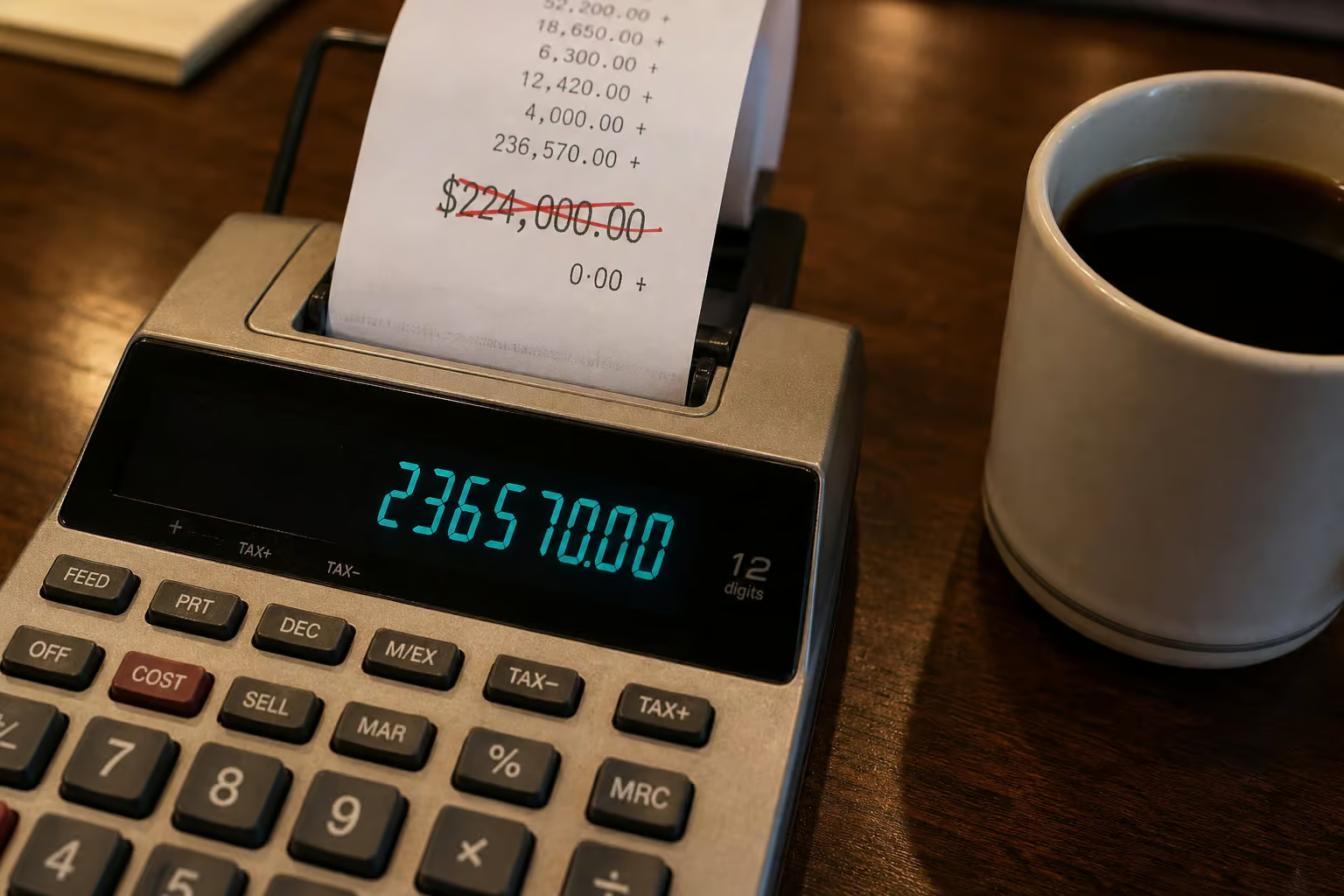
This is the big one. You don’t pay interest, period. On a $300,000 home with a 20% down payment and a 5% mortgage over 30 years, you’d pay about $224,000 in interest – never. That’s money you never write a check for.
But here’s the thing: that’s money you don’t pay, not money you earn. It’s a guaranteed savings, which feels different from gambling on the stock market.
No closing costs and fewer fees
When you get a mortgage, closing costs typically run 3-6% of the home’s price. On a $400,000 house, that’s $12,000 to $24,000 in lender fees – application fees, origination fees, appraisal fees, points, title search. All gone.
Now, you’ll still have some closing costs – title insurance, escrow fees – but they’re way lower.
Seller preference and faster closing
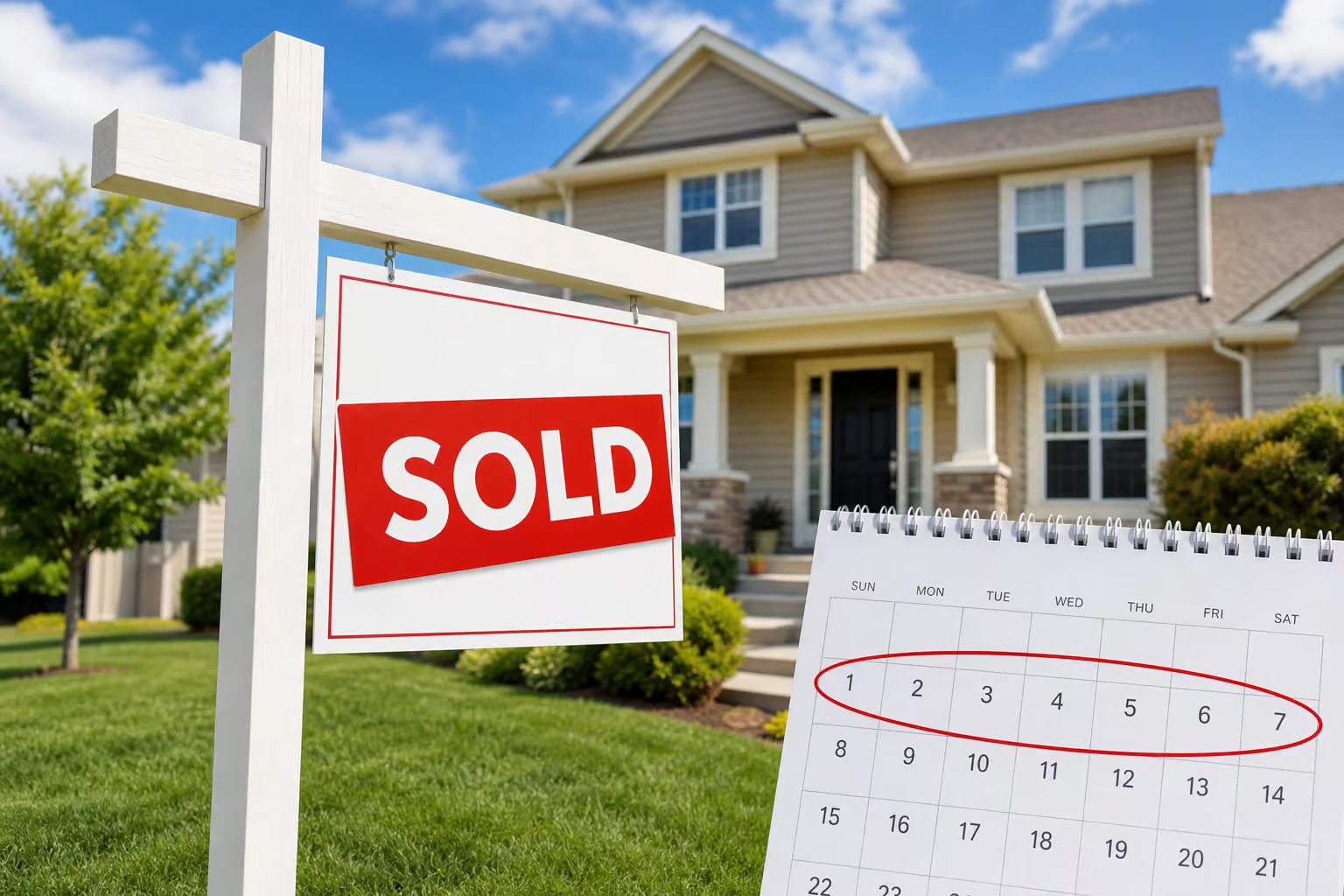
Sellers love cash offers. Why? 40% of real estate deals fall through because of financing issues. A cash deal closes in 7-10 days vs. 30+ days with a mortgage. No worrying about the bank saying no at the last minute.
That certainty can give you leverage. You might even get a discount because the seller values a sure thing over top dollar. But here’s the twist: 52% of sellers who get a cash offer still end up selling to a mortgage buyer – often because the financed offer came in higher. So the advantage is not absolute.
(Curious about the seller’s side? Check out why buying with cash is better for the seller.)
Immediate equity and ownership
From day one, you own the house outright. No lender has a lien on the property. That means no monthly payment, no credit check worries, and a simpler closing process. You also have more negotiation power – sellers know you’re serious and can close fast.
The cons of buying a house with cash
For all its benefits, paying cash also comes with significant drawbacks that can affect your financial health and flexibility.
Illiquidity and reduced financial flexibility
Your money is now in the house. It’s not in the bank. If you need cash for an emergency, tuition, or a great opportunity, you can’t just tap it. To get it out, you’d need a home equity loan, a HELOC, or a cash-out refinance – each with its own fees and interest. So “no mortgage” doesn’t mean “no credit costs” – you just pay them later, which is why it’s worth considering the advantages of buying a home with cash before locking up your liquidity.
The smart move? Keep a separate emergency fund so you’re not house-rich and cash-poor.
Opportunity cost of not investing the cash
Take that $240,000 down payment from our earlier example. If you invested it at a 6% annual return (monthly compounding) for 30 years, it would grow to over $1.4 million. Even a conservative 4% return gets you to about $800,000.
Here’s the real tradeoff: you’re comparing a guaranteed savings (interest avoided) against a probable but uncertain gain (investment returns). And the math often favors investing – even a modest 4% return can outpace the 5% interest you avoided over 30 years.
Or consider a bigger example: a $500,000 home with $100,000 down and a $400,000 mortgage at 6%. Monthly payment is about $2,400. Total cost over 30 years: $963,352.76 ($463,352.76 in interest). If you instead invested that $400,000 at 9% for 30 years (the S&P 500 has averaged about 10% annually over the last 30 years), you’d have roughly $6.58 million.
Lost mortgage interest deduction
Under current law (the Tax Cuts and Jobs Act of 2017), you can deduct mortgage interest on loans up to $750,000 ($375,000 if married filing separately). But to claim it, you need to itemize your deductions – and most taxpayers don’t anymore because the standard deduction is so high. So while it’s a real loss, it’s often smaller than people think.
Concentration risk
All your money in one property. If the real estate market takes a dive – like 2008-2009 – and you have to sell, your entire investment takes the hit. A diversified portfolio spreads that risk across stocks, bonds, and other assets. With cash, you’re betting everything on that one house.
Additional ongoing costs still apply
But you still have property taxes, homeowners insurance, utilities, HOA dues, and maintenance. Budget 2-5% of the home’s value for these annual costs. That $300,000 house? Plan for $6,000 to $15,000 a year in ongoing expenses. The mortgage was just one bill – not the only one.
The hybrid approach — a middle path
You don’t have to choose all or nothing. What if you put down 50% on a $300,000 home – that’s $150,000 – and finance the remaining $150,000? You cut your interest costs roughly in half, keep $150,000 in liquid investments, and still have a manageable monthly payment.
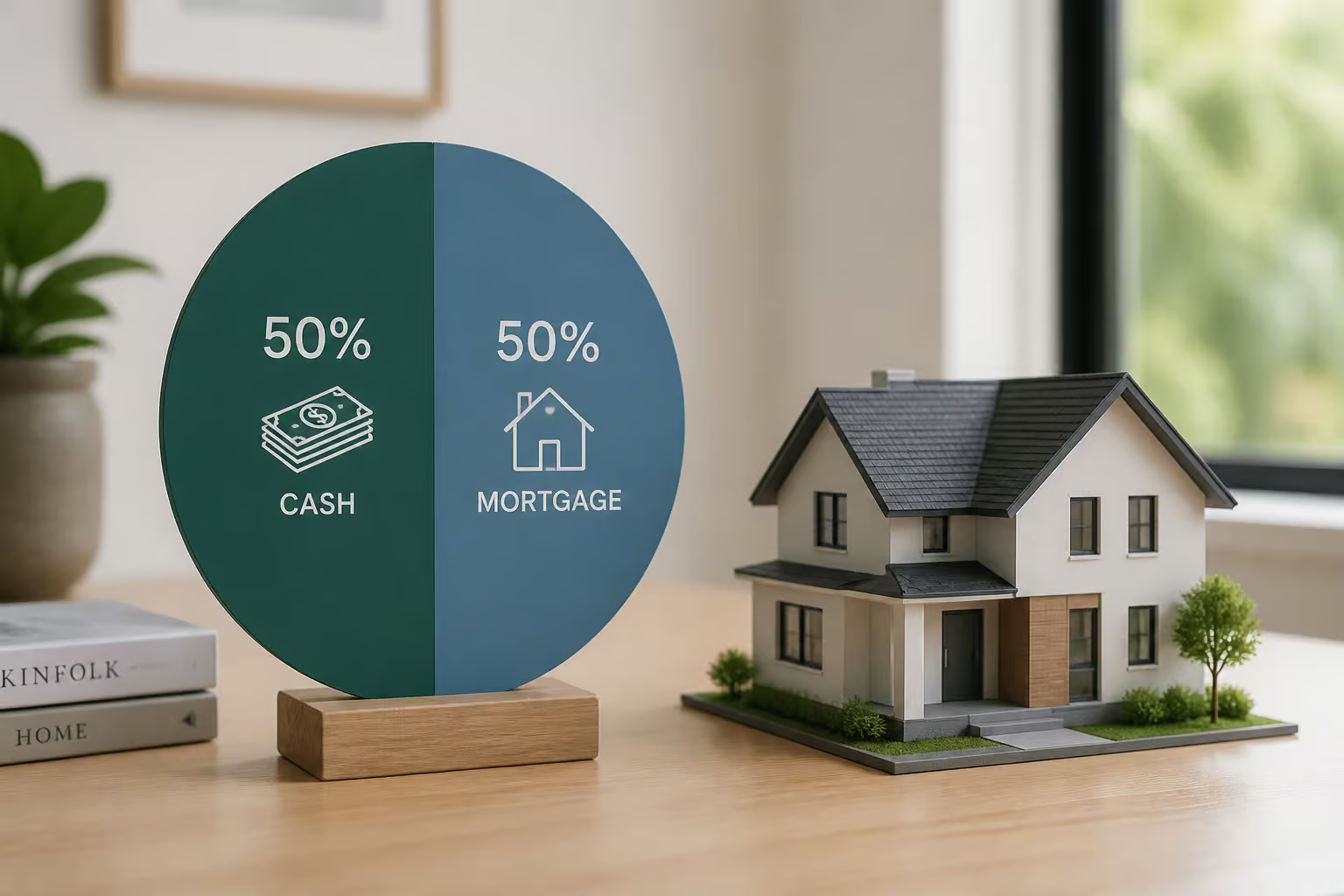
This approach gives you some of the benefits of cash (less debt) without tying up all your money.
How to buy a house with cash — step-by-step
If you decide to go cash, here’s what the process looks like:
- Proof of funds – Your bank writes a letter showing you have the money available. (401(k) statements usually don’t count.) Be prepared to document the source of your funds — large cash transactions may require explanation for anti-money-laundering (AML) compliance, so have bank statements or sale records ready.
- Research and make an offer – Include the proof of funds with your offer. You can waive the mortgage contingency, making your offer even stronger.
- Home inspection – Do not skip this. Just because there’s no lender doesn’t mean you should ignore problems. An inspection catches damage, broken systems, or safety issues before you own them.
- Appraisal (optional but smart) – No lender requires it, but it confirms you’re not overpaying.
- Title search – Make sure there are no liens on the property. Liens can mess up the sale or leave you with someone else’s debt.
- Close – Pay via wire transfer or cashier’s check. You can close in 7-10 days.
The danger: without a lender forcing you to do inspections and appraisals, you might skip them. Don’t. That’s how people inherit expensive problems. (For a complete guide, see buying a house with cash process.)
Market context — why cash is in the news now
32% of homebuyers in 2024 paid cash – the highest share since 2014. But the total number of cash purchases in 2024 was the lowest in at least a decade.
The share is high because rising mortgage payments make cash look attractive. The volume is low because overall home sales are down. If interest rates drop, the calculus could shift quickly. But right now, with monthly payments up 20% since 2021, the temptation to skip the lender is strong. Keep in mind that state-specific factors — such as property tax rules, homestead exemptions, and how your state treats mortgage interest for income tax purposes, can also affect the decision, so it’s wise to consult a local real estate professional or tax advisor.
Is paying cash right for you? A decision framework
Deciding whether to pay cash comes down to your personal financial situation, goals, and risk tolerance.

Questions to ask yourself
Here are four concrete questions to help you decide:
- Will I still have enough emergency reserves after buying the house? If paying cash empties your savings, the answer is no.
- Would I save more in interest than I could earn investing? Compare your mortgage rate (the interest you avoid) with a realistic investment return (like 6-8%).
- How are my other financial goals looking? Retirement, college funds, home repairs – will this cash be needed elsewhere?
- Is this about peace of mind or financial strategy? Be honest with yourself. Both are valid, but they lead to different decisions.
The peace of mind factor
If carrying a mortgage keeps you up at night, that peace of mind is worth something real. Debt aversion is a legitimate feeling, especially when you’ve worked hard to save that cash.
But owning your home outright doesn’t eliminate financial risk. You still have taxes, HOA fees, and maintenance. And if you pour everything into the house, you might end up stressed about the next big expense anyway. What’s more, the peace of mind that comes with no mortgage can be illusionary — unpaid property taxes or HOA dues can still lead to foreclosure, even on a paid-off home. Peace of mind is valuable, but it’s not absolute, and the risks don’t disappear when the mortgage does.
The leverage argument
Robert Kiyosaki (author of Rich Dad Poor Dad) says debt is good if what you buy goes up in value faster than the cost of borrowing. If your home appreciates at 5.4% per year (the average since 1992) and your mortgage is 6%, you’re borrowing at a slight loss – but if you invest the cash you saved, you could come out way ahead.
That $400,000 at 9% for 30 years becomes $6.58 million.
Making your choice
Use a mortgage calculator to see exactly what you’d pay in interest over 30 years. Then use an investment calculator to see what that same cash could grow to at a reasonable return rate. Compare the two – and then also think about how you feel about debt.
Some people sleep better with no mortgage. Others sleep better knowing their money is working for them. The right choice is the one that fits your finances and your priorities – not what worked for your uncle or your coworker.
Take the framework, run the numbers, and make the call.
People Also Ask
Is it a good idea to buy your house in cash?
It depends on your financial situation and priorities. Paying cash saves you roughly $224,000 in interest on a $300,000 home over 30 years and eliminates monthly mortgage payments, but it also ties up a huge chunk of your savings in one illiquid asset. The trade-off is opportunity cost — that same cash invested at a conservative 6% return could grow to over $1.4 million over the same period.
How much lower should a cash offer be on a house?
There’s no fixed rule, but cash offers often come in 5-10% below the asking price because sellers value the certainty and speed of a cash deal — no financing contingencies, no bank delays, and a closing in 7-10 days instead of 30+. That said, 52% of sellers who receive a cash offer still end up accepting a higher financed offer, so your discount depends on how motivated the seller is and how competitive the market is.
What’s the biggest financial downside of paying cash for a house?
The biggest downside is opportunity cost — the money you put into the house could have been invested elsewhere. For example, a $240,000 down payment invested at a 6% annual return could grow to over $1.4 million in 30 years, while the interest you avoid by paying cash is about $224,000. Even a conservative 4% return can outpace the 5% interest you avoided over the same period.
Does paying cash for a house help you avoid all closing costs?
No, you still pay some closing costs like title insurance and escrow fees, but you skip the lender-related fees — application fees, origination fees, appraisal fees, and points — which typically run 3-6% of the home’s price. On a $400,000 house, that’s $12,000 to $24,000 in savings just from not getting a mortgage.