So, Should You Eat IQ Bars Every Day?
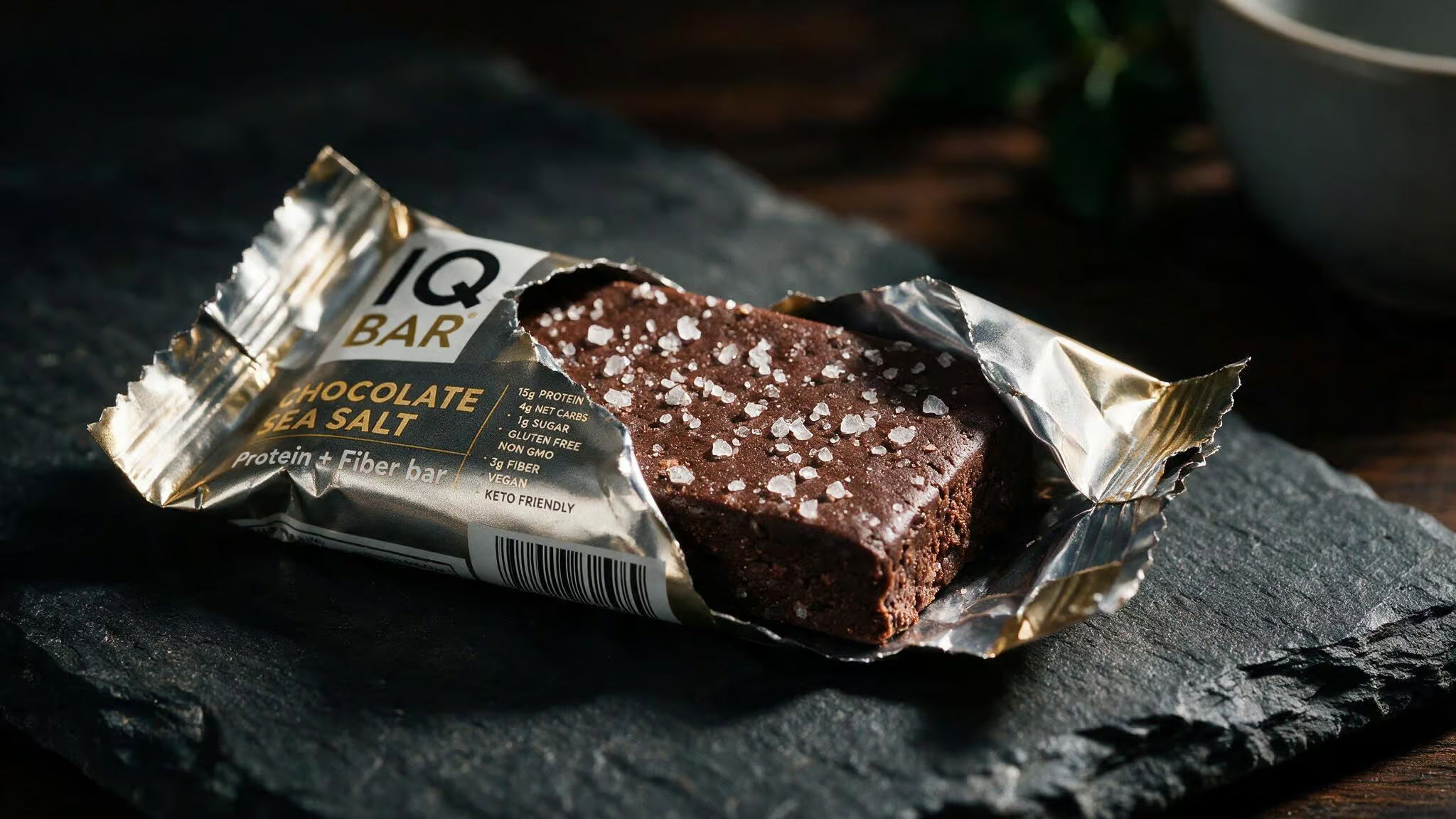
I stood in my kitchen recently, turning over an IQ Bar wrapper for the third time. On the front: “Brain Nutrients.” On the back: a list of 45 grams of plant protein, 1–2 grams of sugar, and ingredients including magnesium, lion’s mane, MCTs, flavonoids, and vitamin-E. IQBAR doesn’t make explicit claims about impact on brain or body because bars aren’t medicine or nutraceutical. A registered dietitian gave them 75 out of 100: high in fiber, low in sugar, no added sugar, but high in saturated fats and moderately high sodium.
And the main selling point, those brain nutrients? The same dietitian called the claim “more marketing than science.”
That tension is the story here. These bars score 75 out of 100 from a dietitian review—a solid low-sugar, high-fiber snack. But are they safe to eat every day? And if they are, what should you actually expect?
I’ve examined the nutrition facts, ingredient science, and practical tradeoffs. Here’s what I found.
Key Takeaways
IQ Bars score 75/100 from a dietitian review—a solid low-sugar, high-fiber snack, but the brain-ingredient claims are not backed by the evidence they cite—the omega‑3s are ALA from flaxseed, not the DHA/EPA used in brain studies, and the body can convert only about 5% of ALA to DHA and EPA.
The biggest daily-use watchpoints are the allulose sweetener (can cause bloating and gas in some people, especially in higher amounts) and the sodium and saturated fat adding up if you eat more than one bar per day (125–135 mg sodium, 2.5–4 g saturated fat per bar).
These bars are safe for most adults as a daily snack, but they are not a meal replacement or a therapeutic product—IQBAR makes no explicit claims about impact on brain or body because bars are not medicine or nutraceutical, and the brain nutrient amounts are undisclosed.
Table of Contents
What’s Actually Inside? A Real-World Nutrition Breakdown
Let’s take one Chocolate Sea Salt bar and walk through what those numbers mean for a typical adult’s day. Each 45‑gram bar lands between 160 and 180 calories, with 12 grams of plant protein and 1–2 grams of sugar, and 2–3 grams net carbohydrates. That’s a snack, not a meal—160–180 calories isn’t enough. The 12 grams of plant protein are respectable for a snack—about the same as a hard‑boiled egg plus a handful of almonds—but it’s not enough to count as a post‑workout recovery if you’re serious about building muscle.
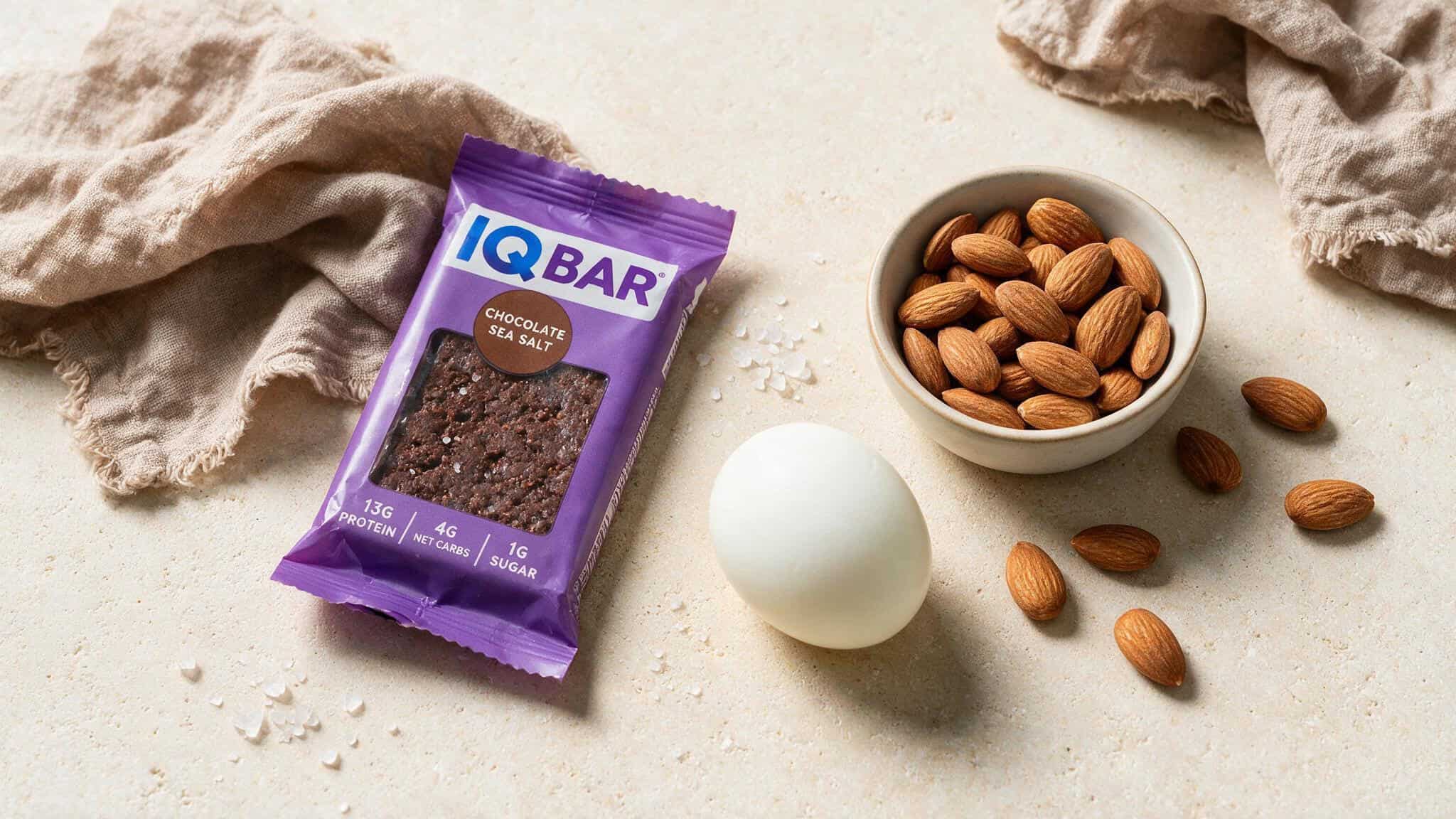
The fiber—6–9 grams per bar—is where things get interesting. You get 6–9 grams per bar, which is a lot for a 45‑gram bar. After subtracting fiber, the net carbs drop to just 2–3 grams, calculated as total carbs minus fiber. That’s what makes them 100% compliant with ketogenic diets.
But net carbs are a marketing term, not a regulated one—IQBAR defines net carbs as carbs that convert into blood glucose. IQBAR calculates net carbs as total carbs minus fiber, because fiber isn’t considered net carbs. The fiber itself is tapioca fiber, a prebiotic resistant dextrin—meaning it feeds your gut bacteria without spiking your blood sugar, and is not to be confused with IMO (isomalto-oligosaccharide), a fiber-like sweetener that the body almost completely breaks down into blood glucose. That’s different from IMO (isomalto‑oligosaccharide), a fiber-like sweetener that the body almost completely breaks down into blood glucose and appears in some other low‑carb bars. IQBAR explicitly uses tapioca fiber instead, and that’s a good call.
The fat profile: 10–13 grams total, with 2.5–4 grams saturated, mostly from coconut oil and almonds. That saturated fat number is something to watch if you eat multiple bars, but the source matters—coconut oil and almonds are less concerning sources than processed fats, and the saturated fat from these sources is less concerning.
So one bar as a daily snack? The numbers work—160–180 calories, 12g protein, 1–2g sugar. Two bars? Now you’re looking at 5–8 grams saturated fat and 250–270 mg sodium—about 15–30% of the daily limit for saturated fat, and 10–15% for sodium.
Ingredient Fine Print: What a Label Reader Will Spot
The allulose sweetener in IQ Bars can cause bloating and gas in some people, especially in higher amounts. Reading the ingredient list reveals a few surprises beyond the basic nutrition numbers, especially around sweeteners and fat sources.
The Sweetener That Causes the Most Questions
IQ Bars are sweetened with allulose and stevia; allulose is a sugar the body cannot digest well, contributes almost no calories, and has minimal glycemic effect. That sounds great—except your gut may not agree. Allulose may cause bloating and gas in some people, especially in higher amounts. However, the 125–135 mg sodium per bar can actually be beneficial for electrolyte balance, as argued in The Salt Fix—this helps counterbalance the moderately high sodium critique.
It’s not universal; some people tolerate it fine. If you’re prone to digestive upset from low‑carb foods, this is the ingredient most likely to bother you.
Some flavors shift to monk fruit instead of stevia; check the label if you have a preference. Check the label if you’ve got a preference.
Fat Source: No Seed Oils
IQBAR makes a point of avoiding seed oils (canola, sunflower, soybean) and using coconut oil instead. That’s a deliberate choice that I appreciate. The protein comes from pea protein, which is a complete protein with all nine essential amino acids—rare for a plant source—and is highly bioavailable, digestion-friendly, and vegan. No lactose, no gluten, no dairy, no soy, and non-GMO.
Preservatives? Just Vitamin E
Vitamin E does double duty here: it’s a nutrient and a preservative that protects the fats from going rancid, and it’s one of the brain nutrients in the 5-nutrient version. That’s the only preservative; no artificial anything. No artificial anything.
The Transparency Gaps
Two minor flags: the “natural flavors” are non‑GMO, WONF (meaning they use real extracts), and free of the top eight allergens—but it’s still a blanket term, and the vegetable fiber source isn’t specified beyond tapioca. And the vegetable fiber source isn’t specified beyond tapioca; not a dealbreaker, but I’d like to know exactly what’s in there. Not a dealbreaker, but I’d like to know exactly what’s in there.
The Brain Nutrient Claim: Marketing vs. Measurable Benefit
This is where you need to set expectations. IQBAR markets itself on five brain nutrients—magnesium, lion’s mane, MCTs, flavonoids, vitamin-E—or six in the newer version adding Omega-3, MCT, Lion’s mane, flavonoids, Vitamin E, and choline. Sounds impressive. But the devil’s in the dosage—the company doesn’t disclose the exact amounts, stating the amounts are in the hundreds of milligrams. The FAQ explains that the FDA hasn’t set daily values for these ingredients, and there’s bar-to-bar variability. They say the quantities are “in the hundreds of milligrams.” That’s enough to be present, not enough to be therapeutic—IQBAR makes no explicit claims about impact on brain or body, but if you’re evaluating the bar as a protein source, the question of is IQ a good protein bar depends on its protein content, quality, and how it stacks up against other options.
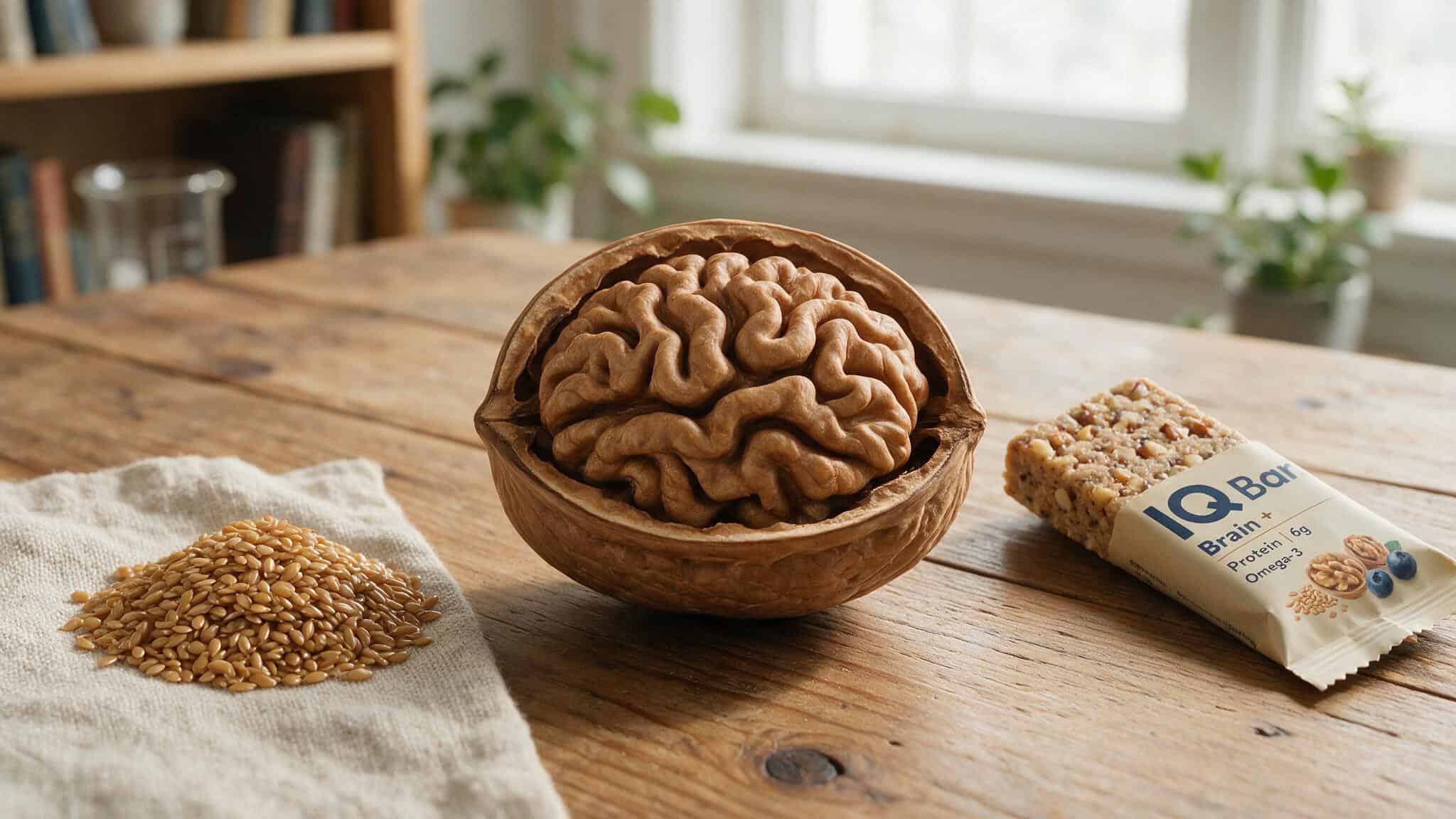
The omega‑3s come from flaxseed (ALA)—the body can convert only about 5% of ALA to DHA and EPA. Your body converts only about 5% of ALA into the active forms (DHA/EPA) that your brain uses, so plant-based omega-3 supplements like flaxseed aren’t particularly useful and don’t offer the health benefits of fish oil. The studies IQBAR’s website cites for brain benefits used DHA/EPA, not ALA. So the science doesn’t map cleanly onto what’s in the bar—the omega‑3s are ALA from flaxseed, not the DHA/EPA used in brain studies. The dietitian review was blunt: the brain-ingredient claim is more marketing than actual science, scoring the bar 75 out of 100.
Lion’s mane? Interest is high, but the evidence is limited and insufficient to say it definitely works—IQMIX contains 8X-Concentrated Lion’s Mane Extract at 250mg per stick.
IQBAR itself says it makes no explicit claims about impact on brain or body because bars are not medicine or nutraceutical. That’s honest, but it also means you shouldn’t buy these bars expecting a cognitive boost—Magtein Magnesium L-Threonate boosted clarity, mood, focus, attention, memory, and productivity across multiple clinical studies at a daily dose of 1.5g, but the bar’s magnesium quantity is undisclosed. For a candid take from a busy parent, this IQ bars review digs into taste, nutrition, and whether they live up to the brain-fuel hype. Buy them for the nutrition profile—low sugar (1–2g), high fiber (6–9g), clean fat (10–13g, mostly from almonds and coconut oil)—and treat the brain angle as a nice possibility, not a promise.

I’ll say this: I’ve eaten these on sleep‑deprived mornings and felt a subtle difference—not like coffee, but a little more clarity; that’s anecdotal, but it’s worth mentioning. That’s anecdotal, but it’s worth mentioning; the effect may be real for some people, but it isn’t proven. The effect may be real for some people, but it isn’t proven—IQBAR makes no explicit health claims.
Digestive Tolerance: What to Expect from Allulose and Fiber
The combination of allulose (a sugar the body cannot digest well) and tapioca fiber (a prebiotic resistant dextrin) can cause temporary gas and bloating. Each works differently: allulose passes through undigested, contributing almost no calories, while the fiber feeds your gut bacteria, which produces gas as a byproduct.
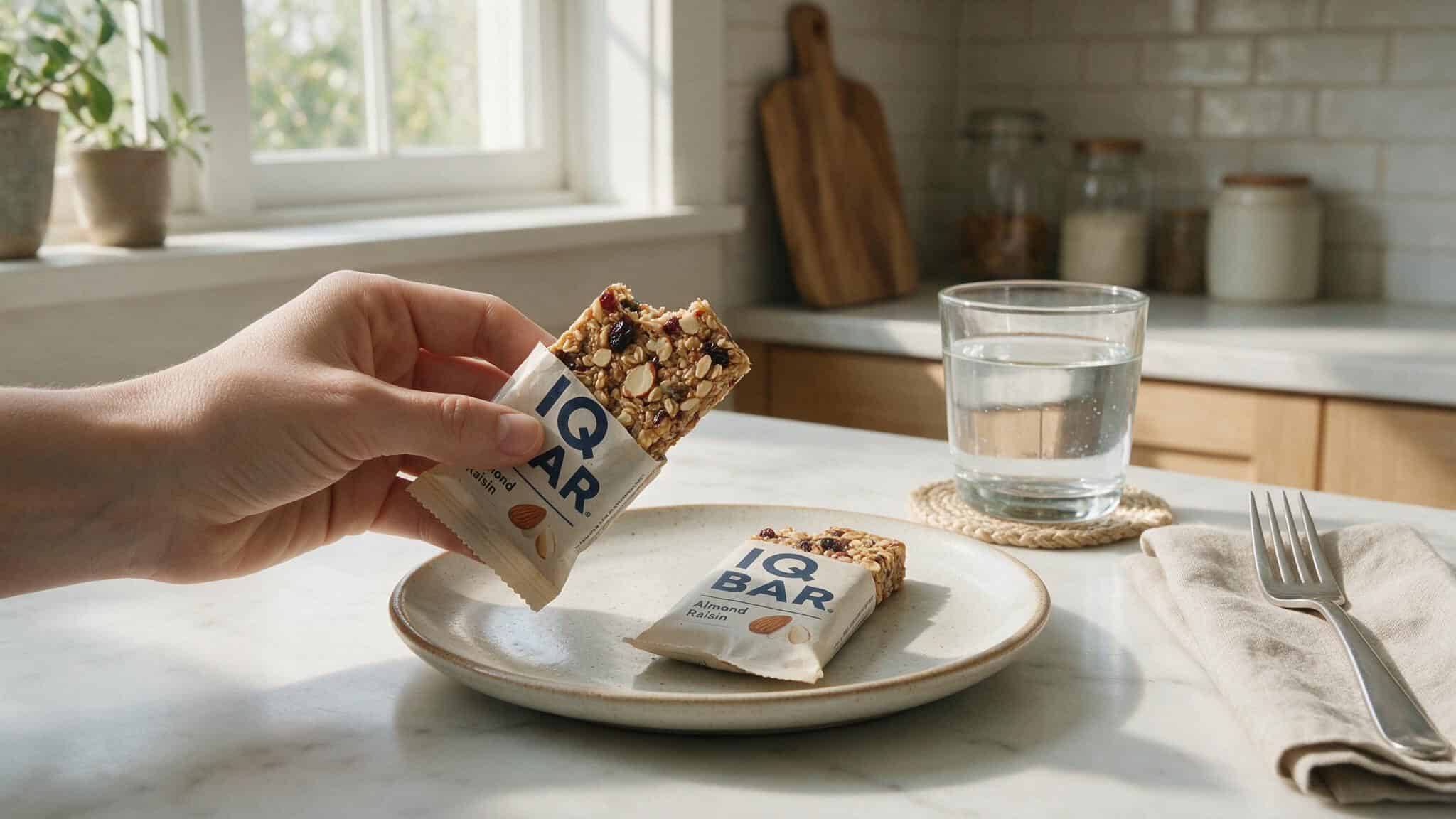
If you’re new to these bars, start with half a bar and see how you feel; most people adjust after a few days. Most people adjust after a few days; I’ve had GI issues with other low‑carb bars that use sugar alcohols, but IQ Bars were fine for me; that’s not universal, but it’s a common pattern. That’s not universal, but it’s a common pattern; also note: some flavors contain caffeine (the Matcha Chai and Coffee flavors, for example).
Also: some flavors contain caffeine—the Matcha Chai and Coffee flavors, for example—IQJOE has 200mg natural caffeine per stick. If you’re sensitive or giving these to kids, read the label; one bar a day for a child is reasonable; more than that adds up in sodium and saturated fat.
Dietary Compliance: Who Can Eat These?
IQBAR is 100% compliant with ketogenic, vegan, and Paleo friendly diets—with caveats per flavor.
- Keto: Yes, net carbs are 2–3 grams. But the Wild Blueberry flavor is specifically noted as keto-friendly; other flavors vary slightly, so check the label if you’re strict.
- Vegan: Most flavors are vegan (pea protein, no animal products). But some contain whey or honey, so read the label; all flavors are Kosher.
- Paleo‑friendly: The company uses that phrase deliberately, not “Paleo.” Why? Pea protein comes from legumes, which strict Paleo avoids; IQBAR argues that peas are lower in phytates and lectins than other legumes, so they call it “friendly”; that’s a reasonable distinction. That’s a reasonable distinction; gluten‑free, dairy‑free, soy‑free, non‑GMO: yes across all flavors.
- Gluten‑free, dairy‑free, soy‑free, non‑GMO: Yes across all flavors.
- Kosher: Yes.
- Kids: Generally safe, but be mindful of caffeine in certain flavors and stevia if you prefer to avoid it. One bar a day for a child is reasonable; more than that adds up in sodium (125–135 mg per bar) and saturated fat (2.5–4 g per bar).
- Diabetics: The low sugar (1–2 g) and low net carbs make them a good option, but the allulose can still affect blood sugar in some people. Test your own response; IQBAR makes no explicit health claims.
Daily Use Without Overdoing It: A Practical Strategy
For an adult, one bar per day is a sensible limit—160–180 calories, 12g protein, 1–2g sugar. Here’s the math: two bars would give you 5–8 grams saturated fat and 250–270 mg sodium—about 15–30% of the daily limit for saturated fat, and 10–15% for sodium; that’s not dangerous, but it starts to crowd out room for other foods. That’s not dangerous, but it starts to crowd out room for other foods; if you want to make one bar work harder, crumble it over yogurt or oatmeal.

If you want to make one bar work harder, crumble it over yogurt or oatmeal; that stretches the flavor and fiber without adding a second bar. That stretches the flavor and fiber without adding a second bar; eat it as a snack between meals, not as a meal replacement—160–180 calories isn’t enough.
At about $2 per bar (less with promos or bulk), daily use adds up; IQBAR offers a sampler pack, which I recommend—try a few flavors before committing to a box. IQBAR offers a sampler pack, which I recommend—try a few flavors before committing to a box; the company ships free in the US (3–5 days), but doesn’t offer refunds on opened packages. The company ships free in the US (3–5 days), but no refunds on opened packages; comparison point: if you’re choosing between IQBAR and Perfect Keto Bar, the main differences are listed below.
Comparison point: If you’re choosing between IQ Bar and Perfect Keto Bar, the main differences are:
- IQBAR is vegan (pea protein); Perfect Keto uses collagen (not vegan).
- IQBAR uses allulose; Perfect Keto uses stevia (less likely to cause GI issues).
- IQBAR’s fats come from coconut oil and flaxseed (ALA); Perfect Keto uses MCT oil and almond butter.
- Both have similar net carbs (2–3g) and protein (12g).
Pick based on whether you want pea protein vs. collagen, and how you tolerate allulose; IQBAR is 100% compliant with ketogenic, vegan, and Paleo friendly diets.
The Bottom Line: Safe to Eat Every Day?
I’ll give you the same verdict the dietitian did: 75 out of 100—high in fiber, low in sugar, no added sugar, but high in saturated fats and moderately high sodium. IQ Bars are a great quality option for anyone looking for a low‑sugar (1–2g), high‑fiber (6–9g), plant‑based protein bar with 12g plant protein. They are safe for daily consumption for most people—one bar per day, adults, with the caveats about allulose (may cause bloating and gas) and sodium accumulation (125–135 mg per bar) if you go beyond that.
The brain claims? Don’t buy them for that—IQBAR makes no explicit claims about impact on brain or body. The evidence doesn’t support a measurable cognitive benefit—the omega‑3s are ALA from flaxseed, not the DHA/EPA used in brain studies. Buy them because they taste decent, keep your sugar low (1–2g), and fit into a keto or vegan diet (100% compliant).
For my family: I keep a box in the pantry for busy mornings when I need a quick snack that won’t spike blood sugar—net carbs are 2–3g. My kids have them occasionally, never more than one, and I choose flavors without caffeine—Matcha Chai and Coffee contain caffeine. I wouldn’t build a meal plan around them, but as a daily option? They’re fine—solid nutrition (160–180 calories, 12g protein, 1–2g sugar), honest labeling (no explicit health claims), no red flags. That’s more than I can say for most protein bars; scored 75 out of 100 by a dietitian.
Frequently Asked Questions
Is an IQBAR a meal replacement?
No — at 160–180 calories per bar, it’s not enough to replace a meal. It’s designed as a snack between meals, not a meal replacement.
Is it okay if I eat a protein bar every day?
Yes, for most adults, one IQ Bar per day is safe as a daily snack. Just watch the allulose sweetener (can cause bloating and gas in some people) and the sodium and saturated fat if you eat more than one.
Do IQ bars actually improve brain function?
The evidence doesn’t support a measurable cognitive benefit. The omega-3s come from flaxseed (ALA), and your body converts only about 5% of ALA into the active forms (DHA/EPA) that your brain uses. The company itself makes no explicit claims about impact on brain or body.