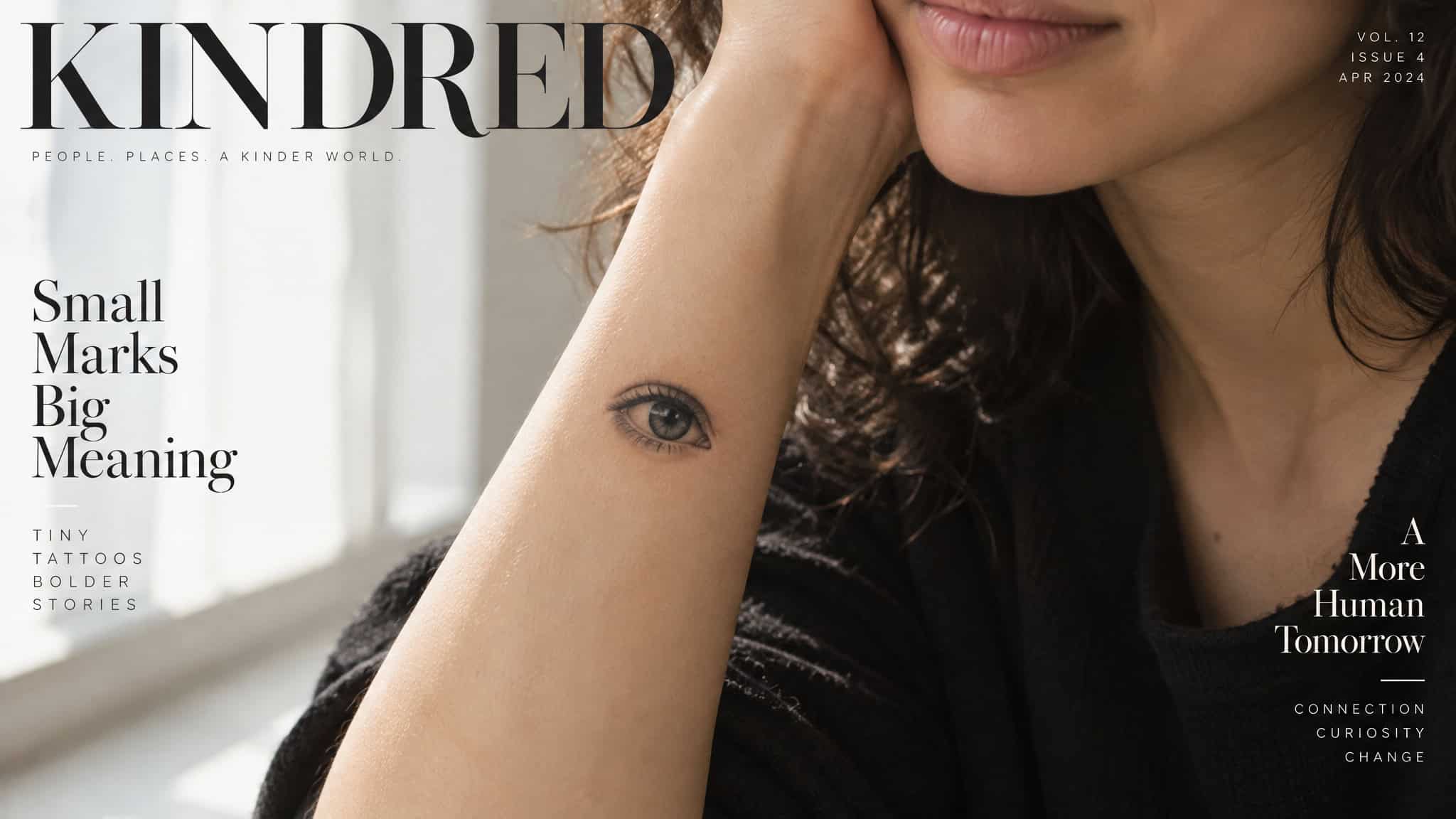
Three friends have sent me the same tattoo this month: a tiny realistic eye, coin-sized, on the inside of a forearm. Each text came with a version of “should I do this??” And each time I typed back some version of maybe, because that little eye is the most in-demand style of 2026, and being the most in-demand style of 2026 is not actually a point in its favor.
Trend lists will tell you what’s popular. What they won’t tell you is which of it will still look good in a decade. So I asked the question the other way around, to Jonathan Bourassa, a tattoo artist with 32 years in the industry and 20 of them running his own studio. He ranked 30 styles into four buckets, from timeless popular down to trendy. He’s quick to say the ranking is his personal opinion and you’re welcome to rearrange it.
Fine by me. An opinion from someone who’s watched three decades of trends arrive and leave is worth more than a list of what’s peaking, and most tattoo trends for women this year will be sold as must-haves. Here’s the list, sorted by what actually lasts.
Key Takeaways
Microrealism, coin-sized single-needle work that looks like a tiny photograph, is 2026’s most in-demand style, and Bourassa ranks miniature fine lines, cybersigilism, watercolor, and 3D, the loudest 2026 trends, as the ones most likely to date.
Placement changes how a tattoo ages: fingers fade fast from washing, ear cartilage is tricky, and delicate work lasts longest away from sun and clothing friction, like the top of the forearm or along the waistline.
Small doesn’t mean reversible. Micro tattoos are physically easier to remove than dense pieces, but removal technicians report clients pricing a tattoo and its removal in the same sentence, and easier is not easy.
Table of Contents
The biggest tattoo trends for 2026 at a glance
Tattoo trends in 2026 are less one aesthetic than three competing currents: delicate precision work, nostalgia cycles, and designs that flow with the body. Here’s every major named style you’ll encounter in this year’s trend coverage, in one scannable list:
- Microrealism, coin-sized single-needle work that looks like a tiny photograph on skin
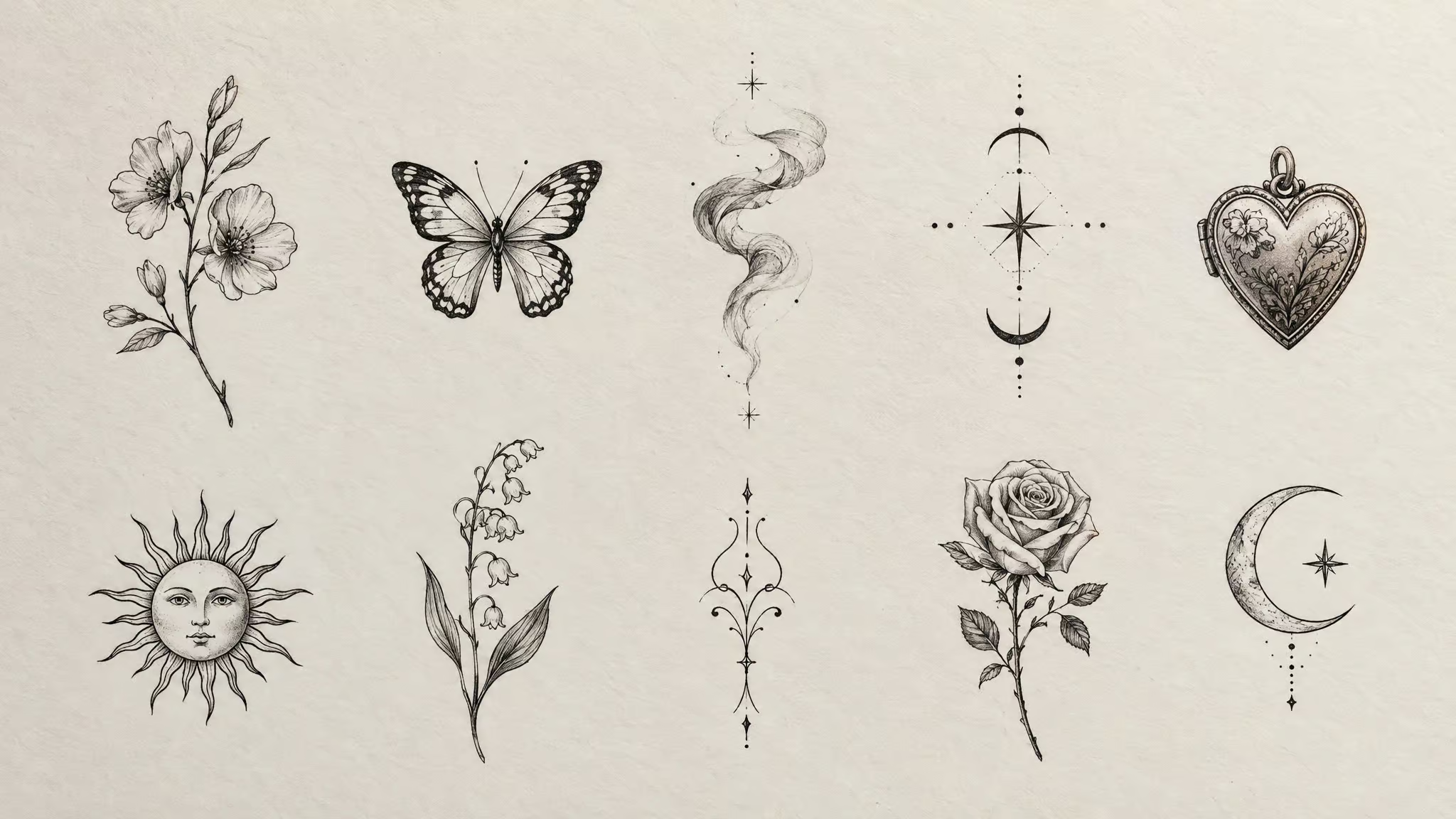
- Fine-line and minimalist tattoos, super-thin florals, script, symbols, and tiny icons
- Fluid and abstract designs, smoke, water, and brushstroke shapes that follow the body
- Y2K and nostalgia designs, ’70s through early-2000s imagery: butterflies, tramp stamps, nostalgic cartoon styles
- Symbolic and memory tattoos, zodiac signs, spiritual symbols, and minimal pieces with deep personal meaning
- Nature redesigned, flowers, animals, and landscapes in stylised, modern form
- Cybersigilism, sharp-lined, tech-inspired sigils straight out of digital culture
- Patchwork and sticker sleeves, small tattoos building a collage over time
- Custom artist collaborations, original work designed with your artist instead of copied from a board
- Visible placements, hands, fingers, spine, and behind-the-ear accents
- Ornamental and sacred-geometry work, fine-line patterns that follow the body’s contours
- Pet-in-a-locket designs, pet portraits inked inside heart-shaped lockets
- American Traditional revival, the oldest styles holding their ground
- Ignorant style, deliberately rough, crude, anti-polish work
- Tech inks. UV glow inks and Augmented Reality (AR) tattoos that animate through a phone app
- Semi-permanent tattoos, inks that fade in one to three years as a test drive
Several of these lean toward the demand this article serves: fine-line work, locket pet portraits, ornamental body-contour pieces, and small meaningful designs skew heavily female in 2026. One thing to keep in mind as you scan: what’s popular right now and what holds up over the years are two separate questions, and the verdicts on which of these styles age well come later in the piece.
Microrealism: the style defining 2026
Microrealism, coin-sized single-needle work that looks like a tiny photograph on your skin, is the most in-demand tattoo style of 2026. We’re talking miniature portraits, pets, tiny objects, pop culture nods, all done at a scale that seems like it shouldn’t be possible, in full color or greyscale. Think of a detailed eye the size of a coin on someone’s inner forearm, or a favorite trinket rendered in miniature.
Your go-to bagel order, rendered like a passport photo. Yes, really that small.
The detail comes from the technique. Single-needle work uses one fine needle to lay down hair-thin lines and subtle shading, so the finished piece reads like a photograph shrunk down to quarter size.
Artists who’ve mastered this charge premium prices, and clients travel across state lines for the right one, because there’s nowhere to hide a mistake in a piece the size of a quarter. The concentration per square inch is high, and the consultation friction is real: Kayla O’Connor, a tattoo artist at Fleur Noire’s San Diego studio, says people arrive with a reference photo the size of a coin and expect photorealism at any size, not realizing that detail has a minimum viable scale and that placement affects how long the tattoo lasts. Her guidance: keep the piece away from heavy sun and the rubbing of clothing, and aim for the top of the forearm, near the bra, or along the waistline.
Jes Valentine says clients increasingly ask for pet portraits inked inside heart-shaped locket designs, customizable down to the pet’s toothy smile and whether the locket reads ornate or understated. “It’s a trend that the client makes super personal,” and that’s the whole appeal.
One thing to know before booking: micro tattoos are less saturated with ink and sit shallower in the skin, so they’re physically easier to remove than dense pieces. Easier, I’ll warn you now, is not the same as easy, and there’s more on what removal actually involves later on.
Fine-line tattoos: everywhere, and honest about aging
Fine-line is everywhere in 2026 and marketed as timeless, but whether it ages well depends on the technique, not the style label. You know the look: super-thin florals, delicate script, small symbols, tiny icons. It’s the style nervous first-timers gravitate to because it’s clean and subtle, and it photographs beautifully, which is exactly what drives the Instagram demand loop. Jojo Lu says the design leaves just enough negative space to highlight both the artwork and the wearer, and it’s versatile enough to work on arms, legs, ribs, back, and sternum. If you’re still collecting options, the feminine tattoo ideas gallery is a good browse before you narrow it down.
Ultra-thin lines can blur over time if the ink isn’t placed at exactly the right depth in the skin, and Bourassa files miniature fine lines in his trendy bucket. He goes further: his advice is don’t get them, because they age poorly. That’s not a judgment on anyone who has one. It’s a heads-up about what delicate work does at the wrong depth a few years down the road.
The pattern he describes is the Pinterest churn: one year the infinity sign is everywhere, the next it’s a baby’s name with a face silhouette. There’s always a new it-design, and the pieces people pick because they were all over their feed are the ones that read as timestamps a few years later. If you love fine-line work, get fine-line work. Just ask your artist straight up how they place the ink for aging and what it’ll look like in ten years. A good one answers both questions without flinching.
Fluid and abstract tattoos
Fluid and abstract designs look like smoke, water, or brushstrokes moving across the skin, think watercolor techniques that mimic paint splashes, color bleeds, and soft gradients. They use negative space, abstract shapes, and modern layouts, working in either colour or greyscale, and they’re less rigid than geometric work, built to feel like they’re flowing with the body rather than contained by it. They’re 2026’s organic counterpoint to all the precise line work: a move toward tattoos that feel alive and read as artistic interpretation rather than realism.
Nostalgia and Y2K designs: 2026’s defining theme
Nostalgia is the defining theme of 2026, with ’70s through early-2000s imagery growing across all ages, including people who weren’t alive for the eras they’re inking. Butterflies, tribal revival, tramp stamps, yes, really.
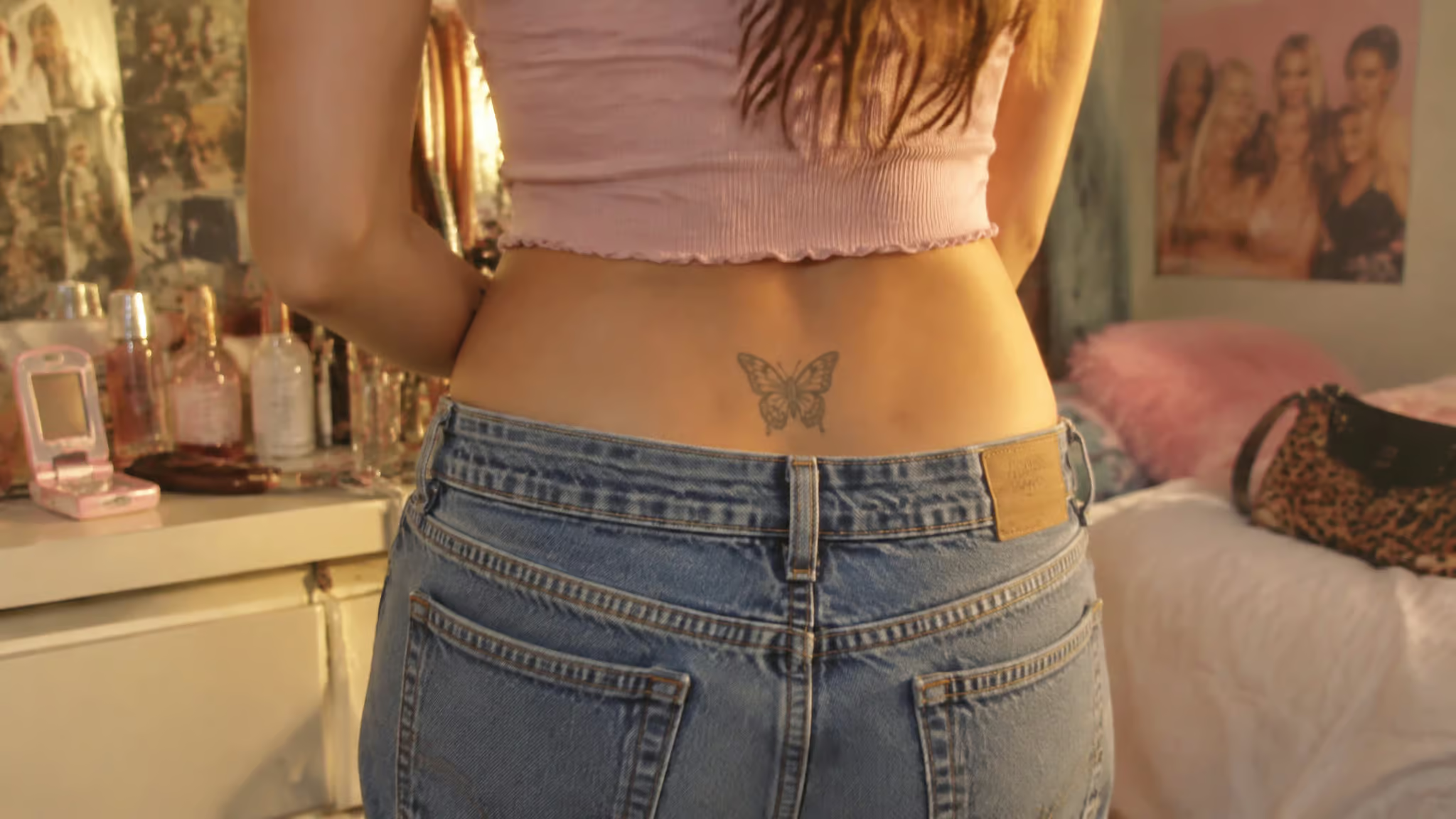
Cherries, bows, nostalgic cartoon styles. Lindsee Boyer’s observation explains a lot of it: to young people, these styles feel new and fresh, not retro. Jes Valentine sees it from the other side of the generational line, looking at the late-’90s and early-2000s motifs coming back: “Basically, all the things I got when I was 18, which is fun, but makes me feel super old.”
The examples are having their moment too: the Titanic’s Heart of the Ocean, the Lisa Frank dolphin off a math binder. It’s fun. It’s also where the timeline matters, because we have receipts on how nostalgia trends age.
Kim Kardashian said in 2009, “You don’t put a bumper sticker on a Bentley,” and the quote marked the moment tattoos went fully mainstream. Then came the fingerstache in 2011, which basically summed up hipster culture in one image. The lavender sprig that took over forearms after 2015. The disco ball boom of 2020, possibly tied to Taylor Swift’s “Mirrorball.”
The recent wave of angel-number flash. That timeline shows a pattern: trends seem to run an arc of roughly five to ten years from everywhere to embarrassing. That’s pattern-based reasoning from the markers, not a law.
Here’s why a dated trend can sting later: tattoos capture feelings, honor people, and freeze moments. That’s the whole point of them. A disco ball picked because it was everywhere captures a moment on the feed, not a moment in your life, and that’s the difference that shows up in year six.
Symbolic and meaningful tattoos
Symbolic and memory tattoos, spiritual symbols, zodiac signs, family references, and minimal pieces with deep personal meaning, are rising in 2026 because they’re about choosing meaning over aesthetics alone. New York City tattoo artist Jes Valentine, owner of Haven Studio, puts the counterpoint plainly: if you’re getting a trendy or ‘Pinteresting’ piece, you need to realize it’s trending. It’s no accident this current is growing alongside the regret data covered later in this piece; tattoos picked for what they honor tend to outlast tattoos picked because they were everywhere.
Nature redesigned
Nature redesigned takes flowers, animals, and landscapes and renders them in stylised form, negative space, abstract shapes, modern layouts. The point is artistic interpretation rather than realism, which is what separates this current trend from botanical realism, a style with its own longevity verdict later in the piece.
Cybersigilism: 2026’s most contested trend
Cybersigilism, the glitchy, sharp-lined, cyberpunk-adjacent style, is being called a defining trend of 2026, though Bourassa expects it to pass quickly. The look: tech-inspired, spiky, sci-fi designs that read like circuitry or sigils, popular with gaming, anime, and digital-culture fans. Its cousin, the cyber-tribal or neo-tribal crossover, merges Polynesian patterns with circuit-board motifs and Maori-style curves with geometric tech aesthetics.
Trend lists call cybersigilism the look of 2026. Bourassa classifies it as an update of 1990s American tribal, ranks it trendy, and points out that ’90s tribal, hugely popular in its day, is rarely seen now. That’s the trend cycle repeating in real time, and you can watch it happen while the hype posts are still up.
One standard applies no matter which side you land on: anyone tattooing tribal patterns should learn where the patterns come from, credit the source cultures, and have honest conversations with clients about meaning. That goes double for the new cyber-tribal looks, which borrow directly from Polynesian and Maori traditions even when they’re dressed up with circuit board motifs. Good artists already hold that line. It’s fair to check that yours does.
Patchwork and sticker sleeves: the trend built to avoid regret
Patchwork, lots of small tattoos building a collage over time instead of one big committed piece, is the trend that structurally protects against regret. The vibe is curated, evolving, very Gen Z, casual in the best way. A sticker sleeve grows with you, piece by piece, and it never has to be finished to look intentional.
The reason it works is structural. Each piece is chosen separately, on its own timeline, so no single trend decision dates the whole arm. A sleeve built one intentional piece at a time can’t date the way one committed trend piece does, because it was never one decision. It’s a hundred small ones, each made when you actually knew what you wanted.
It also fits where the culture is heading: away from copying Pinterest boards and toward collaborating with your artist on original work. Originality matters more than trends right now, which is quietly great news for anyone worried their idea isn’t on trend. If everything else in this piece reads as a warning, read this section as the relief. It’s the approach I’d point a friend toward if she wants to be part of 2026 without being stamped by it.
Where a tattoo lives changes how it ages
The same design can last decades or blur in two years depending on where it sits. It’s the lever you control most and the one trend lists discuss least.
Visible placements, hands, fingers, spine, are becoming acceptable, and it reflects a broader confidence shift more than a rebellion. The tiny accents are everywhere once you start noticing them: a small symbol behind the ear, a single word on a finger, a delicate dot near the hairline. Hidden in plain sight, and honestly kind of charming.
The caveats, plainly. Fingers fade fast from constant use and washing. Ear tattoos are tricky because of cartilage and thin skin. Face tattoos carry social implications worth an honest conversation with your artist before, not after.
None of these are beginner placements, so set touch-up expectations upfront and you’ll know what you’re signing up for. O’Connor’s advice to keep delicate work out of harsh sun and away from clothing that rubs holds for any style you want to still read clearly in a decade, microrealism or not. Sizing matters here too. If you’re unsure how big a design should be for the spot you have in mind, what the 1/3 rule means for tattoo sizing is a useful starting point.
UV and AR tattoos: real, improving, and fine-print-heavy
Glow-in-the-dark and animated tattoos are real and getting better, but both come with fine print worth reading before you book. UV inks glow under blacklight, and modern formulations are safer, more vibrant, and longer-lasting than the earlier versions. Some artists use them as accents; others create entire designs that are nearly invisible in daylight and come alive in clubs, concerts, or under blacklight at home. Genuinely fun idea.
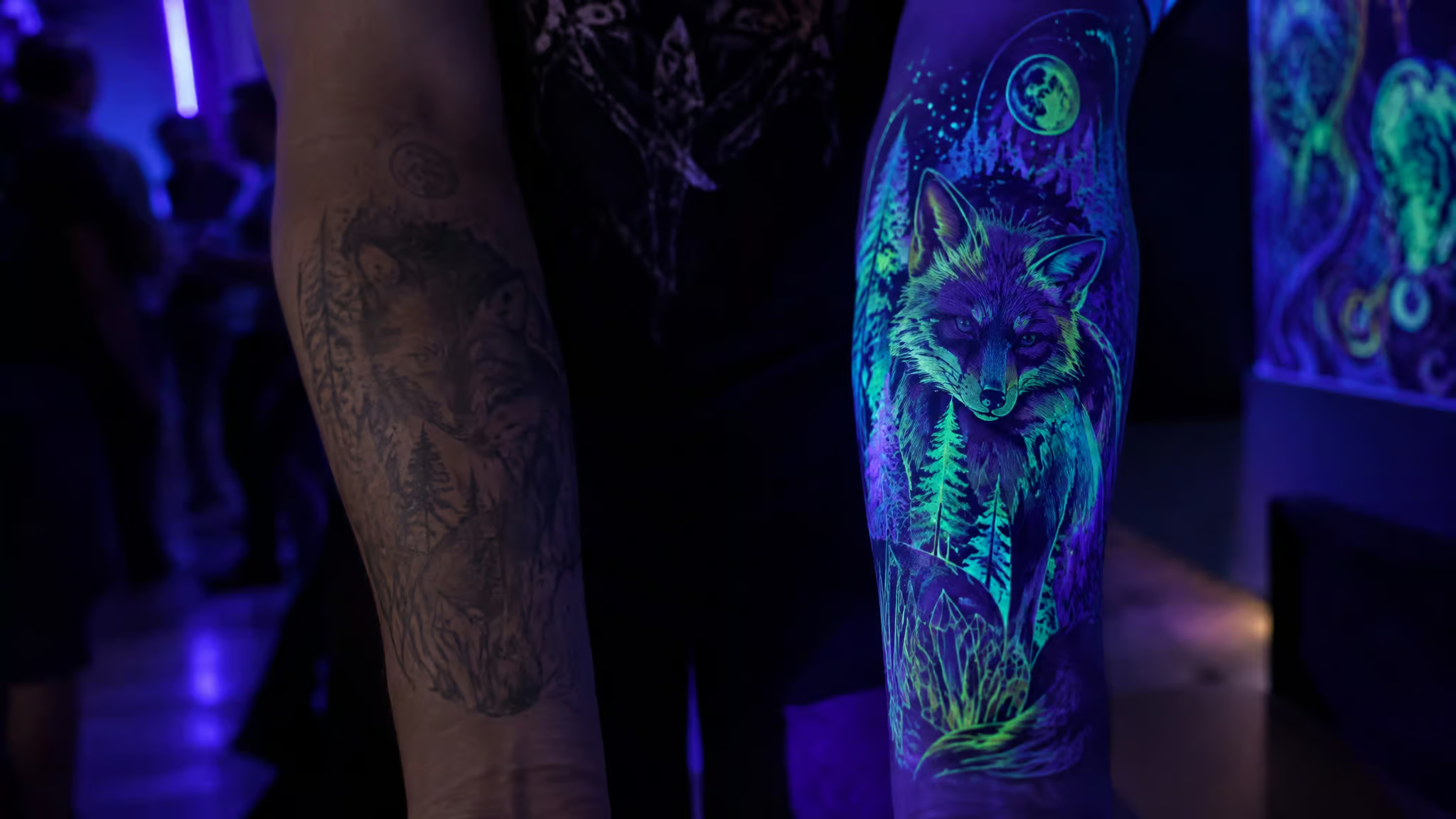
The caveat is about suppliers, not the concept: not all UV inks are equally safe, so ask your artist about suppliers with transparent ingredient lists and a track record of safety testing.
Augmented Reality (AR) tattoos sit at the other end of the tech spectrum: real ink that you scan with a phone app to trigger an animation, video, or 3D effect layered over the design. Like a filter, but on your arm. It’s still niche, it requires an app download, and the novelty can fade. The app part gets old faster than the tattoo does.
The test that matters either way: the tattoo has to stand on its own without the screen. If it only looks good through a phone, it has failed. Get the version you’d still love with the app deleted.
The oldest styles are among the safest long-term bets
The oldest tattoo styles are among the safest long-term bets, and they come with one requirement: respect for where they came from. Ornamental designs use fine lines, pointillism, and shading that follow the body’s natural contours, so the work moves with your body instead of against it, with patterns that call back to Art Nouveau aesthetics and lacework. Sacred geometry is the meditative cousin; Emmanuel Fortunato describes it as something close to meditative, where every line has a purpose. And a fun bit of history: the oldest known geometric tattoo was found on a mummy dating between 3001 and 4000 BC. People have been doing this for a long time.
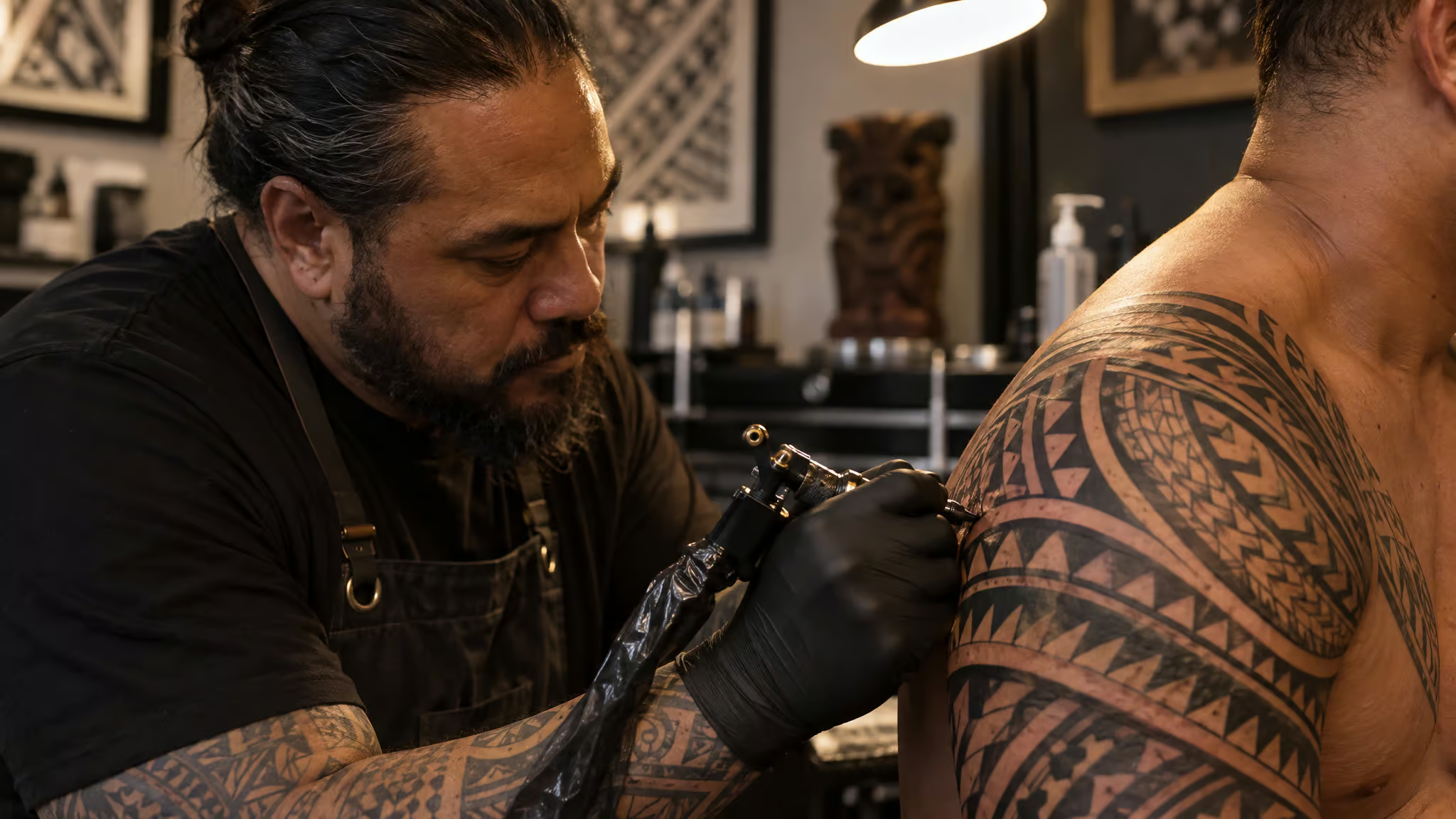
Polynesian, Maori, and Bornean work deserves its own mention: black, bold, intricate, delicate designs with real meanings and ritual behind them. The traditional practice is called tatau, meaning to hit or to strike, and it’s where the word tattoo comes from. Bourassa ranks the style timeless and popular. Celtic knotwork, thousands of years old, he files as timeless niche.
Other timeless niche styles with deep roots earn their place too: biomechanical, dark surrealism, and New School. Biomechanical traces back to H.R. Giger’s creature design for Alien (1979), the look that made flesh and machine read as one.
These are the small meaningful tattoos that tend to hold up, precisely because the meaning existed before the trend did. The respect requirement is simple: research what culturally rooted motifs like mandalas or Celtic knots actually mean before you ink one, and expect a good artist to study the origins, credit the source cultures, and talk through meaning with you. If luck symbols are your lane, the guide to lucky tattoos for women breaks down which tradition each one comes from, which is exactly the homework worth doing.
Which tattoo trends age well and which date quickly
Demand and longevity run in opposite directions: if you’ve been collecting 2026 tattoo ideas off your feed, notice that the styles getting the most buzz are the very ones Bourassa expects to fade. Quick refresher on his credentials: 32 years tattooing, 20 running a studio, 30 styles ranked into four tiers, explicitly his personal opinion, and one he invites people to rearrange. Here’s the table, in his exact tier names.
| Style | Bourassa’s tier | Plain-English verdict |
|---|---|---|
| Traditional American | timeless popular | ages well |
| Traditional Japanese | timeless popular | ages well |
| Polynesian | timeless popular | ages well |
| Chicano | timeless popular | ages well |
| Black and gray realism | timeless popular | ages well |
| Geometric | timeless popular | ages well |
| Dot work | timeless niche | niche but stable |
| Blackwork | timeless niche | niche but stable |
| Calligraphy | timeless niche | niche but stable |
| Botanical | timeless niche | niche but stable |
| Ignorant style | timeless niche | niche but stable |
| Miniature fine lines | trendy | expected to fade |
| Cybersigilism | trendy | expected to fade |
| Watercolor | trendy | expected to fade |
| 3D | trendy | expected to fade |
| Hyper-realistic color work | trendy | expected to fade |
| ’90s American tribal | trendy | already had its moment |
| Fine-line Pinterest churn designs | trendy | expected to fade |
A few verdicts deserve their own sentences. Bourassa splits realism down the middle: black and gray lands in his timeless popular tier, while hyper-realistic color work lands in trendy. It’s been big for the past 15 to 20 years, and in his view it needs another 20 before it earns niche-classic status.
Watercolor tattoos mimic paint splashes and soft gradients, usually without bold outlines, and they’re gorgeous, which is exactly the trap. Without borders to hold them in, the colors can fade and blur. Smart artists add subtle structure and are upfront about touch-up schedules. Bourassa ranks watercolor trendy precisely because it won’t age well. 3D tattoos, same bucket.
Ignorant style is the rare current style with good news behind it: work with rough lines, simple figures, and crude humor, a deliberate rejection of polish, pioneered in the 1990s by the French artist Fuzie and resurging hard. Bourassa ranks it timeless niche, small but here to stay, and its strongest practitioners break the rules on purpose. The rough look only works when the artist could do smooth and chose not to.
Chicano earns its respect beat here too: around since the ’40s and ’50s, from East LA, rooted in Mexican American culture. Bourassa’s praise is high. These artists, he says, are the world’s best at fine-line single-needle work.
As for the tests the artists themselves use, Jes Valentine’s question for anyone eyeing a trendy piece is worth writing down: “Will that thing you’re thinking of inking matter to you in eight or so years?” Bourassa’s version: “I think if you are trying to get a trendy or ‘Pinteresting’ piece, you need to realize just that: It’s trending,” which is the whole warning in one breath. Fortunato’s answer is the constructive half: own the trend with intention, because your story is what makes a tattoo timeless. The goal isn’t avoiding trends.
Nobody can show you a 50-year-old microrealism tattoo, because the style hasn’t existed that long. The closest evidence available is how fine-line blurs at the wrong depth and how watercolor fades without borders. These are pattern-based predictions from a long career, not guarantees, and Bourassa is happy for you to disagree with any row in that table.
What trend-chasing actually costs
The tattoo removal industry is busy precisely because of trend tattoos, and “easy to reverse” is the most dangerous sentence in tattoo marketing. Wayne Joyce, director of The Reset Room removal service in Bristol, is seeing growing demand to remove micro tattoos specifically. They’re easier to remove than dense pieces, because the ink is less concentrated and sits shallower, so the laser shatters the ink into smaller particles your immune system then metabolizes and clears away.
Many people believe smaller, lighter tattoos are easy to reverse. Easier is not easy. And Joyce reports a pattern that says a lot: customers asking the price of a tattoo and the price of removing it in the same sentence, treating reversibility as a given. If reversibility is part of your plan, that’s already your answer to the eight-years question.
Red flag: If you’re pricing the removal in the same sentence as the tattoo, the trend has already made your decision for you.
The regret numbers back this up. In a B&T survey, 14.2% of women said they regret inking another person’s name, and women (57%) were more likely than men (43%) to regret name tattoos. Another 12.8% of women regret animal or nature-type images. And 38% of millennials no longer feel their tattoo resonates with them. The regret traced back to emotion-driven, spur-of-the-moment decisions, which is exactly what drives removal demand.
Then there’s the bottomless session, the group-chat topic everyone has an opinion on. The deal: you book a set time and get unlimited small tattoos during the session, advertised on Instagram and TikTok for as little as £150 for a three-hour session. That’s a UK price, and it’s the detail that makes people gasp. Tattooists say these events devalue the craft and cheapen the industry.
Tanya Buxton’s take: it’s encouraging irresponsibility, tattooing isn’t meant to be gimmicky, and it’s not like an all-you-can-eat buffet. Part of what fueled the trend is permanent make-up practitioners branching into fine-line work, which pressured studios to match the cheap pricing until people started expecting cheap tattoos across the board.
The human cost, said gently: Chantale Coady-McCombs has seen customers regret bottomless sessions after friends pressured them not to be the buzz kill, ending up with what she describes as a bad biro drawing on them. In some cases, it affects their mental health. The point is simpler: the cheapest tattoo often turns out to be the most expensive one.
How to test a trend before committing
You don’t have to choose between skipping a trend and regretting it; there are real ways to pressure-test the decision first. Semi-permanent inks fade naturally over one to three years, which makes them a genuine test drive before permanent ink. Live with the design through a few seasons and see whether you still reach for it.
Then there’s Bourassa’s three never-reasons, which work as a self-check you can run in your head: never get tattooed because it’s trendy, because you’re asking to regret it; never for somebody else, since matching designs are fine but no names; and never to seem cool, because tattoos won’t.
Balance that with his framework for the reasons that do hold up. Healing and milestones: memorial tattoos, and the 65-year-old retiree who got two full sleeves as a gift to himself and only regretted not doing it sooner. Confidence, including scar coverage over cesarean, accident, and breast-cancer-survivor scars. And plain love of the art: decorating skin instead of walls is valid, and not every tattoo needs deep meaning.
The short version of what I’d tell a friend booking her first piece this year: one intentional piece at a time, each one surviving the five-years question on its own. It’s the patchwork approach applied to decisions, and it’s the closest thing to regret-proofing that exists.
The real risk isn’t tattoos. It’s cheap tattoos.
Tattoos aren’t inherently dangerous; the real risk is cheap, low-quality work. No studies prove tattoos cause cancer or other diseases, though some studies suggest correlation rather than causation. Some pigments contain traces of heavy metals depending on the ink brand, and allergic reactions are possible, which is why spot testing helps. The concrete warning: a $200 full sleeve from someone’s kitchen setup is where infection and blood disease risk actually live. Pay for a studio that takes sterility seriously and you’ve handled most of the actual risk.
Why there are so many trends right now
The trend machine is running faster because the market is booming. The global tattoo market was valued at $2.43 billion in 2025 and is on track to nearly double by the end of the decade. The US tattoo artist industry hit $1.3 billion in 2025, and North America’s market held $861.68 million in 2024. The temporary tattoo segment is expected to hold roughly 56% of the global market by 2026, which tells you how big the try-before-you-commit audience has become.
As more shops open, novelty marketing follows: bottomless sessions, UV inks, AR. It also means a values shift some studios are making toward vegan inks, since some traditional black inks contain bone char and some color inks contain animal-derived glycerin, plus biodegradable supplies. If you want proof of how fast the list rotates, the 2025 trends section in our tattoo and piercing ideas guide already reads like a different year.
Which brings me back to those three texts about the tiny eye. The real skill in 2026 is filtering the noise a growing market deliberately generates. The eye is beautiful. Ask it the eight-years question anyway.
Frequently Asked Questions
Is cybersigilism a tattoo trend that will pass quickly?
Trend lists call it the defining look of 2026, but a veteran artist with 32 years in the industry classifies it as an update of 1990s American tribal and expects it to pass quickly. His reasoning: ’90s tribal was hugely popular in its day and is rarely seen now, so the cycle may be repeating in real time. It’s the most contested trend of the year precisely because the hype and the longevity verdict point in opposite directions.
How much does a small fine line tattoo cost in 2026?
Prices vary by artist and studio, and there’s no single standard rate for fine-line work. What’s worth knowing is the other end of the market: bottomless sessions advertising unlimited small tattoos for as little as £150 for three hours have appeared in the UK, and tattooists say these events devalue the craft. The cheapest tattoo often turns out to be the most expensive one once regret and removal enter the picture.
How long do tattoo trends last?
Based on the pattern of past it-designs — the 2011 fingerstache, the post-2015 lavender sprig, the 2020 disco ball boom — trends seem to run an arc of roughly five to ten years from everywhere to embarrassing. That’s pattern-based reasoning, not a law. Tattoos picked because they were all over your feed tend to read as timestamps a few years later, while pieces tied to personal meaning hold up better.