During one of my family trips to California, the wildfire smoke was so thick that I had to wear an N95 mask everywhere I went. Even then, my lungs physically ached by the end of the day. It was a terrifying reality check. We tend to think those heavy-duty construction masks are a magic shield, but while they filter out smoke and dust particulates, they give you a false sense of security against the thermal heat of an active fire front.
Here at Tidbits of Experience, we normally tackle the everyday chaos of parenting, but learning how to survive a wildfire requires shifting into a different mental gear. It isn’t about grabbing the kids and dodging flames. Survival comes down to understanding the “risk vs. exit” variables before your only road out is blocked. Evacuation is always the primary directive, but if your family gets trapped, you need concrete, last-resort emergency protocols to stay alive.
The leading cause of wildfire-related death is the inhalation of superheated gases, which causes rapid respiratory failure. When things go sideways, knowing how to defend your family’s airway matters more than anything else.
Key Takeaways
Prepare a 72-hour emergency go-bag that includes exactly 3 gallons of water per person, alongside crucial personal documents and medications.
Fire spreads up to 14 mph in grasslands, making it mathematically impossible to outrun on foot, especially on an uphill spread.
The most lethal threat is superheated gas; if trapped outdoors, scraping a hole in the dirt to breathe cooler, ground-level air is a critical survival tactic.
Table of Contents
Step 1: Pre-fire defense, supply kits, and home hardening
You’ve probably heard you need an emergency supply kit, but when you’re packing for an entire family, vague guidelines don’t help much. Preparing for a forest fire means doing the math to make sure you can survive for 72 hours, plus prepping your house and clothes to act as a shield against that kind of heat.
The 72-hour ‘Go Bag’
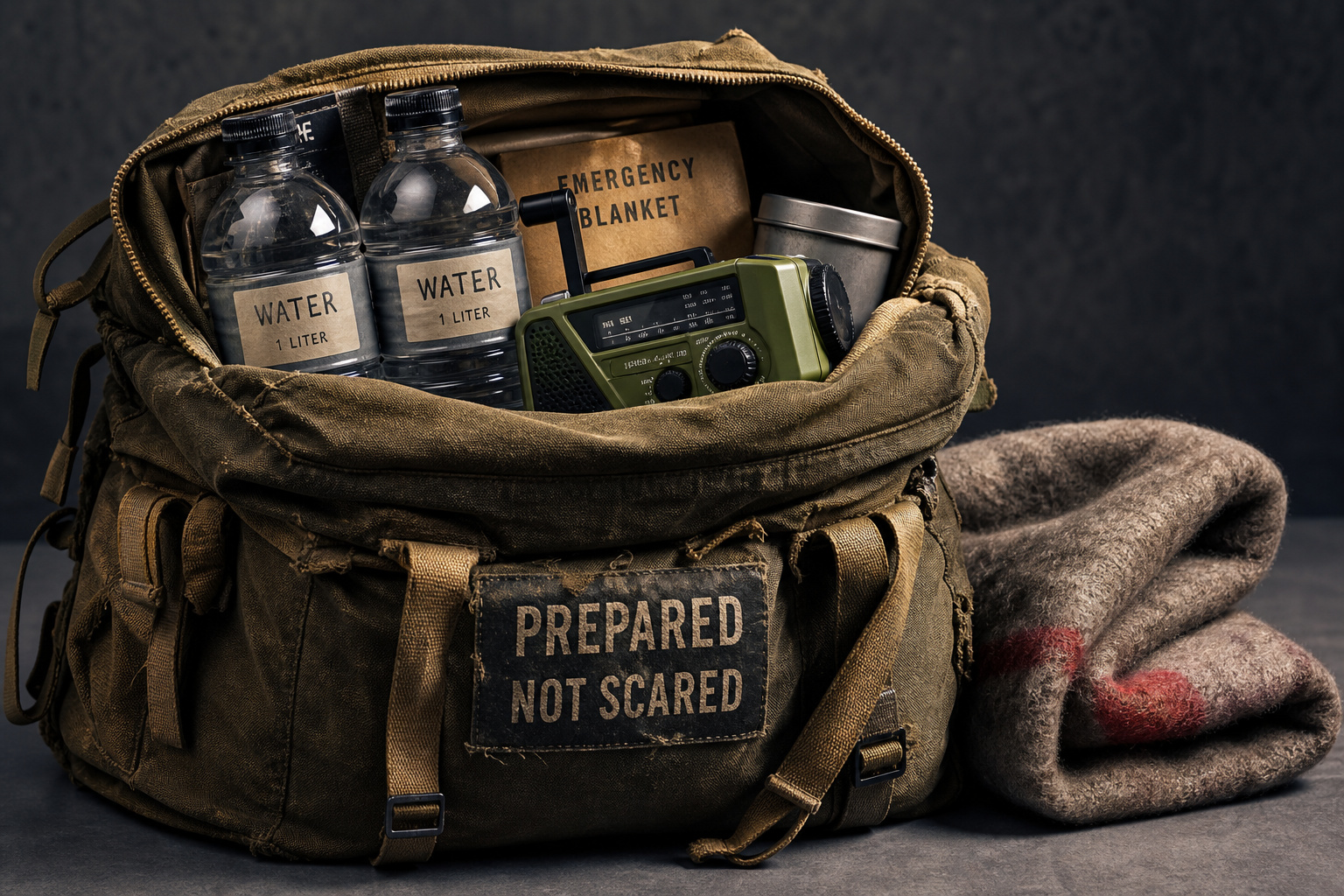
A functional emergency supply kit is measured in days and gallons. You need supplies to sustain your household for exactly 72 hours. The non-negotiable baseline is a minimum of 3 gallons of water per person. Once you have the water covered, pack non-perishable food, a robust first aid kit, a battery or wind-up radio with extra batteries, and a flashlight. Keep all prescription medications in this bag, along with your most important documents like birth certificates, passports, and insurance or bank records.
Structural Defensibility
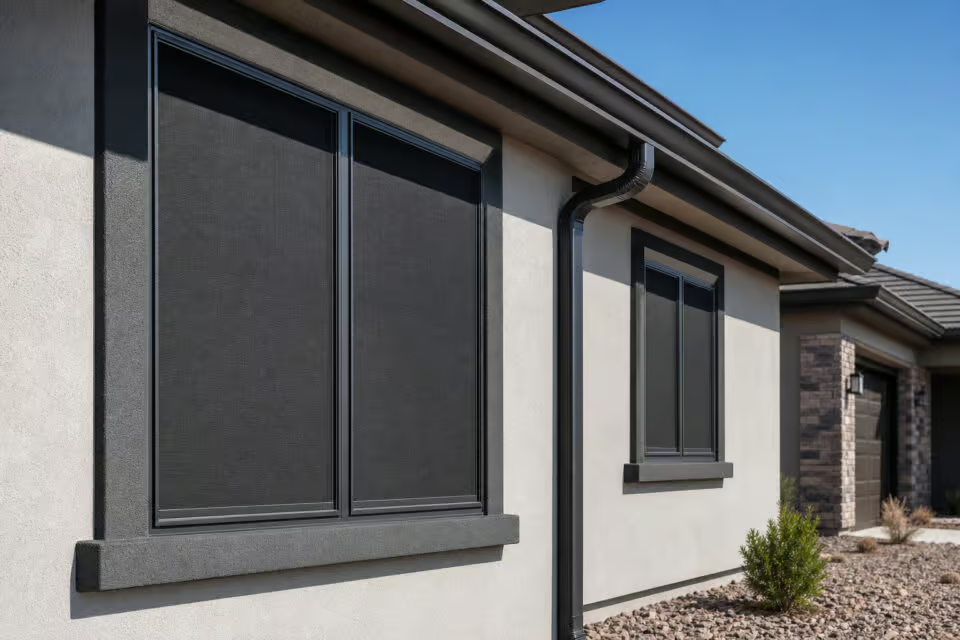
Home hardening is about keeping the microscopic threats out before the flames even reach your driveway. Guidelines promoted by the Federal Emergency Management Agency and The Hartford’s Junior Fire Marshal Program stress the necessity of a defensible space. You need to pull all flammable items—like patio furniture and firewood—away from the building’s exterior. Inside, close all doors, and move curtains away from the windows. To protect the roof, water it down along with your gutters.
The most overlooked vulnerability? Your air vents. Effective vent protection means clearing out debris and sealing them with tape or metal screens to stop atmospheric embers from blowing directly into your attic.
Fire-Safe Attire
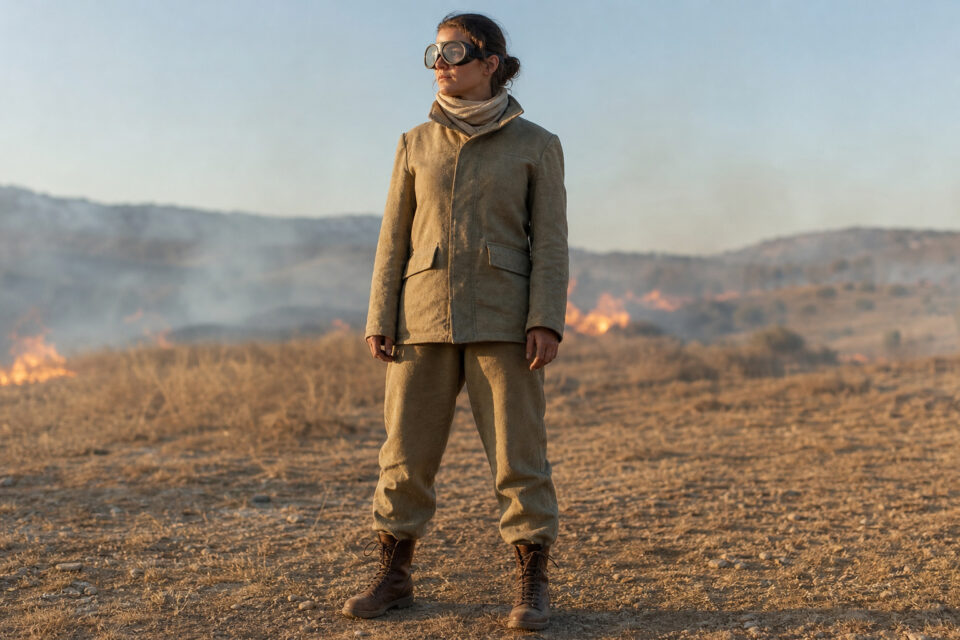
What your family is wearing when you evacuate matters just as much as what you pack. You must exclusively wear 100% natural fibers. Do not put your kids in yoga pants, athletic shirts, or any synthetic activewear. In extreme ambient temperatures, you risk horrifying synthetic melting, where artificial fabrics fuse to the skin.
Everyone needs long sleeves, long pants, heavy closed-toe boots, and a cap. Have goggles or glasses for everyone to protect their eyes, and keep a dry bandana on hand to cover your face.
Step 2: The evacuation directive and fire physics
Evacuation isn’t the time to “wait and see,” and it’s definitely not the time to hang back to defend your property. Dealing with insurance claims and lawyers is a headache for later—not while the fire is moving. California wildfire lawyer after the danger has passed. When authorities issue the order, you execute your exit plan immediately. Understanding the physics of how fire moves explains why trying to leave at the last possible second is a fatal miscalculation.
The Math of Fire Speed
Fires outpace human estimation, trapping families who delay packing the car. Look at the terrifying speed of the 2024 Jasper, Canada wildfire event or the infamous Pagami Creek fire, which demonstrated how rapidly an environment can deteriorate. Data from the Commonwealth Scientific and Industrial Research Organisation (CSIRO) shows that fire spreads at about 6 mph through dense forests. If that fire hits open grasslands, it can surge to 14 mph.
To put that in perspective, an average person jogs at about 5 mph. You cannot outrun it.
Reading Topography
If you are forced to make rapid exit decisions, you need multiple escape routes planned out. If there is only one road in and out of your neighborhood, do not enter it if the fire is near. Avoid moving toward an uphill spread or a downwind path at all costs. Heat naturally moves uphill through convection, pre-baking the trees and brush above it and causing the fire to sprint up mountainsides fast.
Step 3: Vehicle entrapment and stationary sheltering
If your escape route is hopelessly blocked by flames, driving blindly through zero-visibility smoke is how people end up crushed in accidents or driven off narrow roads. Wilderness experts and survival communities like r/Survival consistently highlight a critical mind shift here: a trapped car transitions from a getaway vehicle into a stationary bunker.
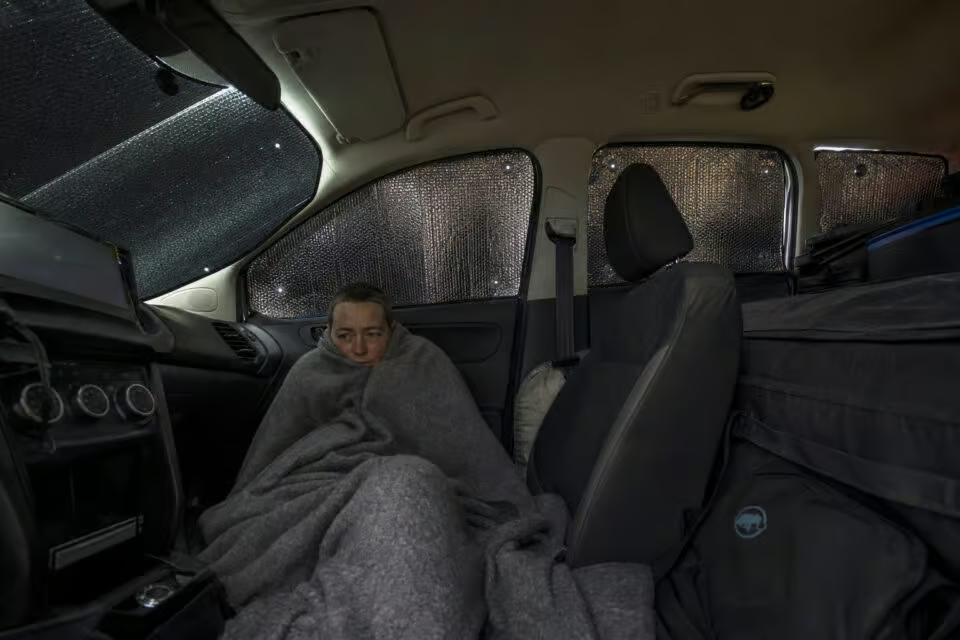
If you’re stuck in your car, the goal is to get it onto a non-flammable surface, like a wide paved road, far away from any brush or trees. Put the car in park, but keep the engine running. Turn your air conditioning on high and set it to AC recirculation to pressurize the cabin and keep outside smoke from flooding the interior. Everyone must get down low, finding footwell shelter below the window glass to escape the radiant heat. Cover yourself in a pure wool blanket—remember, no synthetics—and ensure every window and vent is tightly sealed.
Buyer rule: When trapped in a car, keep the engine running to power your AC and stay low to avoid radiant heat and toxic fumes.
Step 4: Surviving on foot and the 8-times-height safety zone
If your vehicle fails or you are caught in the open on foot, running randomly away from the flames is a guaranteed failure. You have to intentionally search for a specific geographic refuge to ride out the thermal front.
The 8-Times-Height Rule
You need to find areas entirely stripped of fuel, like a deep ditch or a large ground depression. Safety zones must meet a strict mathematical requirement: the radius of your cleared space must be at least 8-times the height of the surrounding unburned vegetation. If you can see the active flames, the clearing needs to be 4 times the height of the flame itself. Think of it this way: your clearing needs to be 8 times as tall as the fire or the brush nearby to keep you safe from that intense, radiating heat.
One Foot in the Black
Wildland firefighters rely heavily on the “one foot in the black” strategy. Fire won’t typically burn the same area twice because the fuel is already gone. Your safest physical location is often stepping onto already-burned ground, even if it is smoky. Once you reach that safety zone, lay flat on the ground face down and breathe through a damp cloth.
Step 5: Airway defense and surviving superheated gases
We tend to assume people in wildfires die from burns. The scariest part about wildfires is that the leading cause of death is actually breathing in superheated gases that race ahead of the flames.

Surviving this extreme heat exposure is entirely about protecting your family’s respiratory tract from terminal airway burns. If you are trapped outdoors without a shelter, scrape away the topsoil with your hands to dig a small hole. Bury your face down into that dirt and breathe. Because heat rises, the ambient air trapped just inches against the cool earth is significantly colder than the superheated gas passing a few feet above your back.
Step 6: Post-fire return and identifying subterranean hazards
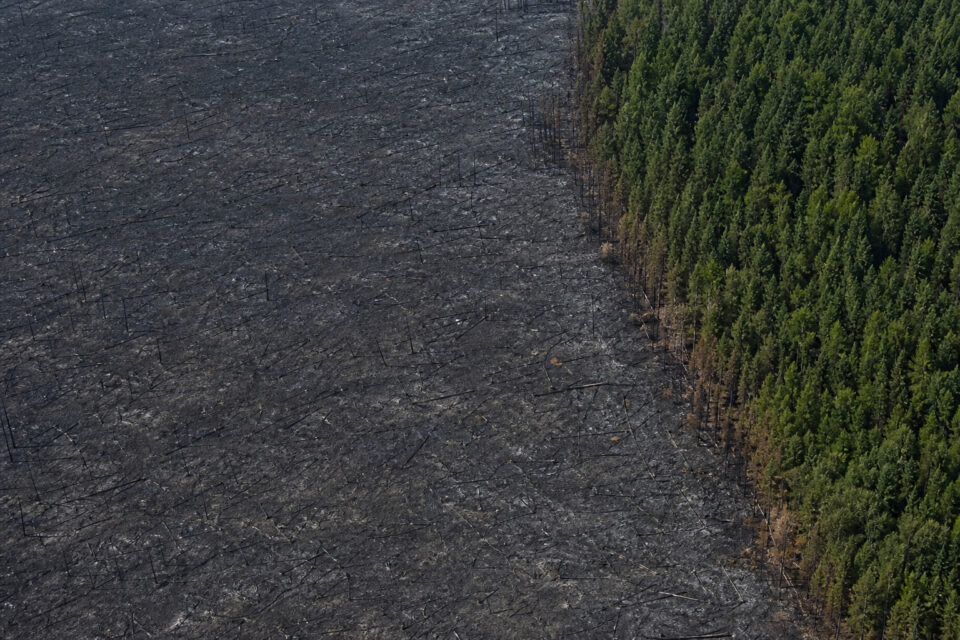
Even after the primary flames have passed and officials clear your family to return, a burn scar is still a highly lethal environment.
Before you do anything else, keep a close eye on your place. You’re looking for any smoldering smoke, sparks, or embers hiding in the attic, on the roof, or in the gutters. Wear thick-soled leather boots and heavy gloves while you work, and immediately discard any food in your home that was exposed to the heat, smoke, or soot. Keep a wide berth around damaged or downed power lines.
Finally, walk very carefully to avoid subterranean ash pits. These are massive, hidden hot voids in the ground created by totally burned tree roots. The surface dirt can look solid, but if you or your child steps on it, the ground collapses into an underground pocket of superheated ash. Being aware of what happens after the fire is as critical as the steps you took to survive the flames.
Field note: Even after the fire is out, the ground can conceal hollow ash pits that hide extreme, dangerous heat beneath a deceptive crust.
Frequently Asked Questions
What kills first in a fire?
The primary cause of death in wildfire scenarios is the inhalation of superheated gases. These gases often travel ahead of the actual flames and cause rapid, fatal respiratory failure, making protection of your airway the most critical survival priority.
What is the 30/30/30 rule for fire?
While often cited in general safety contexts, wildfire survival relies on specific environmental thresholds rather than fixed rules. Focus on avoiding areas with fuels that reach 30 percent dryness or less, as these landscapes allow fire to spread significantly faster than human running speeds.
Can I outrun a wildfire on foot?
No. In dense forests, fire moves at approximately 6 mph, but if it reaches open grasslands, it can surge to 14 mph. Since the average human jogs at about 5 mph, attempting to outrun a fire is a mathematical impossibility.
Why does wearing synthetic clothing increase fire danger?
Synthetic fabrics like polyester or nylon are prone to melting when exposed to extreme ambient heat. This can cause the material to fuse directly to your skin, leading to severe burns that natural fibers like 100% cotton or wool help prevent.
If I am trapped in my car, what is the best way to survive?
Turn your vehicle into a stationary bunker by parking on a non-flammable surface, such as a wide paved road, away from trees or brush. Keep the engine running with the air conditioning on ‘recirculate’ to pressurize the cabin, stay low in the footwell to avoid radiant heat, and cover yourself with a natural fiber blanket.
What is the 8-times-height safety zone rule?
This is a distance requirement for finding a refuge when caught in the open. Your cleared, non-flammable refuge area—such as a deep ditch or clearing—must have a radius that is at least 8 times the height of the surrounding unburned vegetation to protect you from intense radiant heat.
How do I breathe if I am trapped outdoors by a wildfire?
If you are caught in the open, your best defense against superheated gases is to scrape a hole in the dirt and bury your face against the ground. The air held immediately against the cool earth is significantly colder and safer to inhale than the superheated gases passing through the air just a few feet above you.
What are the hidden dangers after a wildfire has passed?
A major post-fire threat is the ‘ash pit,’ which is a large, hollow void created underground by burned-out tree roots. These pits can be covered by a thin, deceptive crust of dirt that looks solid but will collapse immediately if stepped on, exposing you to the hidden, extreme heat inside.