
You are staring at a deeply sentimental rose bouquet—maybe it’s from a funeral, a wedding, or the day you finally brought your new baby home—and you need to know exactly how to pause its structural decay without ruining it through novice DIY mistakes. Right now, you want step-by-step methods to dry those flowers so you can keep the memory intact. Unfortunately, as the roses sit right-side up in a vase on your kitchen counter, gradually drooping while you try to formulate a plan, you are caught in the classic “wait-and-decide” standoff.
Here at Tidbits of Experience, Preserving sentimental flowers is a common challenge, and improper techniques can lead to permanent structural or color damage. Unless you have access to commercial freeze-drying equipment capable of safely sublimating the ice, DIY freeze-drying is out of the question. Every home preservation method requires accepting a specific trade-off between structural integrity and color loss.
Key Takeaways
Hanging roses upside-down prevents flattening and buys you 2-3 weeks of safe storage while you decide on a permanent display.
Chemical desiccants are mandatory to support wide-open blooms, requiring about 2-3 kg of material to fully submerge a standard bouquet.
Encapsulating fresh flowers in resin without aggressive pre-drying traps moisture and will cause the organic material to rot inside the casting.
Table of Contents
Pre-preservation Triage: Preparing Stems to Halt Decay
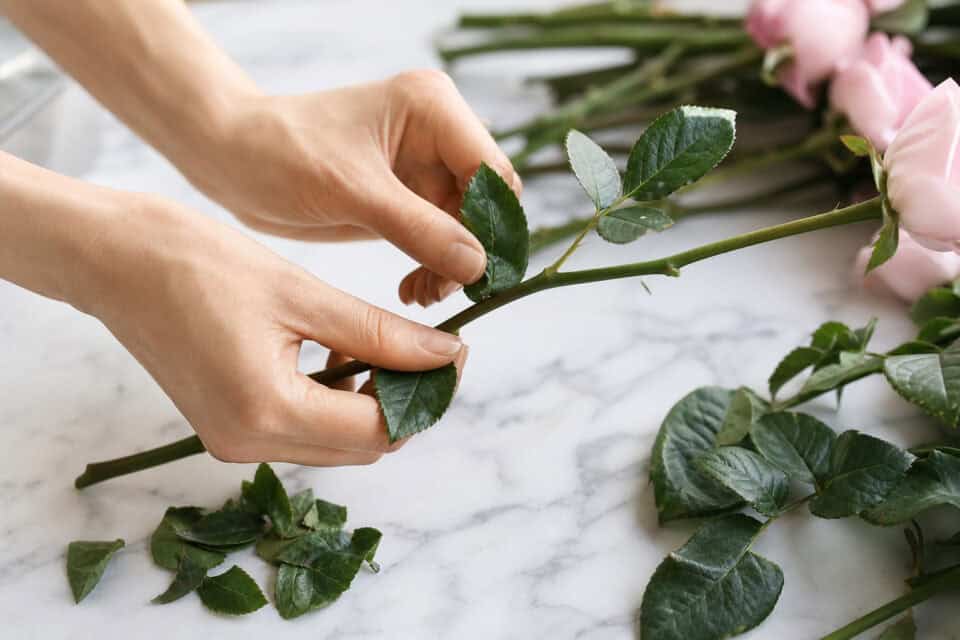
To halt decay, you must pull the bouquet apart immediately. Selecting and trimming your roses involves inspecting your remaining stems as rigorously as an experienced florist. According to the preservation blog Thesmellofroses.com, you need to aggressively strip away all the leaves—they hold on to water and rot rather than dry. If you are clipping from a garden, always pick morning roses when they are naturally dry of dew. Next, cut the stems down to at least six inches long.
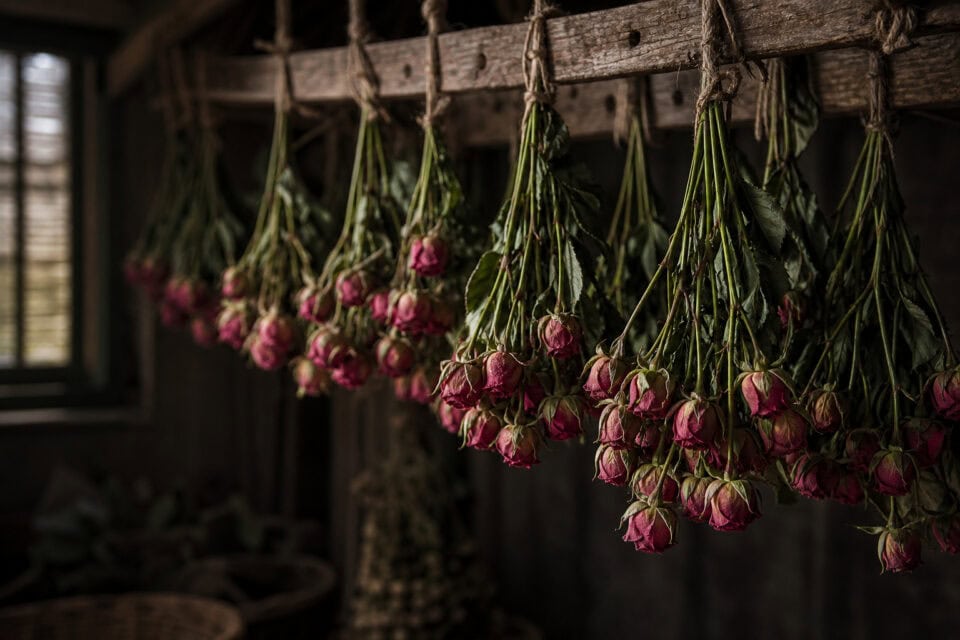
Finally, find a warm, dark, well-ventilated space like an open closet. For the air-drying method, hang the stems upside down. This immediate step prevents gravity from flattening your falling petals while you catch your breath and decide on a final method.
Passive Air-drying: Best for Closed Tighter Shapes
Hanging your flowers from the ceiling is the easiest, lowest-effort method, but there is a major botanical catch. Passive air-drying is strictly optimal for closed rosebuds because the tight, overlapping petals naturally hold their shape against gravity.
If you are air-drying, make sure there is no moisture trapped between the petals before you string them up, or you’ll invite hidden mold. Leave them suspended in your dark, dry, well-ventilated spot. The dehydration process takes anywhere from 2-3 weeks. Do not touch them during this window.
Silica Gel Immersion: Structuring Wide Blooms
If your flowers are already at their peak, passive hanging is a terrible idea. Fully open blooms lack internal tension, meaning gravity and dehydration will cause immediate petal loss before the flower has time to cure.
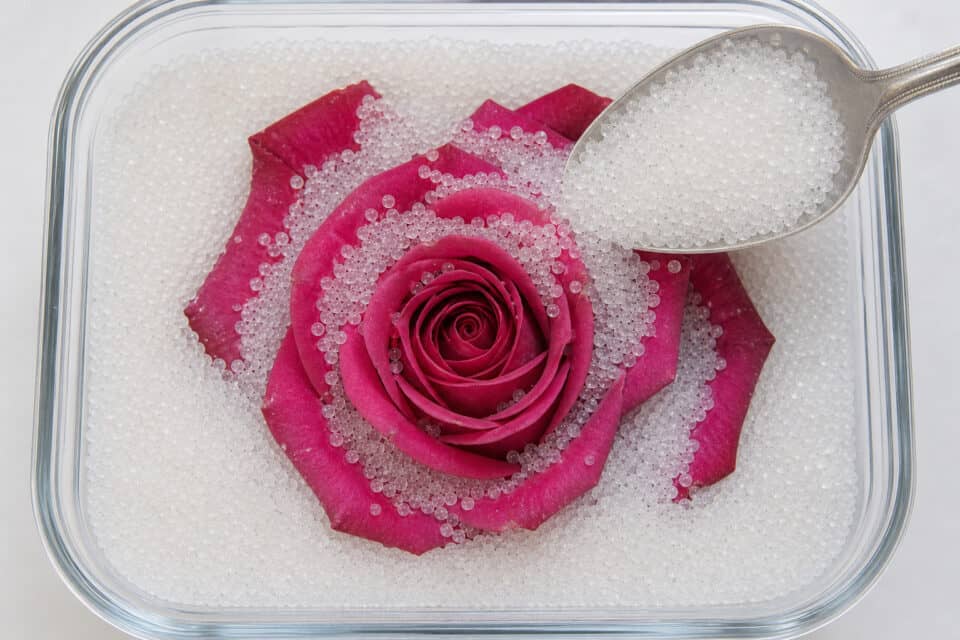
To save wide flowers—whether for a sentimental shadowbox display or as a lasting physical reference for floral tattoo designs—you’ll need to provide physical scaffolding while pulling out the moisture. You gently bury the blooms in an airtight container until they are completely submerged. However, most tutorials undersell the volume you need. To bury a full arrangement, you are going to need about 2-3 kg of the sand-like desiccant base.
Leave them sealed for a few days to a week. Some people try throwing clumping cat litter in a container as a cheap hack, but true silica gel beads are the mandatory choice here and perform drastically better.
“To save wide flowers, you need to provide physical scaffolding while pulling out the moisture.”
Professional preservationists warn that perfectly preserved, vivid color is largely an internet myth. Silica gel holds the physical 3D structure, but it often removes pigments, fading beautiful deep purples into a muted grayish color.
Vase-drying Techniques for Miniature Spray Roses
For tiny miniature or spray roses, use a simple upright dehydration method.
Empty all the water from the display vase to prevent stem rot. Leave the spray roses—often saved from luxury rose bouquets—standing upright. This method leans entirely on having a controlled, hot internal temperature in your house to flash-evaporate the internal moisture naturally. It only works for very small blooms that don’t carry much water weight.
Microwave Dehydration: Rapid Drying for Loose Heads
For rapid dehydration of detached flower heads, use a microwave-based drying process.
You place the short stems or detached flower heads on some greaseproof paper. (You can also bury them in a microwave-safe container with optional desiccant during this process to prevent deformation). But be incredibly careful: you must use the lowest heat setting. Microwave drying demands that you stop and check the organic matter every 45-60 seconds so you extract the moisture without cooking the flower into a burnt crisp.
Flat Book Pressing: Creating 2D Functional Keepsakes
If you don’t care about keeping a 3D centerpiece on your dining table, transitioning your roses into a flat, papery texture makes them perfectly viable for functional keepsakes like framed stationery, journals, or bookmarks.

To press a flower properly—perhaps to preserve a cherished wedding bloom originally scattered by a child within the typical flower girl age limit—open a heavy book and line the pages with wax paper to protect the book from weeping plant moisture. Place your loose flowers face-down, ensuring there is zero physical overlap. Close it up and stack more weight on top. Pressing is a lesson in patience—you need to leave the book untouched for 10 days to a full month for the moisture to completely transfer out.
Resin Encapsulation: Navigating Modern Botanical Casting
Pouring a crystal-clear memorial sphere or piece of heirloom jewelry is all over social media right now, but it’s fundamentally a two-step process.
Your flowers must be pre-dried (typically with a desiccant) until they are brittle. If you pour epoxy over a fresh bloom, the entrapped biological moisture has nowhere to go, and the flower will just rot into a brown lump inside the cured casing. Resin encapsulation requires at least 3-5 failed tests to master. Navigating the exothermic heat (>70°C) generated by curing epoxy can easily ruin a priceless memory if you’ve never mixed it before.
Post-preservation Aesthetic Remediation and Display Limits
Dried floral arrangements are fragile; you’ll need to protect them from common environmental hazards to help them last.
Defending Against Sunlight and House Dust
Direct sunlight bleaches petal pigments within 30-60 days. You also have to rethink your cleaning routine. Because dried arrangements are incompatible with physical dusting, you’ll need to house the bouquet under a sealed glass dome to prevent environmental dust accumulation entirely. If you try to wipe a dried rose with a microfiber cloth, the paper-thin petals will shatter.
Restoring Crushed Blooms
Avoid using hairspray to stabilize petals, as the product causes yellowing and encourages brittleness within 24 months. Giving your flowers a coat of hairspray might hold them firm, but it results in yellowing and makes petals brittle within 24 months. If your arrangement gets accidentally mashed or flattened, you do have a gentle remediation option: hold the flower carefully above some rising kettle steam for just a few seconds to soften and reshape the crushed outer petals.
Reimagining Degraded Petals as Artistic Memorials
If the original flowers crack or degrade beyond repair, consider turning the petals into keepsakes or commissioning art.
If your petals are completely detached but perfectly dry, you can pluck them down, mash them with clay-like binders, and roll them into heirloom rosary beads—just like Reddit user u/TimeLuckBug successfully managed. Alternatively, step entirely outside of decay. Commissioning permanent artwork based on a photo reference, like user u/JSheehyArtwork’s gorgeous 16×20 pastel drawing of a decade-old wedding bouquet, guarantees your memory will outlast any organic matter.
Living Propagation: Sourcing Life From Wilted Stems
There’s a contrarian approach to preserving a flower: stop trying to mummify dead plant matter and use the surviving genetics to spawn a living memorial. Propagation from cutting is your method for success. If your bouquet still has a healthy green stem, you can try propagating an entirely new rose bush. Take a viable 2-inch segment of the stem cutting, slice it diagonally at both the top and bottom, coat the bottom slice in standard rooting hormone, and drive it down into a simple bucket of moist sand. Bringing a living clone of a bouquet rose into your garden offers a lasting alternative to dried arrangements.
Frequently Asked Questions
How do I preserve a rose from a bouquet?
The best method depends on the bloom’s state. For tight buds, hanging them upside down in a dark, ventilated space is effective, while wide-open blooms require burial in 2–3 kg of silica gel to prevent petal collapse.
How to preserve a rose as a keepsake?
You can press flowers in a heavy book for 2D items like bookmarks, or use silica gel to dry them for 3D shadowbox displays. If you want to use resin, you must thoroughly pre-dry the rose first; otherwise, trapped moisture will cause the organic material to rot inside the casting.
How do you make a bouquet of roses last longer?
To extend their life in a vase, ensure they are kept away from direct sunlight, which bleaches colors within weeks. Once they begin to wilt, you can transition them to drying methods like hanging them upside down or upright dehydration to prevent total decay.
Is it better to air-dry or use silica gel for roses?
Air-drying is best for closed buds as it requires no extra materials, but it is unsuitable for open blooms that lack internal tension. Silica gel is the superior choice for preserving the 3D structure of wide-open flowers, though it may cause some pigment loss.
Can I use hairspray to keep my dried roses from falling apart?
No, you should avoid hairspray as it causes yellowing and increases brittleness over time. Instead, keep dried arrangements in a sealed glass dome to protect them from dust and physical damage, as the petals are too fragile to be cleaned manually.
Why does my rose turn brown when I put it in resin?
This happens because the flower was not sufficiently dried before encapsulation, meaning it is still biologically active. To succeed with resin, you must use a desiccant to remove all internal moisture until the bloom is brittle before you begin the casting process.
How much silica gel do I need for a whole bouquet?
To properly submerge and support a full arrangement, you will need approximately 2 to 3 kg of silica gel. Attempting to use less can result in uneven drying or the petals collapsing under their own weight during the process.