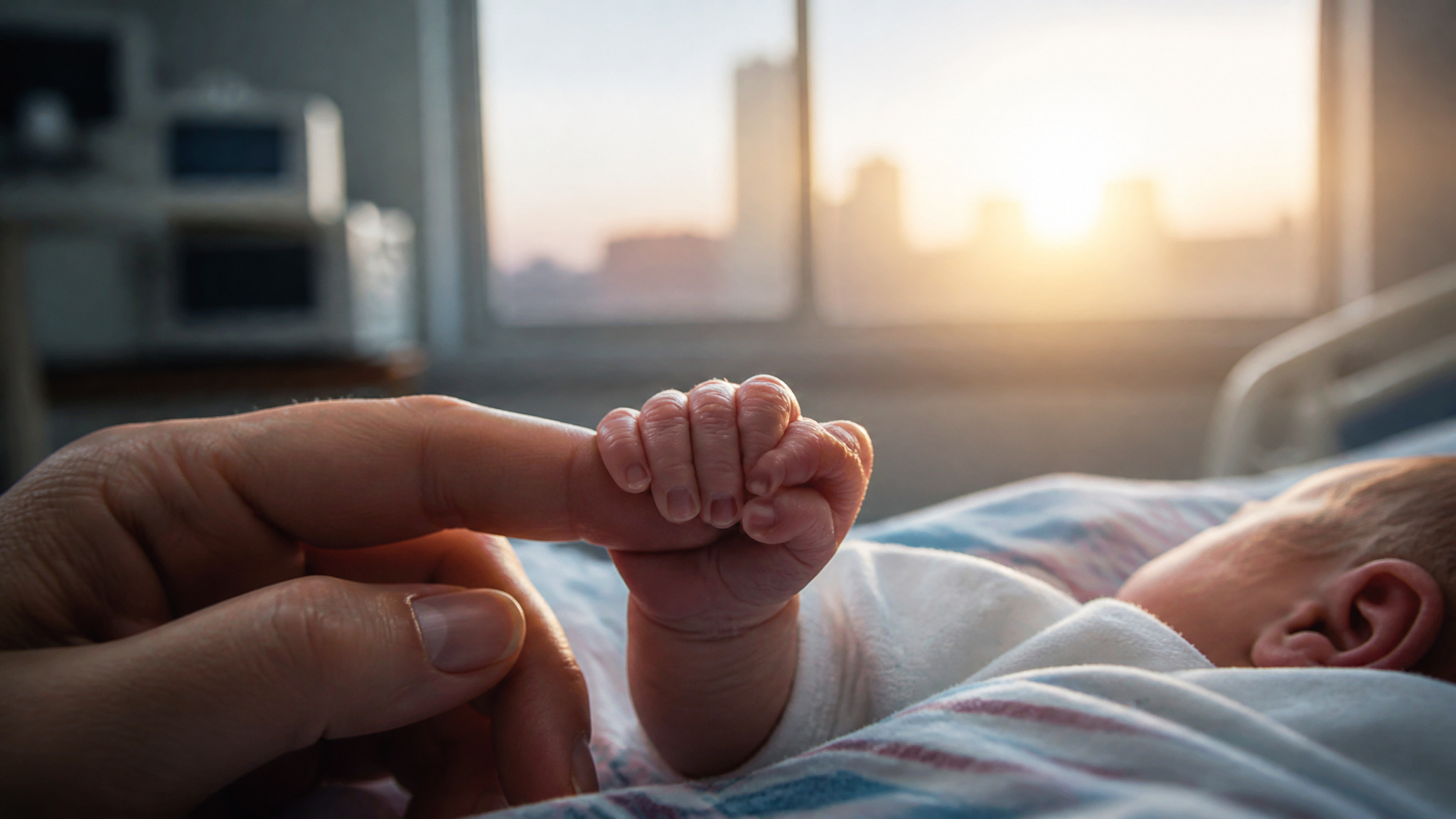
October 2022. A hospital room in Lviv, Ukraine. Melanie Rivarola is about to give birth by C-section when the air-raid siren starts.
Her phone has no signal. Her husband is somewhere she can’t reach. Outside, the war is doing what it does. And then Juliana arrives anyway, healthy, 38 weeks, born into a country at war.
Melanie is from Florida. When doctors told her she had less than a 5% chance of getting pregnant, she and her husband started looking at surrogacy. American prices, $110,000 and up, were out of reach. A friend pointed them to Delivering Dreams, a Ukrainian agency.
They flew to Kyiv in November 2020. Their surrogate, Darya, got pregnant in February 2022.
Russia invaded two weeks later.
Eight months after that, Melanie was on a delivery table in Lviv listening to the sirens. Getting home took a trip to Warsaw and an emergency US passport, issued under a temporary wartime arrangement between the two governments. Her story ended well, better than well, actually. She got her daughter home.
That’s the best-case version of surrogacy in Ukraine during the war. You should know exactly what the best case looks like, because it’s the version the agencies put in the brochure, and the reality underneath it is a lot more complicated.
Before the invasion, Ukraine was the world’s second-largest commercial surrogacy market, handling up to a quarter of a global industry worth $14 billion. Three years into the war, the numbers have nearly returned to pre-war levels. Delivering Dreams alone had 44 pregnant surrogates in fall 2024.
So yes, it’s still legal, and people are still doing it. Here’s what that actually involves.
Key Takeaways
Melanie got her daughter home from a Lviv C-section during an air raid, and that is the version the agencies put in the brochure.
Most intended parents come for the price ($30,000–$50,000 versus $110,000+ in the US), while the women carrying the pregnancies do it for about $25,000 in a country where the average wage is $6,400.
Ukrainian papers name you as the parents from conception, but the second you cross a border the law can treat the surrogate as the mother, and if the intended parents never come back the child has nowhere clean to go.
Table of Contents
Why Ukraine? Mostly the price
Let’s get the obvious out of the way immediately. In the US, surrogacy runs $110,000 or more. In Ukraine, you’re looking at $30,000, $50,000. That’s the entire story for most intended parents, a legitimate one. Lower cost of living and cheaper medical care, plus a surrogacy law that’s been on the books since 2002.
You don’t have to live there for the process. Paperwork happens remotely; biomaterial gets shipped. You can use your own eggs and sperm, or the clinic’s egg bank.
Eligibility is where it gets specific. Ukrainian law requires intended parents to be a married couple who can’t carry a pregnancy themselves, documented with medical certificates. Single people and same-sex couples are officially outside the law, though recent court rulings and agency policies have opened options for single intended parents. If that’s you, read our separate guide on [surrogacy for single parents in Ukraine] before you make any assumptions.
For the full process, clinics, contracts, timelines, costs, there’s our [comprehensive guide to surrogacy in Ukraine]. This article is about something else: what it’s actually like on the ground, in a war.
How the war changed the industry
The invasion didn’t just disrupt individual pregnancies; it forced the entire surrogacy sector to adapt overnight. Agencies had to rethink logistics and safety protocols overnight, and those changes are still in place.
What the agencies did when the invasion hit
The day the invasion started, agencies went into triage. Pregnant surrogates were moved to safer parts of the country. Embryos went into liquid nitrogen. Some surrogates and intended parents evacuated together, one couple made it to Warsaw on a 24-hour train ride, at 39 weeks pregnant, and the baby was born in a private hospital in Poland. More on that later, because the story doesn’t end at the border.
Agencies resumed advertising by mid-2022. One contract was signed in June 2022, two months into the war. And by fall 2024, volume had nearly returned to pre-war levels.
The cost of keeping it running
That doesn’t mean business as usual. The war has hammered Ukraine’s medical infrastructure: nearly 1,900 medical facilities damaged or destroyed. More than 100 civilian doctors killed. In July 2024, a missile strike hit the Okhmatdyt children’s hospital, two people died. A nearby maternity clinic lost seven more, including a doctor who had worked with Delivering Dreams.
Pregnancies themselves carry higher risk now. The UN documented rising rates of premature births and C-sections across the country; one doctor cited a 50% increase. Air-raid sirens send women to bomb shelters. Roads close and appointments get missed. The stress doesn’t stay outside the pregnancy.
What it’s like to be a surrogate in wartime Ukraine
To understand the reality of surrogacy under fire, you have to start with the women themselves. Their reasons, their circumstances, and their daily lives reveal a picture far more complex than the agency brochures suggest.
Who’s doing this, and why
Karina is 22. She was 17 when her home in Bakhmut was destroyed. She moved to Kyiv, couldn’t find work, and one day found herself in a shop, unable to afford bread and nappies for her toddler. That’s when she decided to become a surrogate.
She said it plainly: the war led her to it. She wouldn’t have considered it otherwise.
There’s another Karina in this story: 26, widowed, mother of two, carrying a baby for a German couple who send her photos of their pets. And there’s Ira, 34, a mother herself, who found out about surrogacy when a friend invited her to a Viber group chat. She thought about it for three years. She’s never met the Portuguese couple she’s carrying for. She’s doing it for the money, about $25,000, she says, with plans to open a nail salon in her hometown.
Anastasia Lukinova oversees surrogacy applications at Alice Fertility Clinic, an office building beside a park, with two exam rooms and a lab, offering IVF, fertility treatment, pregnancy support, egg storage, and surrogacy. The main reason women do this, she says, is financial: buy an apartment, a car, fund their kids’ education.
Recruitment reflects that. One agency’s AI-generated ad showed a woman choosing between buying wood for the stove and buying clothes for her kids. You either understand that ad or you don’t. If you don’t, you’ve never been that broke.
The money
The standard arrangement: around $25,000, half of it paid when the baby is handed over. During the pregnancy, $300, $400 a month.
For context: the average yearly wage in Ukraine is about $6,400. A surrogate’s fee is roughly four times her annual income, life-changing money in a war economy.
But here’s the part that should make you uncomfortable. Half the fee arrives at the end. So the surrogate carries the pregnancy, the war, the risk, and then hands over the baby and receives the second half. If something goes wrong, and in a country at war, things go wrong, she has no leverage.goes wrong, and in a country at war, things go wrong, she has no leverage.
In one documented case, a surrogate lost one of her twins during the pregnancy, and her fee was cut from £15,500 to £12,500. It was written into her contract.
Agencies typically provide housing during the pregnancy. Karina, the one from Bakhmut, lives in an apartment on the outskirts of Kyiv, paid for by her agency. Some surrogates share flats with their own rooms.
And the risks aren’t only financial. A Canadian study found surrogate pregnancies already carry higher rates of complications than other pregnancies. Add a war, the sirens, the missed appointments, the constant stress, and you have a body working hard under the worst possible circumstances.
The surrogate’s choice: stay or go
When the invasion hit, some surrogates evacuated, to Poland, to neighboring countries, wherever the intended parents could get them. But not every surrogate could leave, and not all of them wanted to. For some, there wasn’t really a choice: they didn’t want to be separated from their own families, the war had already done enough of that, and they didn’t want to leave their country.
Agencies say they now have evacuation plans for surrogates, with pre-arranged routes to Poland and elsewhere. But plans on paper meet reality in the form of a woman nine months pregnant on a train platform with a war outside the window.
The legal maze after the baby arrives
Getting the baby out of Ukraine is only half the battle. Once the child is born, a new set of legal challenges emerges, especially when crossing international borders with a birth certificate that many countries refuse to recognize.
When the border becomes a wall
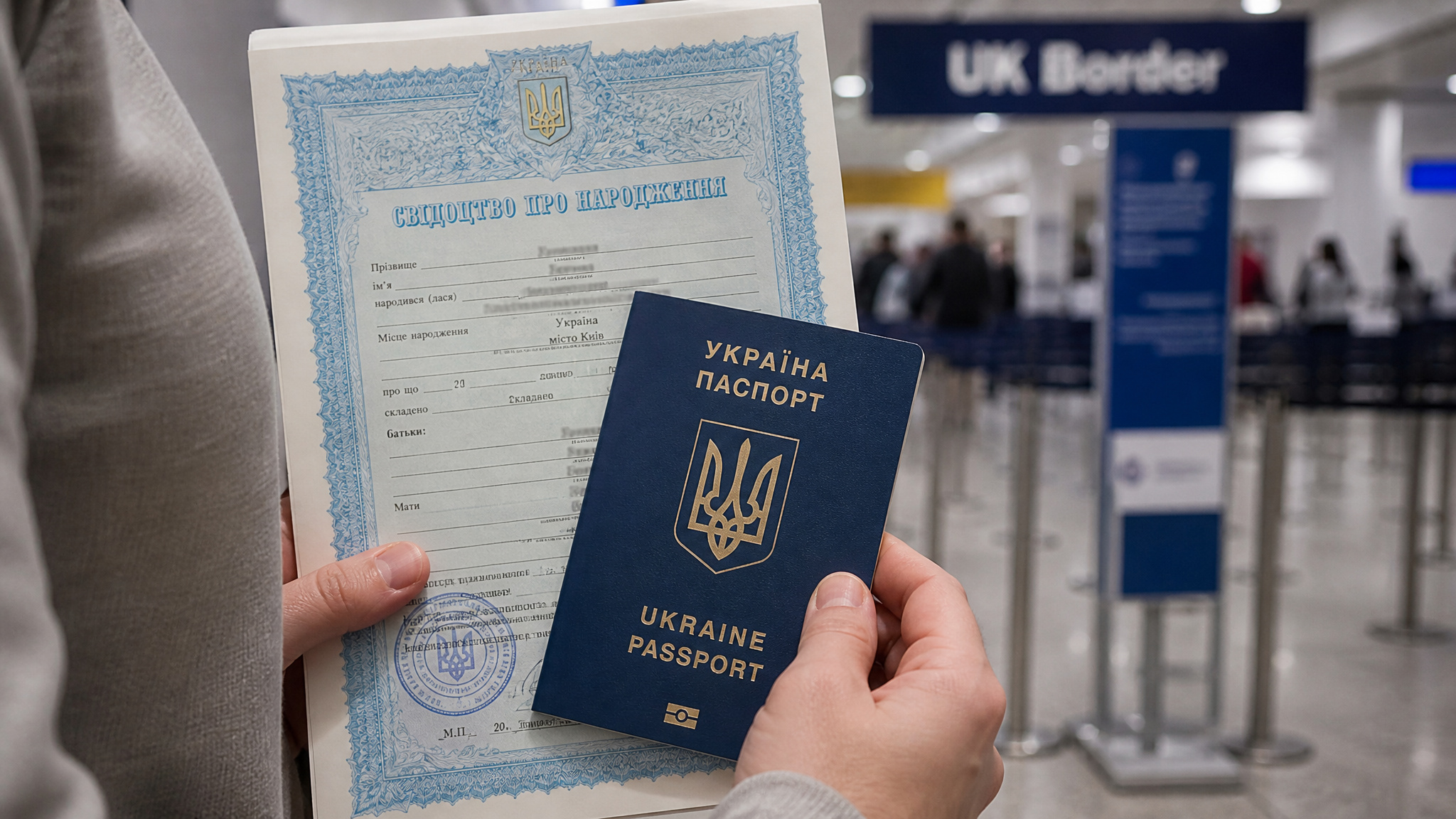
Here’s the part nobody tells you in the initial consultation. Ukrainian law gives intended parents parental rights from the moment of conception, and the eligibility framework under ukraine surrogacy laws for foreigners determines who can pursue this path. Ukrainian birth certificates list the intended parents as the parents. That’s the whole point of doing it there.
But that’s Ukrainian law. The moment you cross a border, the rules change.
Germany, for example, has a rule under §1591 of the Civil Code: the legal mother is the woman who gave birth. Full stop. A Ukrainian birth certificate naming you as the mother means nothing in a German civil registry. One German mother, Simone, went through exactly this, passport difficulties, because under German law she wasn’t the legal mother, and no German document said she was.
Poland doesn’t recognize Ukrainian surrogacy contracts, either. Remember that couple who evacuated to Warsaw at 39 weeks pregnant? The baby was born in a private hospital in Poland, and then came the legal battle, fought across two countries, Poland and Korea, to get the intended parents recognized as the parents of their own child.
If you’re considering this route, understand the [surrogacy laws for foreigners in Ukraine] before you commit, and then get a lawyer in your home country to walk you through the return trip.
The ethical fight about surrogacy
Beyond the practical and legal hurdles, surrogacy in Ukraine sits at the center of a heated ethical debate. The industry’s defenders and critics clash over what it means to create families in the middle of a war, and that conflict has nearly changed the law itself.
The ban that almost happened
The moral panic around Ukrainian surrogacy is nothing new. In 2020, the former presidential commissioner for children’s rights posted on Facebook, warning that insufficient checks meant gay couples were slipping through the system.
In March 2023, it got more serious: a bill introduced in parliament would have banned foreigners from using surrogacy in Ukraine entirely, a massive deal, because foreigners make up about 95% of intended parents. The ban would have applied during martial law and for three years after it ended.
The bill’s author was Viktoria Wagnier. It drew fierce opposition from women’s rights activists, including Maria Dmitrieva, and from Oksana Kashyntseva, who argued for regulation over an outright ban. In May 2023, the bill was rejected.
Agencies frame the industry differently: the income, the medical care, the economic lifeline in a war economy. And they point out that war is precisely when women need money most. The surrogates I’ve described don’t sound like victims, they sound like people making calculated decisions with their eyes open. But the calculation is happening under duress, and when the duress is a war, the line between choice and necessity starts to blur.
When deals fail: the children the industry forgets
And then there’s the part nobody puts in the brochure. Sometimes the intended parents don’t come back.
In one documented case, a child born through surrogacy was left at an agency for six years. Six years. Eventually, the agency moved the child to a state facility. The intended parents were unreachable. The contract said they were responsible; they weren’t answering.
If the intended parents can’t be reached, or the baby has significant medical needs they can’t face, the agency is stuck holding the baby. Ukrainian law doesn’t have a clean mechanism for this outcome, because the law assumes the parents come back. They usually do. Usually isn’t always.
So, what should you do with all this?
If you’re reading this because you’re considering surrogacy in Ukraine, here’s what I’d want you to carry into that decision.
The system works. Melanie got her baby home. Babies are being born, contracts are being honored, and the industry is a major economic driver in a country that can’t afford to lose it, post-war reconstruction plans include reviving it, and the agencies are already positioning for the peace.
But the system works because of what the women carry, literally. The pregnant bodies in bomb shelters. The 24-hour train rides at 39 weeks. The contracts with the fee cut if something goes wrong. The surrogates who stayed because they didn’t want their own children growing up without them.
If you do this, do it with your eyes open. Start with our [comprehensive guide to surrogacy in Ukraine]. Understand the legal requirements before you sign anything. And if you’re outside the official eligibility box, single, or a same-sex couple, read the [guide to surrogacy for single parents in Ukraine], because the legal risk you’re carrying is real.
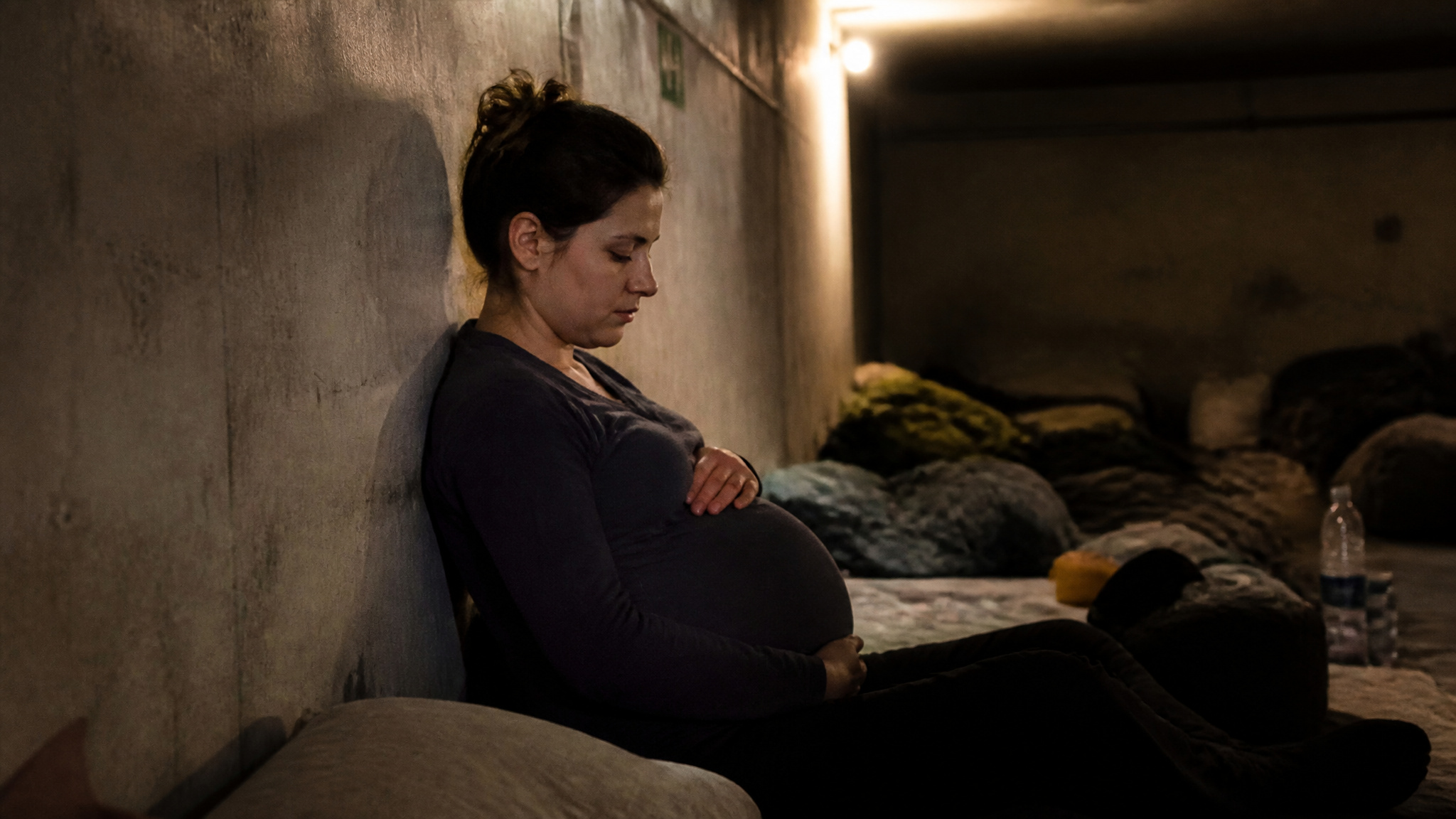
And don’t forget who’s at the center of this. A woman in a bomb shelter, carrying your baby while the sirens go off, half her fee paid when she hands the baby over, per her contract. The system calls her a surrogate. The contract calls her a service provider. But she’s the one who decides, every morning the sirens wake her, that she’s going to keep getting up, keep going to the clinic, keep carrying that baby to term in a country at war.
That’s who’s at the center. Whatever you decide, carry that with you.
Frequently Asked Questions
Is surrogacy still legal in Ukraine?
Yes, commercial surrogacy remains legal in Ukraine. The law has been in place since 2002, and despite the war, the industry has nearly returned to pre-war activity levels. A 2023 bill that would have banned foreigners from using surrogacy during martial law was rejected by parliament.
How did the war affect surrogacy in Ukraine?
The invasion forced agencies to relocate surrogates to safer areas, store embryos in liquid nitrogen, and arrange evacuations. Some surrogates left the country, but many stayed. By fall 2024, the number of pregnancies had nearly returned to pre-war levels, though medical infrastructure damage and stress have increased pregnancy risks.
Why do women become surrogates in Ukraine during the war?
The primary motivation is financial. A surrogate’s fee of about $25,000 is roughly four times the average yearly wage in Ukraine, offering life-changing money in a war economy. Many women use it to buy apartments, fund their children’s education, or start businesses. Some say the war directly led them to surrogacy because they needed the income.
What are the risks for surrogates in wartime Ukraine?
Surrogates face higher pregnancy risks due to stress, air-raid sirens, missed medical appointments, and damaged healthcare infrastructure. They also carry financial risk: half their fee is paid only after the baby is handed over, and contracts can include fee reductions if complications occur. Some surrogates have had their pay cut when a twin was lost during pregnancy.