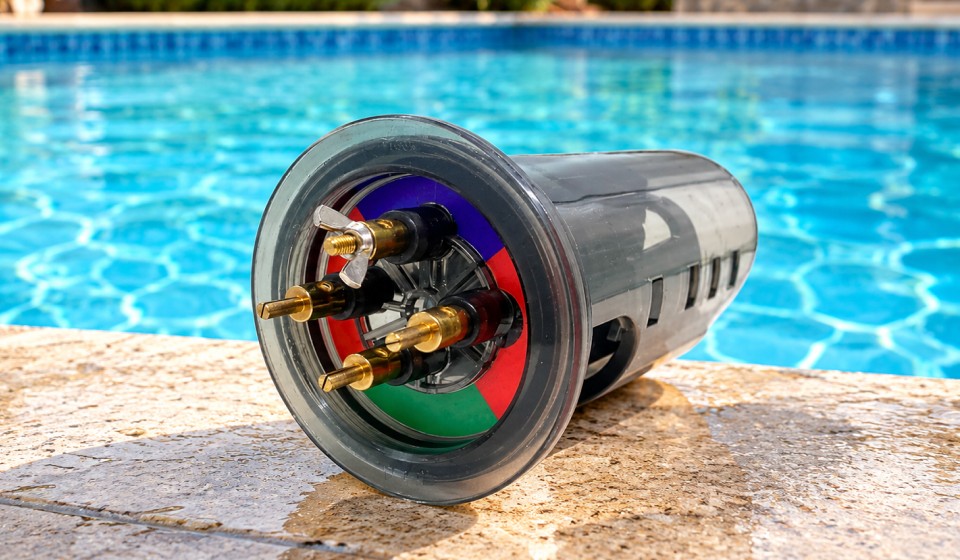
A salt water chlorinator helps keep pool water sanitized by converting dissolved salt into chlorine. The salt cell is a key part of this system, but it gradually wears down with regular use. Calcium deposits, water chemistry, operating hours and general wear can all affect its performance. When chlorine levels start falling, or the chlorinator shows repeated faults, salt cell replacement may be necessary. Understanding a salt cell’s lifespan, warning signs and maintenance needs can help keep the chlorinator running efficiently and prevent premature replacement.
What Is a Salt Cell?
A salt cell is a component of a salt water chlorination system that converts dissolved salt into chlorine. Water passes through the cell while an electrical current moves across specialized metal plates inside it. This process produces chlorine, which helps control bacteria, algae and other contaminants in the pool.
Over time, the metal plates inside the cell gradually wear down, which can reduce chlorine production. Regular cleaning and balanced pool water can help minimize scale build-up and keep the cell working effectively for longer.
How Long Does a Salt Cell Last?
A salt cell can work effectively for several years, but its chlorine production will gradually decrease as the internal plates wear down. How long it remains effective depends on the chlorinator, pool conditions, water chemistry and how frequently the system operates. Regular maintenance can help reduce unnecessary wear and keep the cell producing chlorine effectively for longer.
Several factors can affect how long a cell lasts:
- Water temperature: Warmer water can increase chlorine demand, which may require longer chlorinator operation.
- Water flow: Poor or restricted water flow can affect how effectively the cell operates.
- Cell plate condition: Calcium deposits and physical wear can reduce the cell’s performance.
- System run time: A chlorinator operating for long periods places more operating hours on the cell.
- Pool size: Larger pools may require greater chlorine production to maintain suitable sanitation.
- Chlorinator condition: Problems with the control unit, sensors or other components can affect cell performance.
Signs Your Salt Cell Needs Replacing
A failing salt cell can show several warning signs, including low chlorine production, error messages, calcium build-up and visible damage.
Low Chlorine Production
A noticeable drop in chlorine production can indicate that the cell is approaching the end of its working life. If salt levels, water chemistry and chlorinator settings are correct but chlorine remains low, the cell may no longer be producing chlorine effectively.
Frequent Chlorinator Error Messages
Repeated chlorinator error messages may indicate a problem with the salt cell or another component. If the warnings continue after checking salt levels and water flow, inspect the system to determine whether the cell needs cleaning, repair or replacement.
Excessive Calcium Build-Up
Calcium deposits can collect on the salt cell plates and reduce chlorine production. If heavy build-up keeps returning after cleaning, it may indicate that the cell is wearing out or that pool water chemistry needs attention.
Visible Damage to the Cell
Cracks, damaged plates, deteriorated connections or other physical damage can indicate that the cell needs replacing. A damaged cell should be inspected to ensure it is safe and suitable for continued use.
Reaching the Expected Lifespan
As a salt cell gets older, its chlorine output can gradually decline. If the cell is no longer performing well despite proper maintenance and water balance, replacement may be necessary.
Tips for Maintaining a Salt Cell
- Maintain proper salt levels: Keep the salt level within the range recommended by the chlorinator manufacturer. Incorrect levels can affect chlorine production and system performance.
- Balance pool water: Regularly check pH, alkalinity and other water chemistry levels. Balanced water can reduce scale formation and help protect pool equipment.
- Clean the cell when required: Inspect the cell and remove calcium deposits when necessary. Avoid excessive cleaning, as frequent acid cleaning can shorten cell life.
- Check the cell regularly: A quick inspection can reveal scale, damage or other changes before they lead to larger problems.
- Maintain proper chlorinator settings: Set the chlorine output and operating hours according to pool conditions, water temperature and chlorine demand.
How to Choose a Replacement Salt Cell
Replacing a salt cell is not simply a matter of choosing one that looks similar to the existing component. Compatibility should be checked before purchasing.
Check Chlorinator Model
The exact chlorinator model should be confirmed before choosing a replacement salt cell. This information is usually listed on the control unit or existing cell and helps ensure the replacement is suitable.
Confirm Compatibility
The replacement cell should match the specific chlorinator model. Using an incompatible cell may lead to poor chlorine production or cause faults within the system.
Consider Replacement Quality
Choose a replacement salt cell that meets the required specifications and is suitable for the existing chlorinator. Checking the product specifications can help ensure reliable performance and proper operation.
Professional installation can also help ensure the replacement salt cell is fitted correctly and works with the existing chlorination system. Experienced pool builders in Bendigo can assist with installation and help ensure the equipment is properly connected and configured.
Final Thoughts
A salt cell plays an important role in maintaining chlorine levels in a salt water pool. Although most cells provide several years of service, performance can decline because of operating hours, water chemistry, scale and general wear. Regular inspections, balanced water and appropriate cleaning can help extend its useful life. When chlorine production drops, errors become frequent, or the cell shows physical deterioration, salt cell replacement may be the right solution.
Frequently Asked Questions
How long does a salt cell usually last?
A salt cell can remain effective for several years, but its lifespan depends on operating hours, water chemistry, temperature, maintenance and the type of chlorinator.
What are the signs that a salt cell needs replacing?
Common signs include low chlorine production, repeated chlorinator errors, heavy calcium deposits, visible damage and a noticeable decline in performance after several years of use.
Can a salt cell be cleaned instead of replaced?
Yes, cleaning can restore performance when calcium deposits are the main issue and the cell plates are still in good condition. A worn or damaged cell will generally need replacement rather than cleaning.
What Factors Can Reduce Salt Cell Lifespan?
Long operating hours, incorrect salt levels, unbalanced water, restricted water flow, heavy calcium build-up and poor chlorinator maintenance can all contribute to a shorter cell lifespan.
How Can Salt Cell Lifespan Be Extended?
Keep salt and pool water chemistry within the recommended ranges, inspect the cell regularly, clean it only when required and use appropriate chlorinator settings. Addressing problems early can also reduce unnecessary wear.