
It is 2:00 AM, the house is finally silent, and you are staring at the blue light of your phone searching how to be a good mom. We have all been there. Maybe it was a grocery store meltdown over the wrong brand of crackers, or the absolute circus of trying to strap a stiff-as-a-board toddler into a car seat that finally broke your patience today. You start scrolling, hoping for a magic checklist, but instead, you end up feeling like you are falling short of some imaginary parent of the year.
If you are losing sleep over this, we need to take a collective deep breath. After more than 20 years of child development research and watching thousands of parents navigate this path, one thing’s totally clear: trade perfectionism for “good enough” parenting. Your children do not need a perfect, flaw-free robot; they need a healthy human parent who is not permanently running on empty.
Key Takeaways
Maintaining your own emotional self-regulation just 70% of the time is the clinical sweet spot for raising emotionally stable children.
Apologizing when you actually need to model healthy conflict resolution goes a long way, whereas over-apologizing for everything just creates confusion at home.
Fifteen minutes of daily, distraction-free, child-led play does more for secure attachment than hours of distracted, passive supervision.
Table of Contents
Reframe Parental Anxiety: Your Fear is a Commitment Metric
If you’re constantly battling the feeling that you’re failing, here’s the truth: truly bad parents do not lose sleep worrying about whether they are bad parents. That background hum of maternal anxiety is actually a physical metric of how deeply you care. When you find yourself searching online for reassurance, or scrolling through supportive digital communities like the r/MomForAMinute subreddit, you are witnessing your own deep commitment to showing up for your kids under immense pressure.

Separating past developmental trauma from current parenting
Many of us are trying to raise our kids without a functional childhood blueprint of our own, striving to be the generational cycle-breaker we never had. However, because our kids are naturally wired to find our most sensitive emotional raw spots and poke them, developmental milestones can trigger unresolved childhood wounds we did not even know were there. Try to support your personal healing through professional, science-backed resources like parent coaching or therapy rather than just white-knuckling through the triggers alone.
The 70% Self-Regulation Threshold for Healthy Attachment
You might think that being a stellar parent means never losing your temper, but decades of developmental family studies show that perfect emotional attunement is actually counterproductive. To build a secure, loving bond, you only need to hit the emotional mark about 70% of the time.
The long-term costs of maternal perfectionism
Trying to reach 100% perfectionism isn’t just a quick path to burnout, it also doesn’t do your kids any favors. When we try to hide every negative feeling or mistake, we accidentally teach them that difficult emotions are shameful secrets that have to be suppressed. Letting them see the friction of normal, healthy human struggle, and then showing them how we handle that frustration, gives them the blueprint to develop their own real-world resilience.

Healing the Inner Critic to Protect Your Bandwidth
If you’re constantly beating yourself up, you’re just draining the battery you need to handle your family’s daily chaos. Unconditional self-acceptance isn’t some fluffy luxury; it’s the foundation that keeps you from running on resentful fumes.
Accessing science-based clinical support
Modeling self-compassion is the primary way your kids learn how to treat themselves when they inevitably make mistakes, allowing you to fully enjoy the gift of motherhood. Try this simple rule: if you wouldn’t say a critical thought to your child when they mess up, don’t say it to yourself, either. When the self-criticism gets too loud, look for developmental parenting programs like Grow You or work with professional coaches who use modern behavioral science over punitive “tough love” tactics.
Emotional Self-Differentiation: Witnessing Your Child’s Drama
It’s easy to feel like a toddler’s screaming tantrum or a teenager’s door-slamming attitude is a direct grade on your parenting, but it isn’t. Learning to separate your own internal state from your child’s behavioral storms is called emotional self-differentiation.

De-escalating tantrums through your own physiology
Try viewing your role as the watcher of the movie, rather than an actor who has to jump in and start screaming on screen. When your toddler is melting down over cut sandwiches or your older child is lashing out after school, look at their behaviour as overwhelmed communication rather than a personal attack on your authority. Whether you are parenting with a partner or taking on the challenges of becoming a single mother, your children are often worst with you because you are their safest harbor; keep your own nervous system calm so theirs can slowly catch up.
It’s fine to validate their heavy feelings while setting clear boundaries on behavior. Think of it this way: it’s completely fine to feel angry, but it’s never okay to hit or call names.
Rupture and Repair: The Accountability Apology
We all lose our cool eventually, and when you do, how you handle the aftermath is what actually matters. Many women fall into a pattern of socialized over-apologizing, saying “I’m sorry” for simple, healthy boundaries like ending screen time or saying no to another toy. Save the apologies for when you actually make a mistake, and use those moments to model restorative accountability.

Keep your apology clear, honest, and excuse-free. Try saying: I was feeling overwhelmed and I shouldn’t have yelled at you. It wasn’t your fault, and I’m working on staying calm when I feel frustrated. Crucially, don’t ask them to comfort you or tell you “it’s okay.” Just own your part, show them how to repair a relationship, and move forward.
Build Connection via Predictable Micro-Habits
You don’t need to plan elaborate, hours-long family excursions to make your kids feel valued and connected. When life feels like an endless blur of school drop-offs and chore lists, build connection through a simple 15-minute connection baseline.

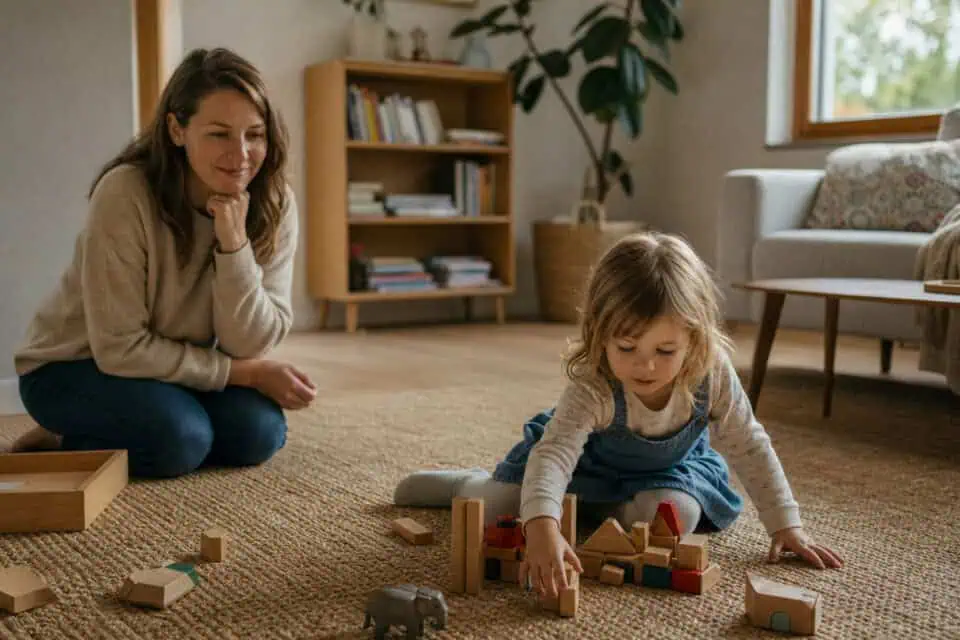
Commit to just 15 minutes of completely uninterrupted, child-led play every day. Put the phone entirely away, shut the work laptop, and step into their world on their terms. Let them make the rules of the game without you trying to teach, correct, or direct the play. This brief dose of real, undistracted interaction does far more to satisfy their emotional tank than hours of passive, phone-in-hand supervising.
Buyer rule: When your child is directing the play, silently observe and follow their lead rather than correcting their technique or suggesting improvements.
Relinquishing Emotional Control: Mentoring Autonomy
One of the hardest parts of parenting is letting go of the urge to manage every single piece of their day. When we try to mold them into a perfect, pre-planned projection of who we think they should be, we choke out their development.
Shift your parenting mindset from being their controlling manager to serving as their supportive mentor. Give them the freedom to make low-stakes mistakes and figure out the hard stuff on their own terms, even when their choices are moderately annoying to watch. When you offer encouragement, focus your praise on their character and effort rather than their grades or trophies. Emphasizing how kind, tenacious, or thoughtful they are highlights developmental qualities they can control, unlike test scores or sports outcomes.

Operating as the Family’s Chief Culture Officer (CCO)
It’s incredibly easy to fall into the exhausting role of a “domestic service provider” who spends all day picking up socks, nagging about dishes, and making endless meals. Instead, shift your perspective to operating as your home’s Chief Culture Officer. Just like a leader sets the vibe and culture at a workplace, you are responsible for defining the emotional climate of your home.
Rather than setting fifty exhausting little house rules, establish two or three core team values—like “we are kind to each other” or “we try hard things.” Live these out yourself, showing genuine respect and support to everyone under your roof. Keep your relationship with your partner a high priority too; the way you two communicate and handle friction serves as the primary relational template your kids will carry into their own future lives.
Preserve Your Identity: The Logistics of Bandwidth Preservation
You can’t keep pouring love, patience, and logic into your kids if you’re constantly scraping the bottom of your own cup. Preserving your identity is not some selfish luxury; it is basic preventative maintenance for maintaining your sanity.

Practical boundaries for managing mom guilt
Ditch the toxic myth that says you must maintain constant, suffocating physical proximity to your kids to keep them secure. It’s healthy—and important—to have a thriving life outside of being their parent. Keep up with your own friends, book that dinner, and hold onto the creative hobbies that make you feel like yourself.
Self-care as a preventative medical strategy
If you wait until you are completely running on empty to take a break, your time away shifts from a healthy recharge into an emergency escape. Schedule your personal downtime before you reach a screaming breaking point. If the family budget allows, outsource the dusting, get some help with food prep, or look for local cleaning support. You are not being lazy; you are buying back the patience, bandwidth, and energy you need to be truly present for your family.
Preserving Perspective: Motherhood as a Lifelong Metric
Raising kids isn’t a short sprint; it’s an incredibly long relationship that will shift as they grow from toddlers into adults. You are growing and learning right alongside them, which means your family dynamic is supposed to change as the years pass.
To keep your perspective when you are right in the thick of a grueling phase, find practical ways to preserve the good stuff. Use quick journaling, photo apps, or Shutterfly memory books to collect milestones and sweet moments when life feels like a blur. When you look back at these archives on a particularly tough afternoon, they do not just show you how fast your kids are growing—they remind you of how much secure, beautiful ground you have already built together.
Frequently Asked Questions
What are the qualities of a good mom?
A good mom is defined by ‘good enough’ parenting rather than the pursuit of perfection. Prioritizing emotional self-regulation, modeling healthy conflict resolution, and being present for short bursts of focused, child-led play are far more effective for building secure attachment than constant, distracted supervision.
What is the 70% rule in parenting?
This is a clinical threshold suggesting that being emotionally tuned-in to your child 70% of the time is sufficient for raising emotionally stable children. Aiming for 100% perfection is counterproductive, as it prevents children from seeing how to handle struggle, frustration, and the inevitable messiness of human emotions.
Why do I feel like I am failing as a mom?
That feeling of failure is often a physical metric of how deeply you care about your child’s well-being. Truly harmful parents do not typically stay awake at night worrying about their parenting performance; your anxiety is proof of your commitment to showing up for them, even when the pressure feels overwhelming.
How does emotional self-differentiation help with tantrums?
Self-differentiation is the ability to separate your own internal state from your child’s behavioral outbursts. By viewing yourself as an observer of the ‘movie’ rather than an actor forced into the drama, you can remain calm and provide a secure harbor rather than escalating the situation.
Can I apologize to my children without over-apologizing?
Yes, and it is a vital way to model restorative accountability. Use clear, excuse-free apologies only when you have actually made a mistake, such as losing your temper, and avoid apologizing for enforcing standard, healthy boundaries like ending screen time or saying no to requests.
Is it selfish to prioritize my own identity beyond motherhood?
No, preserving your individual identity and hobbies is a form of preventative maintenance for your mental health. Without taking time for yourself, you risk running on empty and becoming resentful; keeping your own life active ensures you have the bandwidth and patience to be truly present for your family.
What is the best way to handle my own childhood triggers while parenting?
Recognize that your child may unintentionally poke your emotional raw spots, which can trigger unresolved wounds from your own upbringing. Rather than white-knuckling through these moments alone, seek support through professional resources like therapy or parent coaching to address these triggers proactively.