
Let’s be honest: hiring lately feels like staring at a kitchen sink stacked high with dirty dishes that somehow multiplies the minute your back is turned. Application overload, driven by easy online application processes and economic uncertainty, often results in thousands of resumes per opening. We have to lean on modern technology, specifically AI for business, just to get through our normal hiring workflows without losing our sanity or missing dinner with our families.
Application overload stems from simple online application processes and economic uncertainty, straining the ability of hiring teams to review candidates thoughtfully. Candidate deception and AI manipulation, where applicants use AI to craft resumes or manipulate hiring algorithms, complicates the screening process and risks the erosion of candidate trust. If we want to survive this automated avalanche, we have to look for the best ai for business setups—not to replace our human hearts, but to serve as a defensive shield against the robotic noise.
Key Takeaways
Modern AI-powered recruiting and screening platforms can scan and analyze thousands of resumes in the time it takes to brew a morning cup of coffee.
A true defensive hiring strategy relies on a “human-in-the-loop” framework, where software like Greenhouse AI Recruiting helps filter candidates but humans make all critical hiring and rejection decisions.
Applying structured hiring guidelines—such as those recommended by the Harvard Business Review—is a required operational step to prevent AI from scaling existing human biases.
Table of Contents
The Reality of Modern Enterprise Scaling: Surviving the AI Arms Race
Automated resume sifting allows thousands of resumes to be processed in minutes, significantly reducing time-to-hire compared to manual review. Before we look at solutions, we have to understand the new landscape that makes modern hiring feel like a zoo.

The mechanics of application overload in economic uncertainty
When economic worries hover over the market, digital job boards make it easy for candidates to apply to dozens of places simultaneously. This volume of applications creates a physical limit for manual screening. If you’re a busy manager wearing three different hats, you don’t have the hours to give every resume a fair look. You’re left trying to find a needle in a digital haystack, leaving candidates waiting and leaving you exhausted.
How AI tools help recruiters detect resume manipulation
Candidate deception and AI manipulation complicates the screening process, as automated decision-making based on surface-level keywords leads to perceived biases. To combat this, we need modern AI that acts like a capable personal assistant who can scan an entire shelf of books in seconds to find the one you need. Defensive AI doesn’t just scan for standalone words; it highlights artificial patterns and flags resume manipulation, helping you bypass the bots and find the real people underneath.
The Foundation for Algorithmic Integrity: Why Structured Hiring is a Prerequisite
Using AI in hiring does not inherently reduce unconscious bias. If you set up an algorithm on a messy, unstructured process, you’re just going to speed up your mistakes. Unconscious bias—that unintentional brain filter where we favor a profile because the candidate went to our old school or has a familiar background—doesn’t fade away just because software is running the screening. Programmatic tools without structure codify our human slip-ups.
To fix this, we need “structured hiring” supported by AI-driven frameworks before we turn on any recruiting software. As noted by the Harvard Business Review, these practices are essential for neutralizing unconscious bias and improving hiring objectivity, ensuring that every candidate is evaluated against the exact same standardized benchmarks.
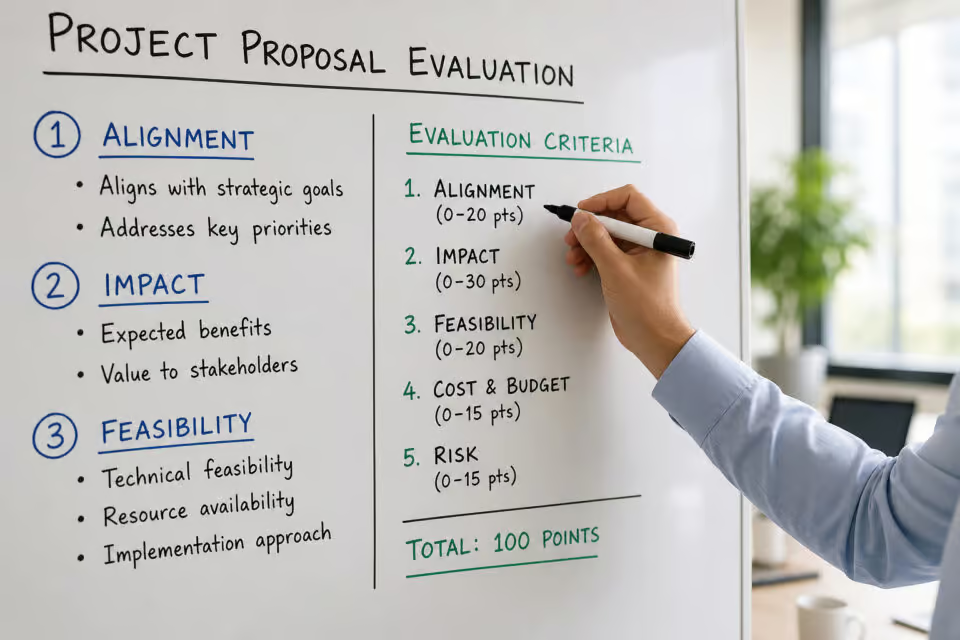
If you’ve looked into an ai for business course online, or perhaps taken an ai for business free course or a university certification like AI for business Harvard or AI for business Microsoft programs, you’ve probably noticed they focus heavily on technical capabilities. They often bypass this critical operational step of standardizing your metrics and workflows before applying technology. But laying this structured groundwork acts like a checklist that saves your brainpower, levels the playing field, and ensures you’re measuring raw skills rather than surface-level shine.
Balancing Algorithmic Speed with Human Judgment
Achieving this equilibrium requires shifting our perspective on technology from a replacement for human intuition to an essential support layer. By integrating automated tools thoughtfully, teams can handle high volumes of applicants while ensuring that final hiring decisions remain profoundly human.
Beyond keywords: The mechanics of automated resume sifting
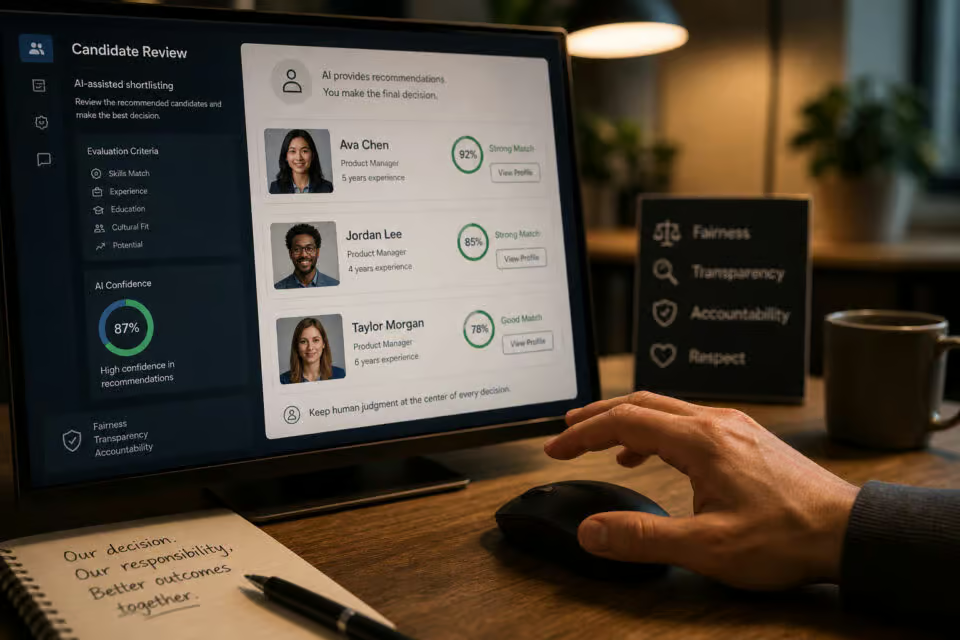
Old-school keyword matching is easy for automated applicant bots to game. Modern sifting goes beyond surface-level keyword analysis; it analyzes experience, skills, and cultural fit to uncover top talent that might otherwise be overlooked. AI-powered tools are capable of processing thousands of resumes within minutes, a capability discussed in the section on how AI enhances the recruitment process.
The human-in-the-loop standard in Greenhouse AI Recruiting
So, how do you balance automation and human judgment in the recruitment process without drowning in tasks? You do it by choosing tools designed with a “human-in-the-loop” philosophy. Take a platform like Greenhouse AI Recruiting, for example. Greenhouse designs its platform on the logic that the software is a helpful guide, not a boss.
The machine suggests qualified matches and streamlines your day, but the ultimate authority to progress or reject a candidate rests with you. Greenhouse AI Recruiting ensures that all vital hiring determinations remain under human control, addressing concerns about fairness and transparency while ensuring no automated algorithm has the final say on anyone’s career path.
Maintaining Trust and Transparency in Algorithmic Decisions
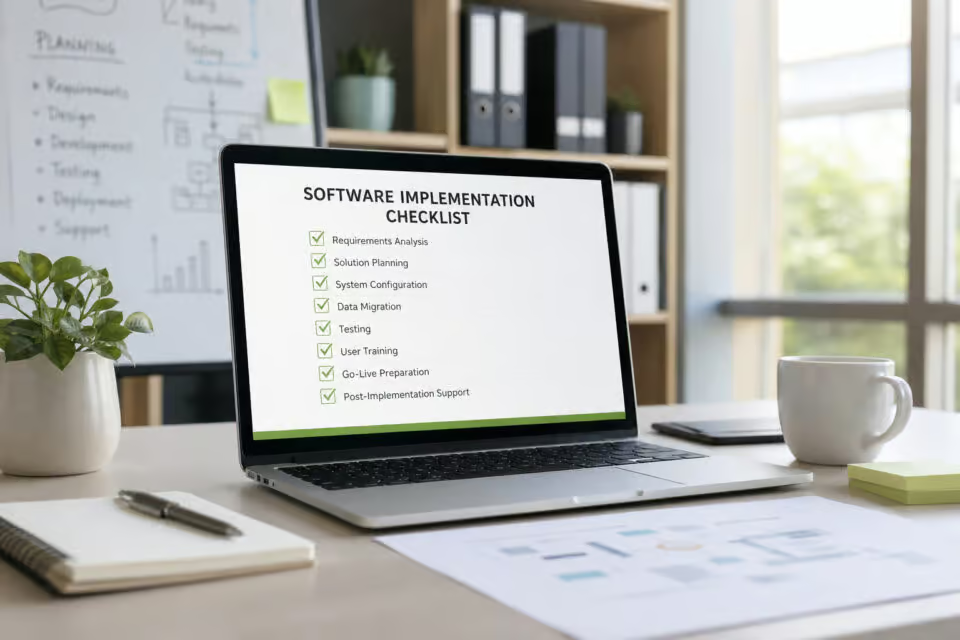
When automated decision-making leads to perceived biases, companies risk an erosion of candidate trust. A perceived lack of transparency not only hurts the employer brand but also undermines overall candidate attraction.
The risk of opaque scoring and the “explainable” solution
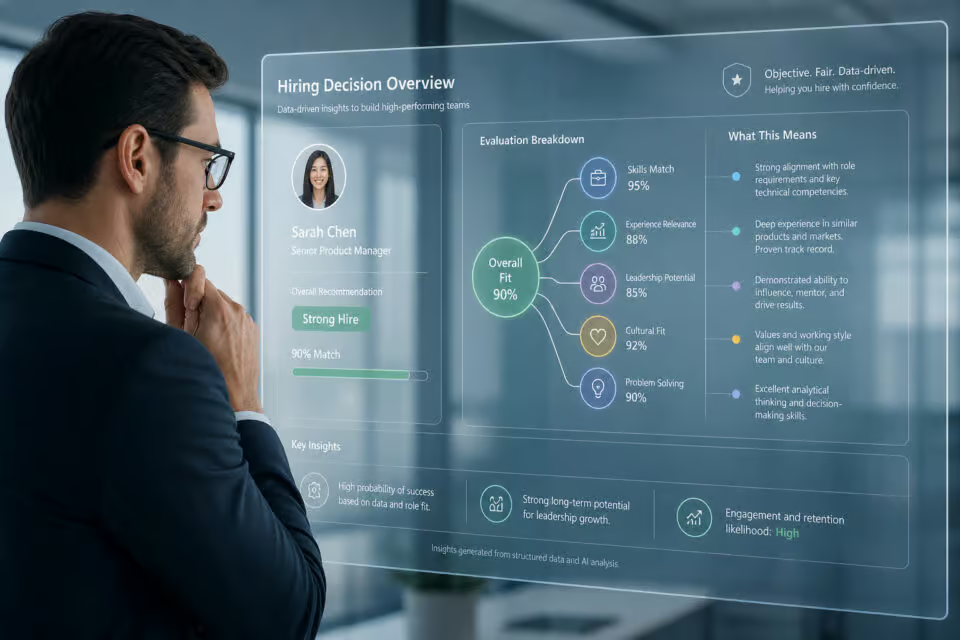
Here is one of our best practices for maintaining candidate trust when using automated hiring systems: make sure your software can explain its decisions. When candidates—and your recruiters—feel like a mysterious, faceless computer program is making selections based on “intuition,” trust breaks down. That “ick” factor is hard to shake. By deploying explainable AI outputs, you can see the clear criteria behind every recommendation, which makes it simple to explain decisions and ensures you aren’t unconsciously playing favorites.
Mitigating “AI fatigue” and compliance risks
Opaque, black-box systems aren’t just bad for candidate trust; they also bring compliance and legal risks, like the regulations around the NYC Automated Employment Decision Tool laws. There’s also the very real threat of AI fatigue. This occurs when exhausted hiring managers become so weary that they mindlessly approve automated suggestions without performing necessary safety checks. To avoid this, we always need a person in the driver’s seat. Tools are there to help, but humans must steer.
Measuring Success and Operational ROI
When we look at AI recruiting software vs traditional hiring methods: which is more cost-effective? manual screening is a leak of team energy. Under traditional setups, you are paying people to do hours of administrative sifting when they could be doing valuable project work. Moving automated sifting into your toolkit drastically decreases both your time-to-hire and your cost-per-hire.
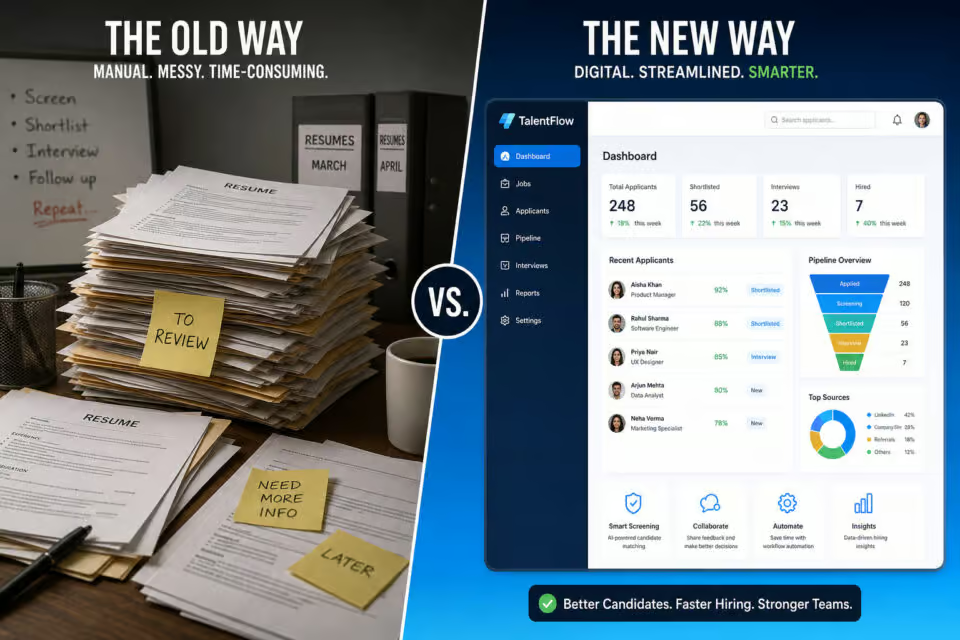
But the real return on investment here isn’t just about financial reports; it’s about your peace of mind. By achieving a measurable return on investment through a reduction in time-to-hire and cost-per-hire, you also see improved hire quality and candidate satisfaction. Moving automated sifting into your toolkit acts as a sanity safety net that frees up your team’s schedule for meaningful human interaction.
Step-by-Step Playbook: Implementing AI with Greenhouse AI Recruiting
Let’s look at the tasks most suitable for automation.
Step 1: Mapping and documenting your current recruiting pipeline
Before you turn on any fancy software, you need to map your existing recruitment workflow to identify key pain points. Greenhouse AI Recruiting implementation steps rely on this clarity to ensure you optimize the right areas. Use onboarding and training resources to successfully adopt a culture of continuous improvement.
Step 2: Isolating clear friction points for automated sifting
To make your strategy work, identify what specific tasks in the hiring cycle are most suitable for AI automation. The answer: repeated, high-volume, top-of-funnel administrative tasks. This is where you want to automate resume sifting and initial skill checks. Leaving these repetitive chores to the computer preserves your mental energy for the active interview rooms, where human judgment matters most.
Step 3: Devising manager training and onboarding pathways
A new tool is only helpful if people actually use it correctly. Use the onboarding resources provided by your platform so your managers aren’t guessing. Train your team to read the explainable AI notations so they understand why the software suggests specific candidates, and make sure everyone feels confident with the dashboard from day one.
Step 4: Activating a continuous improvement feedback cycle
Hiring is never a “one-and-done” task. Set up a regular check-in loop to review the software’s screening output against actual candidate performance. If you notice the software is missing critical qualifications, change your structured criteria. Keeping a constant eye on your progress keeps the process fair, prevents errors, and makes your working life much more sustainable.
Using ai for business functions as a shield against candidate-side bot noise. By building structured hiring pipelines and keeping a real, caring human in the loop, you can find the actual people behind the paper. It’s the only way to build a team you’re proud of, keep your business growing, and make sure you still have the energy to enjoy your life when the workday is done.
Frequently Asked Questions
Which AI is good for business?
The most effective tools for business are those that balance high-volume processing with transparency, such as Greenhouse AI Recruiting. You should prioritize platforms that support a ‘human-in-the-loop’ framework, ensuring that while the software handles time-consuming administrative screening, critical hiring decisions remain in the hands of human managers.
How does AI screening prevent resume manipulation?
Unlike basic keyword-matching bots that are easily gamed by applicants, modern defensive AI analyzes broader patterns across experience, skills, and behavior. It flags artificial anomalies in resumes that suggest dishonesty, helping recruiters bypass deceptive automated applications to reach actual candidates.
Is AI in hiring worth the cost and complexity of implementation?
Yes, it is worth the effort because traditional manual screening is unsustainable and drains team energy. By automating top-of-funnel administrative tasks, companies significantly reduce both time-to-hire and cost-per-hire, while reclaiming the mental bandwidth required to conduct meaningful interviews.
Why does structured hiring matter when using AI tools?
AI will simply scale your existing mistakes and biases if your hiring process is messy or inconsistent. Implementing standardized, structured benchmarks ensures that AI tools evaluate all candidates against the same objective criteria, turning a chaotic system into a fair and measurable pipeline.
What’s the difference between standard AI and ‘explainable’ AI in recruitment?
Standard or ‘black-box’ AI often provides recommendations without showing its work, which can lead to distrust and legal compliance risks. Explainable AI, by contrast, provides clear, evidence-based justifications for its suggestions, allowing recruiters to see exactly why a candidate was flagged and ensuring transparency in the selection process.
Can I trust AI to handle the final stage of the hiring process?
No, and you shouldn’t try; the best practice is to keep the final authority with a human recruiter. While AI is an excellent assistant for filtering and sifting, a ‘human-in-the-loop’ approach is essential to maintain fairness, avoid AI fatigue, and ensure that personal judgment still guides the hiring experience.