If you’ve spent any time lately scrolling rankings of weight loss shots, you know the drill: every list crowns a different winner, and half of them are secretly trying to sell you something. So here’s the homework, done for you. The top injection for weight loss you can take at home right now is tirzepatide, sold as Zepbound. In trials, people lost up to 22.5% of their body weight on it, and in the one head-to-head trial that directly compared it against semaglutide (Wegovy), tirzepatide won by a clear margin. Semaglutide is the close runner-up at 15 to 21% depending on the dose and form.
But you already knew there’d be a catch, because there’s always a catch. “Best” depends on your health conditions, your budget, and whether you can realistically stay on the drug for years. A shot with the best trial average that you quit in month four because it wrecked your stomach or your wallet is, functionally, not the best. So we’ll walk through the evidence, the asterisk, the money, and the part nobody says out loud. Deal?
Key Takeaways
In the SURMOUNT-5 head-to-head trial published in the New England Journal of Medicine in 2025, tirzepatide produced 20.2% average weight loss over 72 weeks versus 13.7% for semaglutide, but no trial has compared tirzepatide against the newer 7.2 mg Wegovy dose (approved March 2026, 20.7% mean loss).
Real-world results are usually smaller than trial headlines: typically 2 to 8% loss after a year in routine care, with cost and access, not side effects, being the top reason people quit.
Cash prices in early 2026 vary a lot: Foundayo runs $149 to $349/month, Saxenda hits $1,325/month, and generic liraglutide at around $402/month is the cheapest injection of the bunch.
Table of Contents
Which weight loss injection is most effective: tirzepatide or semaglutide?
Tirzepatide is the most effective GLP-1 injection for weight loss on the current evidence, and the case rests on two pieces of research worth knowing about.
The first is the head-to-head. SURMOUNT-5, published in the New England Journal of Medicine in 2025, put the two big drugs in the same trial and watched. Tirzepatide at 10 to 15 mg produced 20.2% average weight loss over 72 weeks. Semaglutide at 1.7 or 2.4 mg produced 13.7%.
Tirzepatide also trimmed more off waistlines, which we’ll mention once and move on from. Worth knowing who was actually in the trial: adults with obesity, without type 2 diabetes. If that’s not you, your mileage may genuinely vary.
The second is the big-picture view. A 2024 review pulled together 53 studies covering 21,349 people, with studies running 12 to 78 weeks, and ranked the whole GLP-1 family:
- Tirzepatide
- Semaglutide
- Liraglutide
- Dulaglutide
- Exenatide
In pound terms, tirzepatide delivered roughly 19 pounds more loss than placebo, versus about 6.6 pounds for semaglutide in the same review.
What the trial numbers actually look like
Dose matters, a lot. In the tirzepatide dose-response data over 72 weeks: 5 mg produced about 15% loss, 10 mg about 20%, and 15 mg about 21%, against roughly 3% for placebo. And here’s the stat that made me sit up: half or more of people on the 10 and 15 mg doses lost 20% or more of their body weight. That’s a striking number. It’s also a trial average, not a promise.
Semaglutide’s numbers are solid too. At 2.4 mg over 68 weeks, 86% of people lost at least 5% of their body weight, versus 32% on placebo, averaging about 34 pounds lost versus about 6. And the older option, Saxenda, still has real data behind it: in its 56-week trial, people lost around 18 pounds versus 6 on placebo, with 63% hitting the 5% mark.
How these drugs actually work
Kitchen-counter version: GLP-1 medications slow down digestion and quiet your appetite, so you eat less. That’s it. That’s also why the constant “food noise” in your head goes quiet for a lot of people, which is the part that surprises folks most. Tirzepatide just hits two buttons instead of one: GLP-1 plus a second hormone called GIP, and nobody fully knows why that combo works better, but the trial numbers say it does.
One friendly myth-bust while we’re here: no, there’s no shot that melts just your midsection. These aren’t fat burners, and they don’t pick targets. Anyone telling you otherwise is selling something.
Is tirzepatide really the winner? Wegovy 7.2 mg changes the picture
Here’s the honest answer: tirzepatide leads on direct evidence, but the newest comparison hasn’t been run, so hold the crowns loosely.
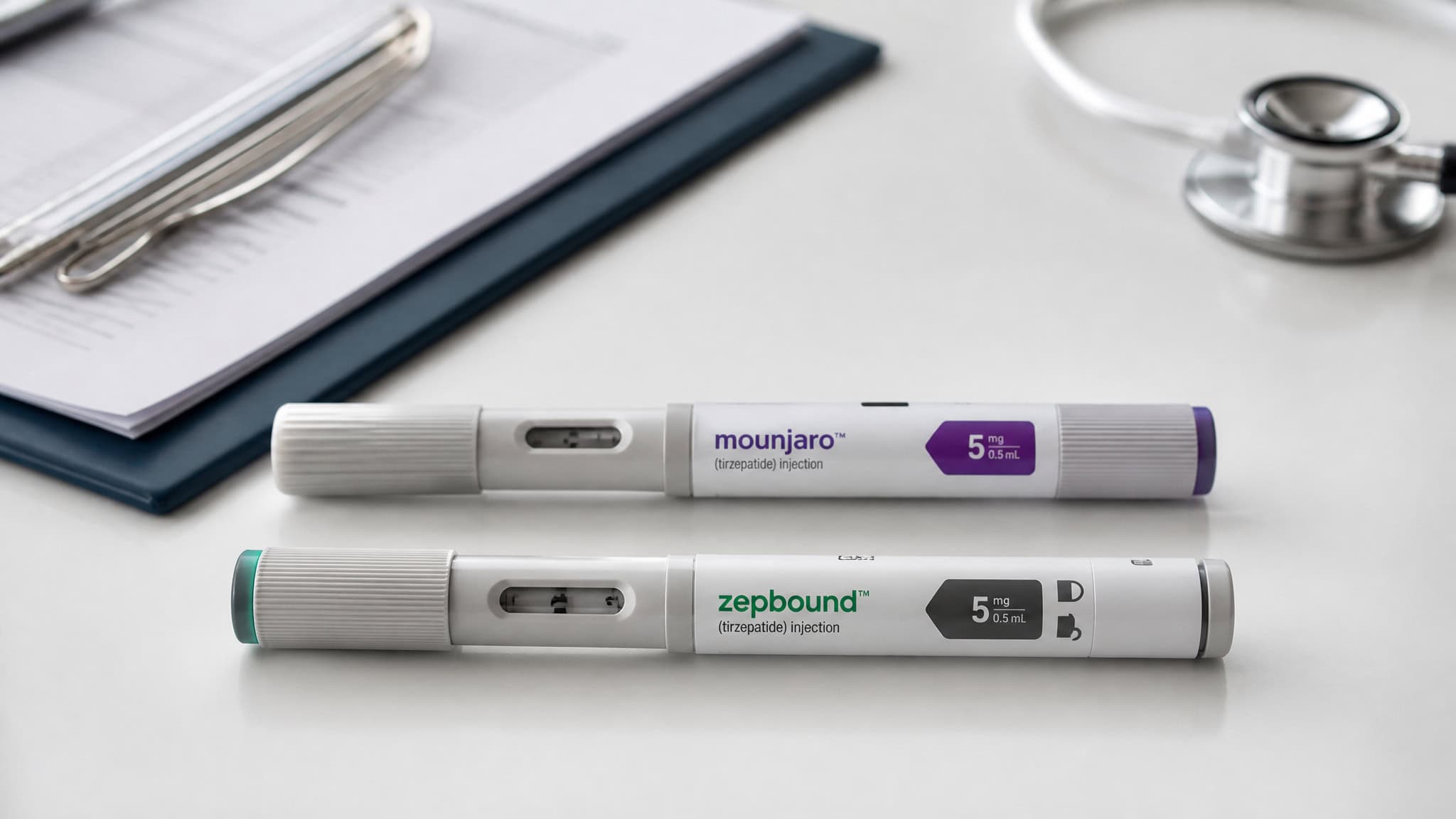
In early 2026, the picture looked like this: Zepbound for weight loss, Mounjaro for diabetes, tirzepatide on top of the efficacy charts. Then semaglutide stopped standing still. The STEP UP trial tested a once-weekly 7.2 mg semaglutide dose and got about 21% average weight loss at 72 weeks. The FDA approved that dose, sold as Wegovy HD, in March 2026, citing 20.7% mean weight loss.
Notice the problem? SURMOUNT-5 only tested semaglutide up to 2.4 mg. Nobody has run tirzepatide against the 7.2 mg dose head-to-head. The famous 20.2% versus 13.7% verdict is a snapshot that predates the newest dose. The numbers 20.2%, 20.7%, and 22.5% each come from different trials with different setups, so you can’t just line them up and declare a winner.
A quick word on how to think about the evidence, because it’ll save you from seventeen conflicting rankings: some studies compared these drugs directly, most didn’t. Head-to-head trials tell you about averages, and averages don’t know your body. And real life adds cost, tolerance, and follow-through, none of which show up in a 72-week trial endpoint.
Your FDA-approved injectable options, and the Ozempic vs Wegovy confusion
Zepbound and Mounjaro contain the same drug (tirzepatide), and Wegovy and Ozempic contain the same drug (semaglutide). Same molecule, different FDA label. That’s the whole confusion, and it explains a lot of headlines.
Only four drugs carry U.S. weight-management labeling: Wegovy, Saxenda, Foundayo, and Zepbound. Everything else on the GLP-1 list causes weight loss as a side effect, not as its approved purpose. Doctors can and do prescribe those others off-label for weight loss, which is a normal, legitimate practice. It’s just not what the label says.
The twin-brands problem, explained over coffee
Think of it like the same engine in two different cars with different stickers. Zepbound carries the weight-loss label; Mounjaro carries the diabetes label (for adults and kids 10 and up with type 2 diabetes). Wegovy is the weight-management brand of semaglutide; Ozempic is the diabetes one. Doctors sometimes prescribe the diabetes versions off-label for weight loss, and insurance treats all of this very differently, which we’ll get to.
The full current list
For your quick reference, here’s the current FDA-approved GLP-1 family:
| Drug | Active ingredient | Form |
|---|---|---|
| Byetta | exenatide | Injection, twice daily |
| Foundayo | orforglipron | Daily tablet |
| Trulicity | dulaglutide | Weekly injection |
| Victoza | liraglutide | Daily injection |
| Saxenda | liraglutide | Daily injection |
| Xultophy | liraglutide | Daily injection |
| Ozempic | semaglutide | Weekly injection (plus daily tablet option) |
| Rybelsus | semaglutide | Daily tablet |
| Wegovy | semaglutide | Weekly injection or daily tablet |
| Mounjaro | tirzepatide | Weekly injection |
| Zepbound | tirzepatide | Weekly injection |
Byetta’s twice-daily injection schedule is honestly a lot for anyone’s routine, and it’s worth saying that plainly. Saxenda and Victoza are daily too. Weekly is the sweet spot most people can actually stick with.
Do you qualify? Eligibility for Zepbound, Wegovy, and Saxenda
BMI 30 or above qualifies on its own for the approved injections. BMI 27 or above qualifies only with a weight-related condition, and the details differ a bit by drug.
Quick translation, since BMI gets thrown around without explanation: it’s a number calculated from your weight and height, and it’s the yardstick these FDA labels use. “Weight-related condition” means things like high blood pressure, type 2 diabetes, or high cholesterol.
- Zepbound: Adults with a BMI of 30+, or 27+ with a weight-related condition.
- Wegovy: Same adult thresholds, and it’s also approved for kids 12 and up with obesity.
- Saxenda: Same adult thresholds, plus kids 12+ who weigh above 60 kg (about 132 pounds) with a BMI matching the adult 30 mark.
- Foundayo: Adults with obesity, or with overweight and a weight-related condition.
One thing the label requires and every article should say without diet-culture baggage: these drugs are approved to be used alongside reduced-calorie eating and increased activity. The label says so, those changes are part of the treatment plan, not a test you have to pass and not a moral judgment about effort.
The best injection depends on your health profile
Weekly shot or daily pill is a real fork in the road, and your health conditions should pick the drug, not the trial leaderboard.

If you’ve been dragging through your days exhausted and snoring your way through nights, that points one direction. If heart disease runs in your family, that points another. Here’s the map.
The condition-specific approvals nobody mentions
- Sleep apnea points to Zepbound. In 2024, it became the first and only medication approved for moderate-to-severe obstructive sleep apnea in adults with obesity. If you’re the parent who falls asleep at 8:30 pm during bedtime stories, this one’s worth a conversation with your doctor.
- Heart, kidney, or liver context points to Wegovy. In March 2024, it was approved to reduce the risk of major cardiovascular events in adults with cardiovascular disease and obesity or overweight, and in 2025 the Wegovy injection got approved for MASH, a liver condition where fat causes inflammation and scarring.
The landscape is moving fast. Approvals keep landing, so whatever you read, including this, check what’s current before making decisions.
The formulation fork: needles, pills, and privacy
Weekly injections (Zepbound, Wegovy, Ozempic, Mounjaro) suit most people, mostly because consistency is what drives long-term success, and weekly is easier to stay consistent with. Daily Saxenda can suit highly motivated people who want faster dose adjustment, and that’s a legitimate choice, not a willpower contest.
If needles make you queasy, that’s a totally valid preference, and you have options. First, a quick primer: How Do Weight Loss Injections Work? In short, shots skip digestion entirely, which is why the pill doses below run higher, since your stomach dissolves some of the drug before it absorbs. The Wegovy pill arrived in January 2026 as the first GLP-1 pill approved for U.S. weight management; it’s a morning tablet taken on an empty stomach with a 30-minute wait before eating.
Foundayo is a once-daily tablet at $149 to $349 a month. Rybelsus has been around as a diabetes-labeled daily pill since 2019.
Here’s the rarely-discussed bit: the pens live in the fridge, and pills don’t. Amid how much judgment heavier people already face, a box with a recognizable name in the fridge can out you, at home or at the in-laws’. A pill in a cabinet is private and travel-friendly. That’s a real consideration, and it’s okay to weigh it.
A small real-world study tracked 105 people with type 2 diabetes from 2019 to 2022, and the pill and the shot came out basically even on blood sugar. The shot came out slightly ahead on weight, and the pill caused more side effects, with more people stopping over them. One small study, not a verdict.
And to say it once, clearly: no reliable medical source names one injection as safest or best for everyone. Anyone who does is simplifying.
What results should you actually expect at home?
The honest scale math is this: up to around 22% loss in trials versus typically 2 to 8% after a year in routine care, with only about a third of people getting past 5% loss in the real world. Letting that land gently: real-world results are usually smaller than the headlines.
Before anyone spirals, this isn’t a “they must not have tried hard enough” situation. People stop these medications a lot, and skipped doses shrink results. Costs are a big part of why, which we’ll get to. When lots of people quit or skip doses, the averages drop. Full stop.
Here’s the pattern that trips people up. Folks anchor on the trial headlines, then read slow scale movement in the first month as failure. But the early weeks are deliberately low-dose while your body adjusts. The disappointment usually hits during the ramp-up, not at the real dose. If you’re on month two and feeling like it’s not working, that’s often the schedule, not you.
Two more honest notes: even smaller losses help heart and metabolic health, which is encouraging and true without needing confetti. And the trials measure 72-week endpoints, not speed, so any article confidently naming the “fastest” injection is making it up.
Side effects and safety screening: why no single injection is “safest”
The most effective drugs also cause the most stomach trouble, and safety is a screening question, not a ranking. Yeah, this part is no fun. Here’s a preview of what’s coming.
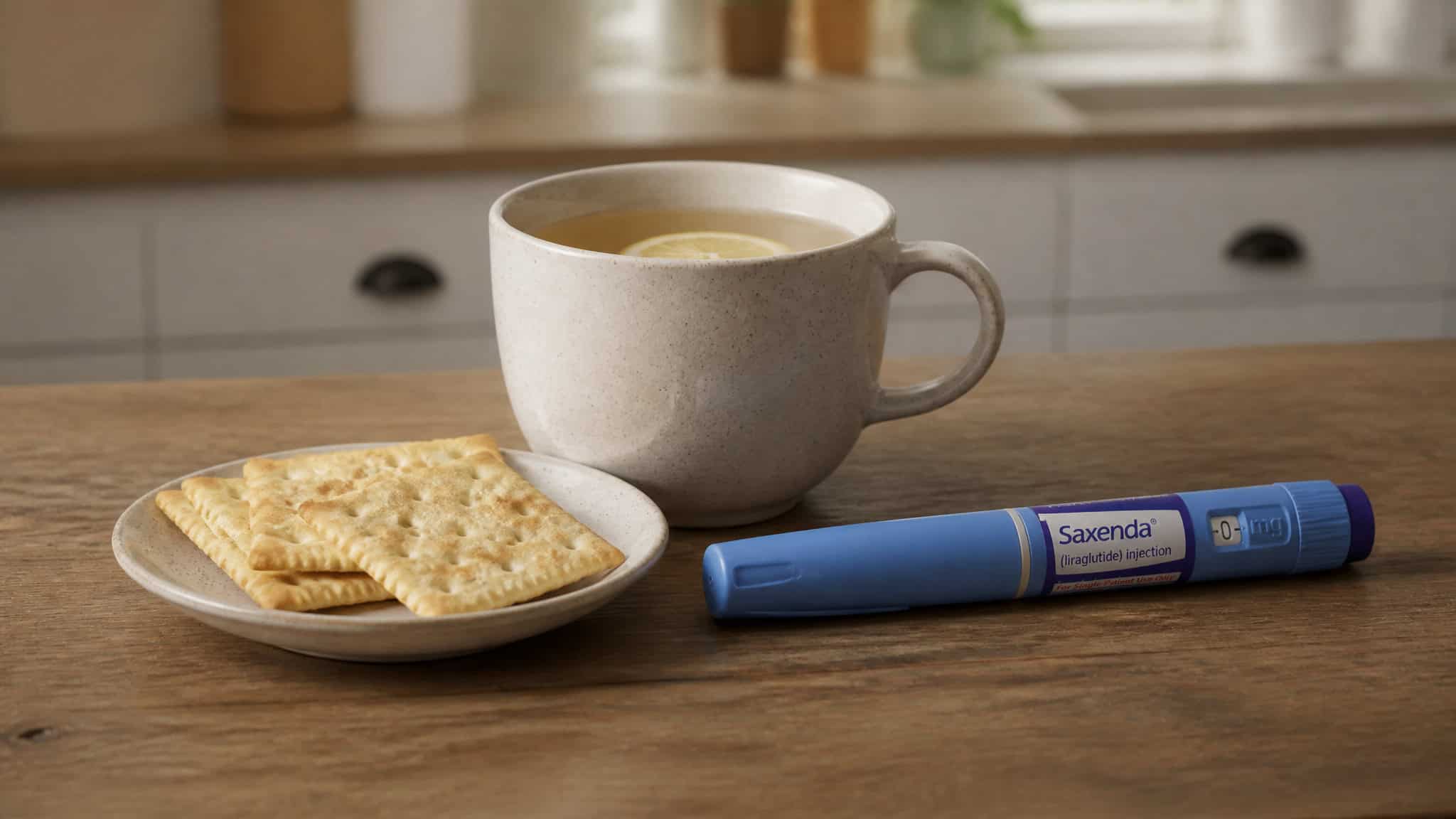
The stomach stuff
The common ones: nausea, vomiting, diarrhea, stomach pain, and constipation. They hit hardest early on and whenever the dose steps up, which is exactly why you shouldn’t quit on day three thinking something’s broken. The schedule is designed to ease your body in.
In that big 2024 review, the most diarrhea showed up with tirzepatide and semaglutide, the older drugs caused less, and every single one caused more nausea than placebo. So yes, queasy is common. You’re not doing it wrong.
Zepbound’s own medication guide also lists injection-site reactions, tiredness, belching, heartburn, and, the one that surprises people, hair loss. Worth knowing before it happens rather than after.
The boxed warning, explained without the spiral
Every GLP-1 comes with an FDA boxed warning covering thyroid C-cell tumors. Here’s the exact framing so nobody lies awake: that finding was seen in rats. It has not been proven in humans. These drugs are not for people with a personal or family history of medullary thyroid cancer, or MEN2, which is a rare inherited condition affecting certain glands.
Bring up any of these with your provider before starting, because they change the screening conversation:
- History of pancreatitis
- Gallbladder disease
- Severe gastrointestinal disease
- Insulin or sulfonylurea use
- Pregnancy plans
- Prior serious allergic reactions
When to go in, not wait
Some signs don’t wait for a scheduled follow-up: severe or persistent abdominal pain, pain radiating to the back, repeated vomiting, signs of dehydration, yellowing skin, a severe allergic reaction, trouble breathing, or swelling of the face or throat. Go in. That’s what urgent care is for.
What weight loss injections cost per month, and the cheapest paths without insurance
Cash prices in early 2026 run from about $149 to over $1,300 a month. If you’re paying out of pocket, the budget options are generic liraglutide at around $402, Foundayo starting at $149, or the Wegovy pill self-pay at $149 to $299.
Let’s say the quiet part: these are real-money numbers, and staring at a pharmacy receipt for one of them is a specific kind of gut punch. Here’s the early 2026 list, via Drugs.com discount card pricing, with the caveat that these change fast and vary by pharmacy:
- Zepbound: $690
- Wegovy: $538
- Saxenda: $1,325 (generic liraglutide: $402.26)
- Mounjaro: $1,094
- Ozempic: $1,011 (with a limited-time $199 to $499 manufacturer offer)
- Rybelsus: $1,011
- Trulicity: $991
- Victoza: $576.67 (generic: $442.97)
- Byetta: $686
- Foundayo: $149 to $349
- Wegovy pill self-pay: $149/month at lower doses, $299 at higher doses
- Wegovy pen discount: $199 to $349 for the first two months
If you’re hunting for the cheapest GLP-1 without insurance, that’s your shortlist: generic liraglutide, Foundayo, or the Wegovy pill at the lower doses. There’s more detail in our breakdown of how much weight loss injections cost.
The trap, though, isn’t the list price. Insurance coverage varies wildly by plan, diagnosis, employer, and prior authorization requirements, which is a fancy term for your insurer making you (well, your doctor) prove you need it before they’ll pay. Two friends on the same drug can pay wildly different amounts. Research published in 2025 in the journal Obesity found cost and access lead the list of reasons people stop these drugs, more than side effects. Let that sink in: the most common failure mode isn’t the medication failing, it’s the checkout line.
So the pattern to avoid: picking a drug on list price or a promo offer without checking your prior authorization situation, then getting priced out when the discount window ends. And I’ll hold myself to that same honesty: these prices go stale fast. Check current figures before you budget anything.
Cost check: Before committing to a drug, confirm your plan’s prior authorization requirements — two people on the same shot can pay wildly different amounts.
How to self-inject weight loss medication at home safely
Yes, at-home injection is standard and safe when you go through the legitimate process, and here’s exactly how it works. It’s less dramatic than you’re imagining, more like unloading the dishwasher than performing surgery.
- Medical evaluation first. A licensed provider reviews your history and confirms the drug makes sense for you.
- Real prescription. From that provider, through a legitimate telehealth service or an in-person office.
- Injection training. Someone shows you how, properly, before you’re on your own.
- The injection itself. Subcutaneous, meaning under the skin, into your abdomen, thigh, or upper arm. Rotate sites so no one spot gets sore.
- Storage. The pens live in the fridge.
- Track side effects so your provider can adjust.
- Follow-up visits. Dose changes only under medical direction, never solo.
Zepbound, Wegovy, Ozempic, and Mounjaro are weekly. Saxenda is daily. And the missed-dose rules matter, so here they are exactly: a missed weekly injection can be made up if more than 2 days remain before your next dose. A missed daily pill is skipped, never doubled. The Wegovy pill needs that empty stomach and 30-minute morning wait, no exceptions.
Follow the official prescribing information for your specific drug, not the TikTok comment section. The comment section has opinions; the label has data.
Are cheap compounded semaglutide and OTC “GLP-1 boosters” safe to buy online?
Mostly no, and here’s how to tell a legitimate source from a scam. If you’ve searched for weight loss injections near you and landed on a website with prices that seem too good, this section is for you.
The FDA has warned about fraudulent compounded semaglutide and tirzepatide, including products with false labels and, I promise this is real, pharmacies that don’t exist. Somebody went to the trouble of faking an entire pharmacy. For compounded versions that aren’t FDA-approved, nobody is checking quality, safety, or whether they work at all.
Then there’s the OTC stuff flooding your feeds. Products like Lemme GLP-1 Daily aren’t medications. They have no regulated clinical data behind them, and they could clash with prescription meds you’re already taking. The FDA regularly warns about or pulls products making unauthorized GLP-1 claims, so this isn’t just parental worry. They’re not the real thing, unfortunately.
Red flags for any online seller:
- “Research use only” labels on something you’re clearly meant to inject
- No prescription required
- No medical-history verification step
- Guaranteed-results promises
The tell for every bad source is the same: it skips the licensed-provider step. Legitimate access runs through licensed providers, telehealth or in-person. We’re not going to name companies or directories, because principles age better than endorsements, but any legitimate option will have that step.
What happens if you stop, and what to ask your doctor before starting
Stopping usually means regaining weight, up to two-thirds of what you lost within a year, that’s from researcher Hamlet Gasoyan, PhD, and it’s exactly why sustainability should drive your choice more than any trial number.
This is the fear nobody says out loud, so let’s say it. The drugs quiet your appetite while you’re on them; stop, and it comes back. Here’s the part to tattoo somewhere visible: that regain reflects needing long-term care for a chronic condition. It is not you failing. If you take one sentence from this whole article, make it that one.
Maintenance is its own realistic plan, not a wellness-guru fantasy: follow-up appointments, attention to nutrition and protein, resistance training, regular movement, decent sleep, medication reviews, and monitoring. Boring, doable, real. Our piece on what happens when you stop weight loss injections goes deeper on this.
Worth asking your doctor before starting:
- Am I eligible for which drugs, specifically?
- Any thyroid or MEN2 history in my family that matters?
- My pancreatitis and gallbladder history?
- How do my pregnancy plans factor in?
- Do my diabetes medications interact with these?
- What’s the monitoring plan?
- What are my insurance and cost options?
- And the question people forget: what happens if I don’t tolerate the drug?
That last one matters more than it sounds.
So here’s the verdict, asterisk and all. The top at-home injection for weight loss is the FDA-approved option that fits your goals, your eligibility, your medical history, your side-effect tolerance, your budget, and your long-term plan. The drug you can stay on beats the drug with the best trial average you’d abandon at month four. This article is a starting point, not the full picture; your provider has that, and prescriptions and dosing belong to official labeling and your doctor, not social media.
People Also Ask
Which injection makes you lose weight the fastest?
No reliable answer exists, because the major trials measure 72-week endpoints, not speed — any article confidently naming the
Which weight loss injection has the least side effects?
There’s a real trade-off: the most effective drugs also cause the most stomach trouble. In a 2024 review of 53 studies, tirzepatide and semaglutide caused the most diarrhea, while older drugs like liraglutide caused less — but every GLP-1 caused more nausea than placebo. No medical source names one injection as safest for everyone; safety is a screening question based on your history, not a ranking.
What is the poor man’s alternative to Ozempic?
The cheapest legitimate injection is generic liraglutide at around $402 a month, compared to Ozempic’s roughly $1,011 list price. Other budget paths include Foundayo, a once-daily tablet at $149 to $349, and the Wegovy pill self-pay option at $149 to $299 depending on dose. Be wary of anything dramatically cheaper online — the FDA has warned about fraudulent compounded semaglutide, including products with fake labels and nonexistent pharmacies.
How much weight can you actually lose with Zepbound compared to Wegovy?
In trials, Zepbound (tirzepatide) produced up to 22.5% body weight loss, with half or more of people on the 10 and 15 mg doses losing 20% or more. Wegovy at the standard 2.4 mg dose averaged about 15 to 21% depending on the form, and the newer 7.2 mg dose showed 20.7% mean loss. Real-world results are smaller: typically 2 to 8% after a year in routine care.
Is it safe to self-inject weight loss medication at home, and how is it done?
Yes, at-home injection is standard and safe when done through the legitimate process: a medical evaluation, a real prescription from a licensed provider, proper injection training, and follow-up visits. The shots are subcutaneous — under the skin of your abdomen, thigh, or upper arm — and you should rotate sites. A missed weekly injection can be made up if more than 2 days remain before your next dose; a missed daily dose is skipped, never doubled.
Do I qualify for Zepbound or Wegovy? BMI and eligibility requirements explained
For both, a BMI of 30 or above qualifies on its own, and 27 or above qualifies with a weight-related condition like high blood pressure, type 2 diabetes, or high cholesterol. Wegovy is also approved for kids 12 and up with obesity, and Zepbound carries an additional approval for moderate-to-severe obstructive sleep apnea in adults with obesity. The labels require use alongside reduced-calorie eating and increased activity.
How much do weight loss injections cost per month with and without insurance?
Cash prices in early 2026 ranged from about $149 to over $1,300 a month: Zepbound at $690, Wegovy at $538, Mounjaro at $1,094, Saxenda at $1,325, and Foundayo at $149 to $349. With insurance, coverage varies wildly by plan, diagnosis, and prior authorization requirements, so two friends on the same drug can pay very different amounts. Prices change fast, so check current figures before budgeting.
Are cheap compounded semaglutide or OTC GLP-1 supplements safe to buy online?
Mostly no. The FDA has warned about fraudulent compounded semaglutide and tirzepatide, and for compounded versions that aren’t FDA-approved, nobody is checking quality, safety, or effectiveness. OTC products like Lemme GLP-1 Daily aren’t medications, have no regulated clinical data behind them, and could clash with prescription drugs. Red flags include