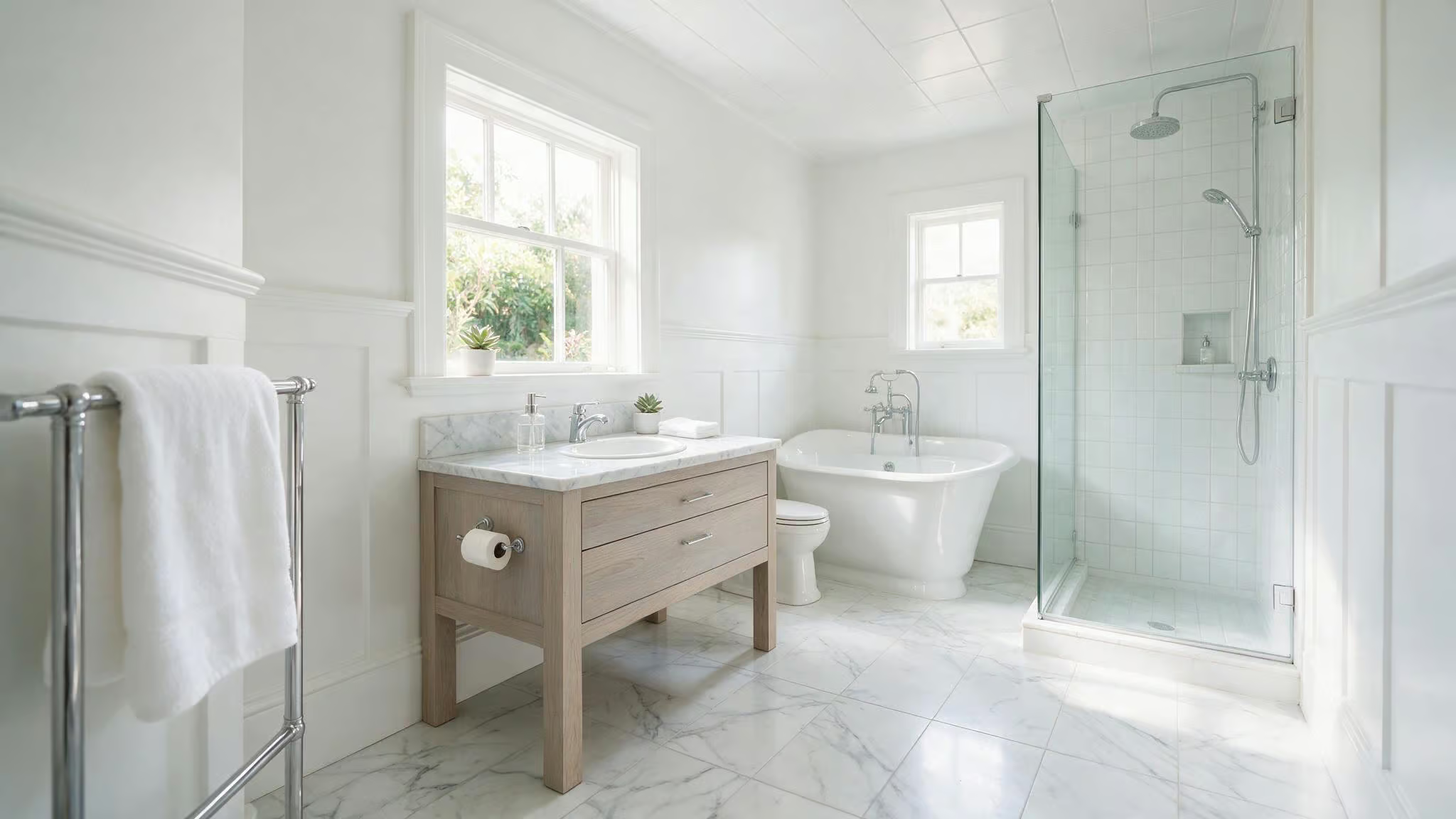
When we first started looking into a bathroom remodel, the one-week timeline sounded like a dream.
So I did the research. I talked to contractors, read through company processes, and dug into the fine print. Here’s the answer: yes, a one-week bathroom remodel is possible, as long as you’re sticking to cosmetic updates and keeping the same layout. It takes meticulous planning, pre-ordering materials, securing permits, and a contractor who’s built their business around speed — not just a generalist who promises you a week because they want the job.
Key Takeaways
A one-week timeline works only if you’re doing cosmetic updates (paint, fixtures, hardware, simple tile), keeping the exact same layout, using off-the-shelf materials, and working in a small-to-medium bathroom.
The work happens before demo: materials must be pre-ordered and on-site, permits secured, and the design finalized — no decisions on the fly.
Even with perfect planning, hidden issues like water damage behind the shower wall can blow the schedule, which is why specialized companies use employee teams and structured processes to stay on track.
Table of Contents
What kind of bathroom can actually be remodeled in a week?
GreatBuildz, a contractor-matching service for the Los Angeles area, has a clear checklist for what makes a bathroom a good candidate. If your project checks all five boxes — cosmetic updates only, same layout, minimal tile work, prefab materials, small to medium size, you’re in the sweet spot. If it doesn’t, you’re probably looking at a longer timeline.
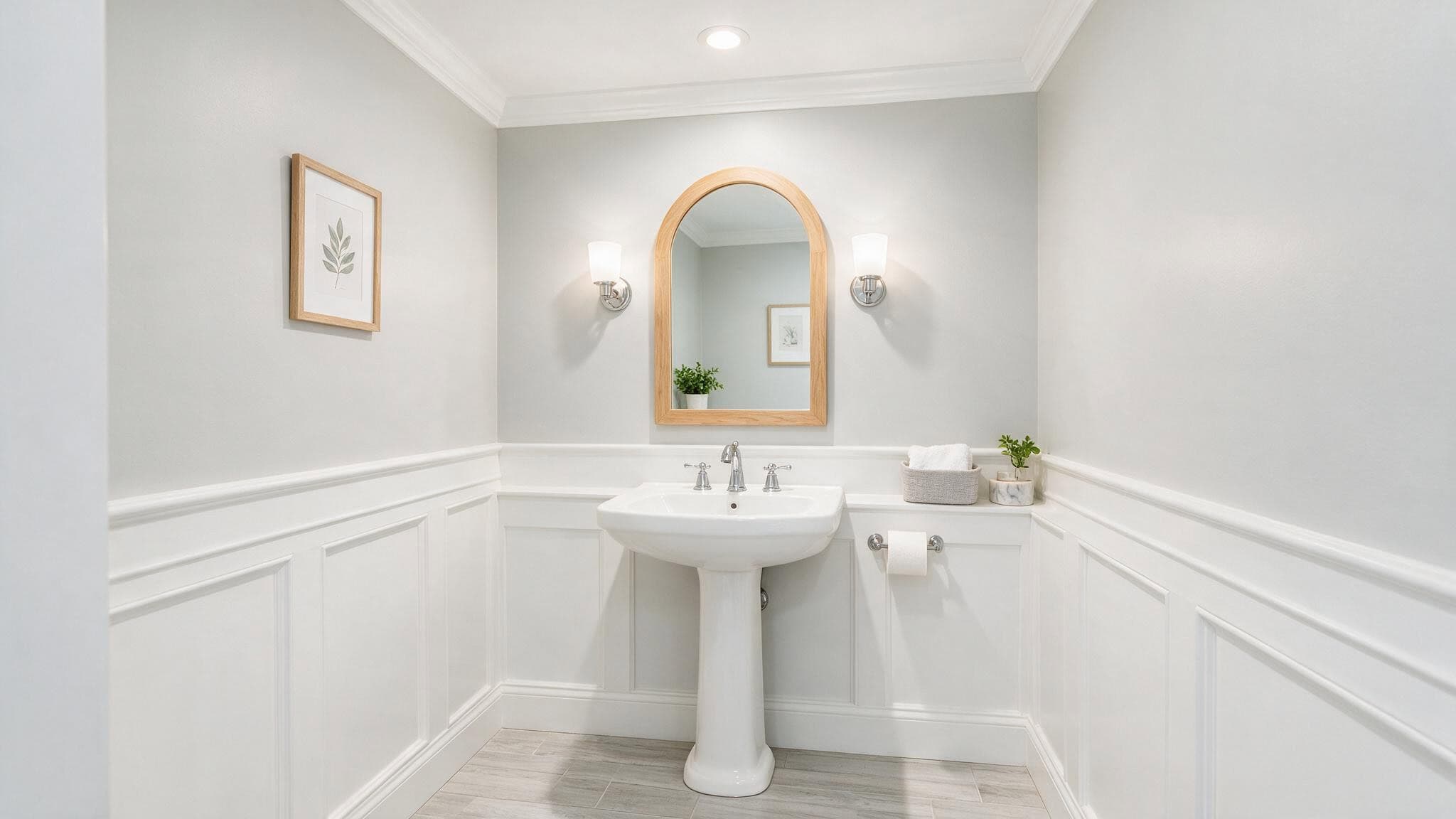
Cosmetic updates only
This is the big one. A one-week remodel is a refresh, not a gut job. We’re talking new paint, new light fixtures, new faucets and hardware, maybe a simple tile backsplash or a new vanity. No moving walls, no rerouting plumbing, no rewiring.
The “don’t move anything” rule
The single most common mistake homeowners make? Wanting to move the toilet or sink “just a few feet.” But House Beautiful points out that any layout change means new plumbing runs, new electrical lines, and possibly new gas lines for a vent — and each of those requires inspections that add days to the timeline.
That alone adds days to the timeline. If you’re keeping the same footprint, you’re already ahead.
Why tile work is the enemy of speed
Tile takes time. Diane Welhouse, CKBR, Executive Director of Milwaukee Chapter of NARI, says tiling can take a couple of weeks since each piece must be measured and cut, and then you have to wait for grout to dry. If your current tile is in good shape and you can work around it, you save a ton of time. If you’re set on new tile, keep it to a single accent wall or a backsplash — not a full floor-to-ceiling job.
The materials trap
Custom anything means waiting. Custom cabinets have a 2 to 4 week wait time after measurement. Custom glass shower doors cannot be measured or ordered until the tub and walls are installed. High-end countertops?
You need the base cabinets in first, then laser measurement, then cutting. For a one-week timeline, you need prefab or off-the-shelf materials that are already in stock. If you fall in love with a special-order tile that’s backordered, your week-long remodel turns into a month-long saga.
Size matters
Smaller bathrooms are faster. Less square footage to demo, less to rebuild, fewer fixtures. A powder room can realistically be done in a week. A master bath with a separate tub and shower? That’s pushing it, unless you’re doing a very surface-level refresh.
How the pros deliver: a step-by-step look
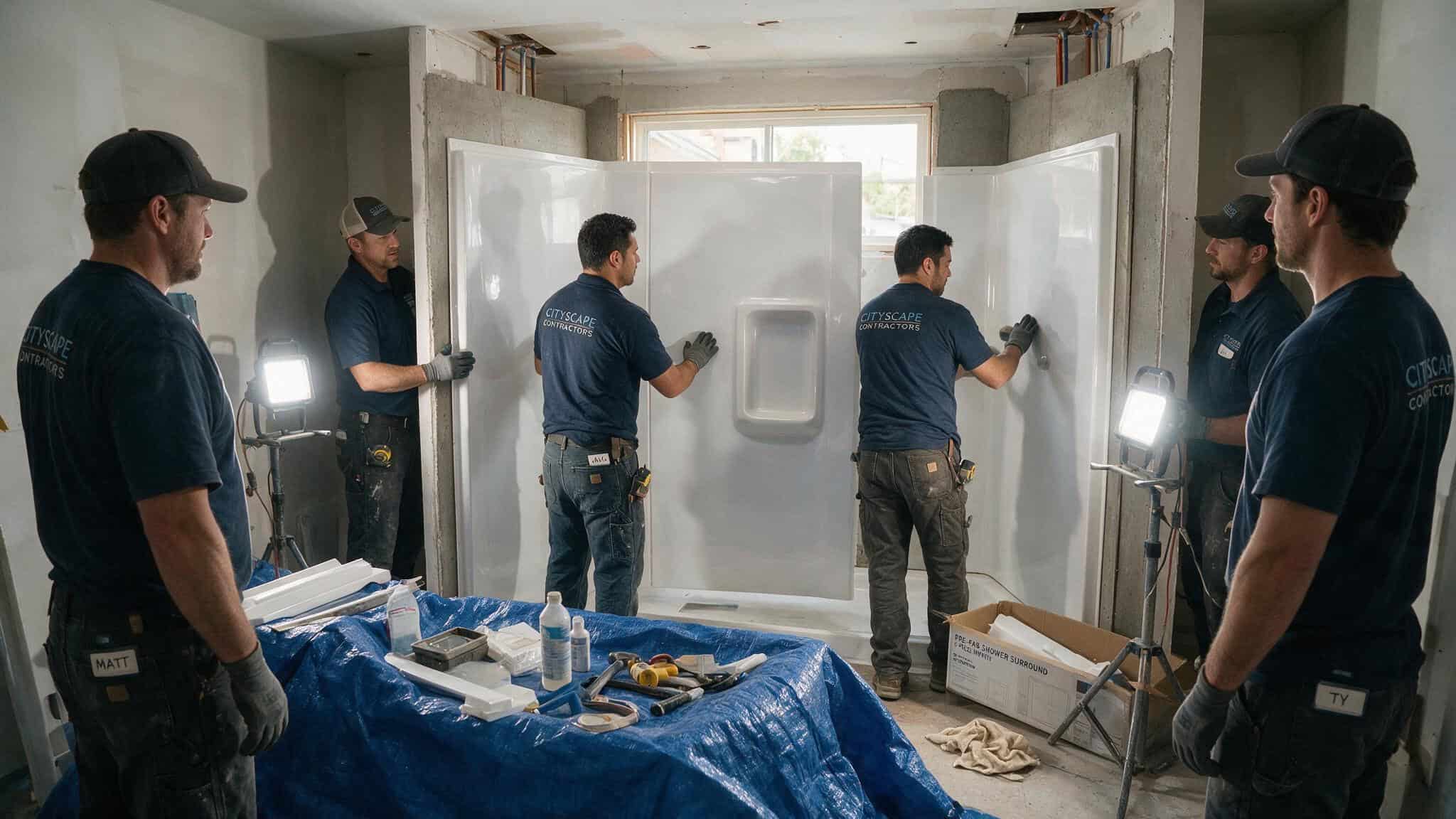
So who pulls this off? One Week Bath in Southern California has transformed over 5,000 bathrooms using a process that’s totally different from a traditional contractor’s approach. Their CEO, Matt Plaskoff, has more than three decades of experience building A-list celebrity homes — he was one of the original Lead Construction Consultants on ABC’s ‘Extreme Makeover: Home Edition’ and received Fred Case’s ‘Remodeling Entrepreneur of the Year’ award.
The mobile showroom advantage
Instead of dragging you to a showroom, they bring the showroom to your house. That means you pick your materials in your actual space, with your lighting and your layout. No guesswork, no “I thought it would look different.”
Employee teams, not subcontractors
Most contractors hire subcontractors for different trades — plumber, electrician, tile guy, etc. Subcontractors juggle multiple jobs, so they might not show up when you need them. One Week Bath uses their own employees. That means accountability, consistent scheduling, and no waiting for someone else’s project to finish.
The 7-step process
They have a structured sequence: First Contact, Consultation, In-Home Design, Technical Walk, Job Prep, Delivery & Installation, Post Construction. It’s not a loose plan — it’s a day-by-day schedule. They know exactly what happens Monday, Tuesday, Wednesday, and so on.
There’s also One Week Bathroom (Hofmann Design Build) in Providence, New Jersey, a division of Hofmann Design Build, which has over 40 years of experience serving New Jersey. They offer a design-build service with a contingency fund that is just 1% of the final price — which is low.
The price tag: what a one-week remodel actually costs
According to GreatBuildz, the average cost of a one-week bath remodel is $5,000 to $20,000 or more. That’s a wide range because the scope can vary a lot, and a realistic timeline is essential since a full gut renovation often takes six to ten weeks. One Week Bathroom offers services including bathroom makeovers, reconfigurations, conversions, and expansions, with pricing typically falling within this range. A simple refresh with new fixtures and paint will land on the lower end. If you’re doing new tile, a new vanity, and a prefab shower surround, you’ll be closer to the middle or top.
Your budget needs to cover labor, materials, permits, and a cushion for surprises. And the materials you choose are the biggest cost driver — so the practical question is is $10,000 enough for a bathroom remodel? Luxury tile, high-end fixtures, and custom cabinetry add up fast.
According to HGTV, a minor bathroom remodel has an average return at resale of 102%. So you’re not just spending money — you’re investing in your home’s value.
What can go wrong: the hidden pitfalls that blow the schedule
Here are the most common schedule-killers we found.
Hidden water damage and mold
You think you’re just swapping out a vanity, but when the contractor pulls off the old one, they find water damage behind the wall. Suddenly a simple fixture swap becomes a full rip-out, mold remediation, and new drywall. That’s not a one-week fix anymore. It’s the kind of discovery that can double your timeline and budget.
Supply chain delays
That special tile you picked out? It might not be in stock. The faucet you wanted?
Six weeks out. The only way to protect against this is to order everything before the work starts and confirm it’s actually on-site. Don’t trust a “should be here by then.”
Permit and inspection delays
Most professional jobs require permits. And if your contractor has to wait for an inspector to show up, that can eat a day or two. Some cities have a backlog. If you’re changing plumbing or electrical, you’ll need inspections at multiple points. That’s why the one-week timeline works best for cosmetic work that doesn’t trigger permits.
The surprising role of homeowner indecision
If you haven’t picked out your tile, your vanity, your light fixtures, and your hardware before day one, the project stalls. Contractors can’t install what you haven’t chosen. The ones who deliver a one-week timeline often force you to make all decisions upfront — and that’s actually a good thing.
The big decision: one week vs. one day vs. full remodel
Not every bathroom problem needs a week. There are three options, and they serve different needs.
One-day remodel
Companies like Re-Bath promise to complete most renovations in days, not weeks. A one-day remodel typically includes new fixtures, fresh paint, a prefab tub or shower surround, and no plumbing or electrical changes. It’s the fastest option, with the least disruption. But you’re limited to off-the-shelf products, you can’t change the layout, and the quality might not match a full renovation.
One-week remodel
This is the middle ground. You get more customization than a one-day job — you can pick your own tile, upgrade fixtures, and do a partial tile surround. But you still can’t move walls, change plumbing, or wait for custom orders. It’s ideal for a bathroom that’s functional but dated.
Full remodel
A full remodel typically disturbs the home for 4 to 16 weeks, depending on scope. House Beautiful notes that swapping out cabinets and fixtures alone takes about three weeks, and adding new tile and a heated floor can take several months. If you’re adding new tile and a heated floor, you’re looking at several months. A full remodel allows structural changes, custom features, new plumbing and wiring, and solves hidden problems like old pipes or mold. The ROI is higher, and you get exactly what you want.
Finding the right contractor: a step-by-step guide
The red flag isn’t price — it’s the absence of a detailed timeline and a clear change-order process. If a contractor says “we can do it in a week” but can’t tell you what happens on day two, walk away.
Here’s what to look for:
- Referrals and credentials. Ask friends, check licenses and insurance. Portfolio and references from previous clients give you insight into work quality and reliability. A contractor who’s done one-week bathrooms before should have a portfolio of projects on that timeline.
- Detailed quotes. Get breakdowns of labor, materials, permits, and timeline. Compare apples to apples.
- A contract that covers everything. Before signing, review terms, payment schedules, warranties, and timeline. The contract should include payment schedule, start and finish dates, specific work hours, bathroom use rules, and how changes will be handled. House Beautiful even suggests you can put in rules like “no work before 8 AM” or “crew can’t use your bathroom.” It’s your house.
- Project management process. Ask how they keep the one-week timeline on track. If they use employee teams instead of subcontractors, that’s a good sign. If they have a day-by-day schedule, even better.
- GreatBuildz offers a free contractor-matching service for the LA area at (818) 317-3567 if you want pre-vetted options.
Before the work starts: the critical pre-work that makes or breaks the timeline
You need to have your design finalized, materials ordered and on-site, permits pulled, and a clear schedule before anyone picks up a hammer. For a room addition or deck, trenches or holes are excavated, then footings or foundations are added by pouring concrete. Electricians run cable for new fixtures or outlets. Custom cabinets have a 2 to 4 week wait time, and tiling can take a couple of weeks due to custom measurement, cutting, and grout drying. Custom glass shower doors cannot be measured or ordered until the tub and walls are installed, and if you’re waiting on any of these, your one-week timeline is already shot.
The pros who deliver one-week remodels have a supply chain that’s already set up, and they know what’s in stock, they’ve pre-ordered the materials, and they’ve scheduled the crew in advance. For complete overhauls, the room is usually stripped down to the studs. Heating and air conditioning specialists install new vents and registers. They’ve done the work of planning before you even see the first invoice.
So is a one-week bathroom remodel right for you?
Only companies that have built their entire business model around speed can deliver it reliably. A general contractor who says that sure, they can do it in a week is probably underestimating the scope.
If your bathroom fits the criteria — cosmetic only, same layout, minimal tile, prefab materials, small to medium size, and you’re willing to do the pre-work, a one-week remodel is achievable. You’ll pay $5,000 to $20,000, get a 102% average return at resale, and be back to normal life in a week.
But if you’re dreaming of a new layout, a heated floor, custom cabinets, or a full tile shower, a one-week timeline isn’t realistic. A full remodel takes longer, costs more upfront, but gives you a bathroom that’s exactly what you want and will last for years.
Frequently Asked Questions
How quickly can you do a bathroom renovation?
A bathroom renovation can be done in as little as one week if you’re sticking to cosmetic updates like paint, fixtures, and hardware, and keeping the same layout. For a full gut renovation with layout changes, custom tile, or new plumbing, expect 4 to 16 weeks. The timeline depends entirely on the scope of work and how much planning you do upfront.
What does a $10,000 bathroom remodel look like?
A $10,000 bathroom remodel typically falls in the middle range of a one-week refresh, covering new fixtures, a vanity, paint, and a prefab shower surround or simple tile work. It won’t include custom cabinetry, high-end tile, or layout changes, but it can give a dated bathroom a clean, modern look. The average cost for a one-week remodel is $5,000 to $20,000, so $10,000 is a solid budget for a mid-range refresh.
Can a bathroom renovation be done in one week?
Yes, a one-week bathroom renovation is possible if you’re doing cosmetic updates only, keeping the exact same layout, using off-the-shelf materials, and working in a small to medium bathroom. The key is meticulous pre-work: materials must be ordered and on-site, permits secured, and all design decisions finalized before demo starts. Hidden issues like water damage or supply chain delays can still blow the schedule, so working with a contractor who specializes in speed is critical.
What’s the difference between a one-day and one-week bathroom remodel?
A one-day remodel is limited to swapping fixtures, paint, and a prefab tub or shower surround with no layout or plumbing changes, using only off-the-shelf products. A one-week remodel allows more customization, like choosing your own tile, upgrading fixtures, and doing a partial tile surround, but still can’t move walls or wait for custom orders. The one-week option gives you a better balance of speed and personalization.
Why does tile work take so long in a bathroom remodel?
Tile work takes time because each piece must be measured and cut individually, and then you have to wait for grout to dry, which can add a couple of weeks to a project. Full floor-to-ceiling tile jobs are especially time-consuming, which is why a one-week remodel works best with minimal tile, like a single accent wall or backsplash. If your existing tile is in good shape, working around it saves a ton of time.
How much does a one-week bathroom remodel cost?
A one-week bathroom remodel typically costs between $5,000 and $20,000, depending on the scope and materials. A simple refresh with new fixtures and paint lands on the lower end, while adding new tile, a vanity, and a prefab shower surround pushes it toward the middle or top. The materials you choose are the biggest cost driver, and a minor bathroom remodel has an average return at resale of 102%.