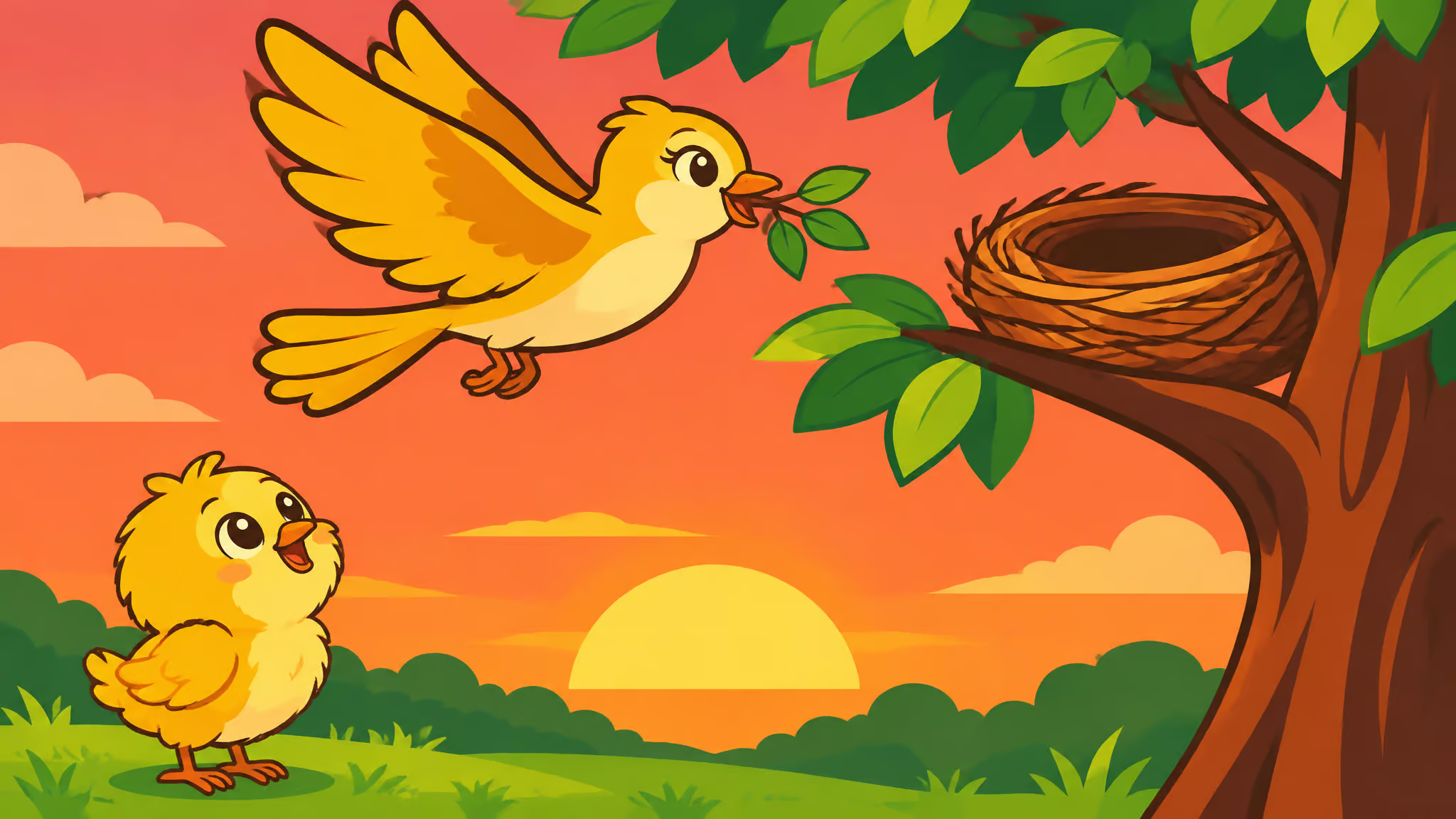
The “are you my mummy” story is P.D. Eastman’s picture book Are You My Mother?, which you’ll also find retold across six YouTube read-aloud adaptations by Sean Ross, Ms. Gravonski, MovingStories, Mr Storytime, Little Cozy Nook, and Neenie’s Nest. A mother bird leaves her egg to find food, the egg hatches while she’s gone, and the flightless baby bird walks off to ask a kitten, a hen, a dog, a cow, a car, a boat, a plane, and the Snort if they are his mother before the Snort lifts him back to his nest just as his mother returns. The separation lasts the length of one errand, from her promise that she will be back to her return, keeping the story safe for a small child.
Key Takeaways
The “are you my mummy” story is the children’s picture book Are You My Mother?, written and illustrated by P.D. Eastman, not Dr. Seuss.
Before reuniting with the mother bird in the nest, the flightless baby bird asks eight candidates in exact order: a kitten, a hen, a dog, a cow, a car, a boat, a plane, and the Snort.
Because Are You My Mother? remains under copyright, no legal free full-text PDF exists online, though families can borrow a library copy, watch six full-narration YouTube adaptations, or read the complete beat-by-beat retelling below.
Table of contents
Table of Contents
Are you my mummy? The real title and the author
When a toddler asks for the “are you my mummy” story, or you’re typing that phrase into a search bar at 7:15 p.m., the book you’re looking for is the children’s picture book Are You My Mother?. The cover and the story itself use the word “Mother” from start to finish, while “mummy” is just how plenty of families ask for it at bedtime. If your kid’s question actually came from a nursery rhyme or another picture book where children search for mommy, that’s a whole separate rabbit hole, though this baby bird is usually the culprit.
The title page credits P. D. Eastman as both the writer and the illustrator of Are You My Mother?, a credit that’s also stated or shown in the introductions of all six YouTube read-aloud videos. That single line clears up the other big bedtime debate: Dr. Seuss didn’t write it. P.D. Eastman handled both the writing and the illustrations himself.
How Are You My Mother? begins: the egg and the empty nest
Every retelling starts with the mother bird sitting on her egg until the egg jumps, prompting a quick exclamation from her: “Uh-oh!” in Sean Ross’s reading, “Oh-ho!” in Ms. Gravonski’s, “Aha!” in MovingStories, and “Oh, oh” in Little Cozy Nook and Neenie’s Nest. Before it hatches, she realizes her baby is about to arrive and will want to eat (or “will be hungry” in MovingStories), so she promises she will be back and flies off to find food for her baby bird.
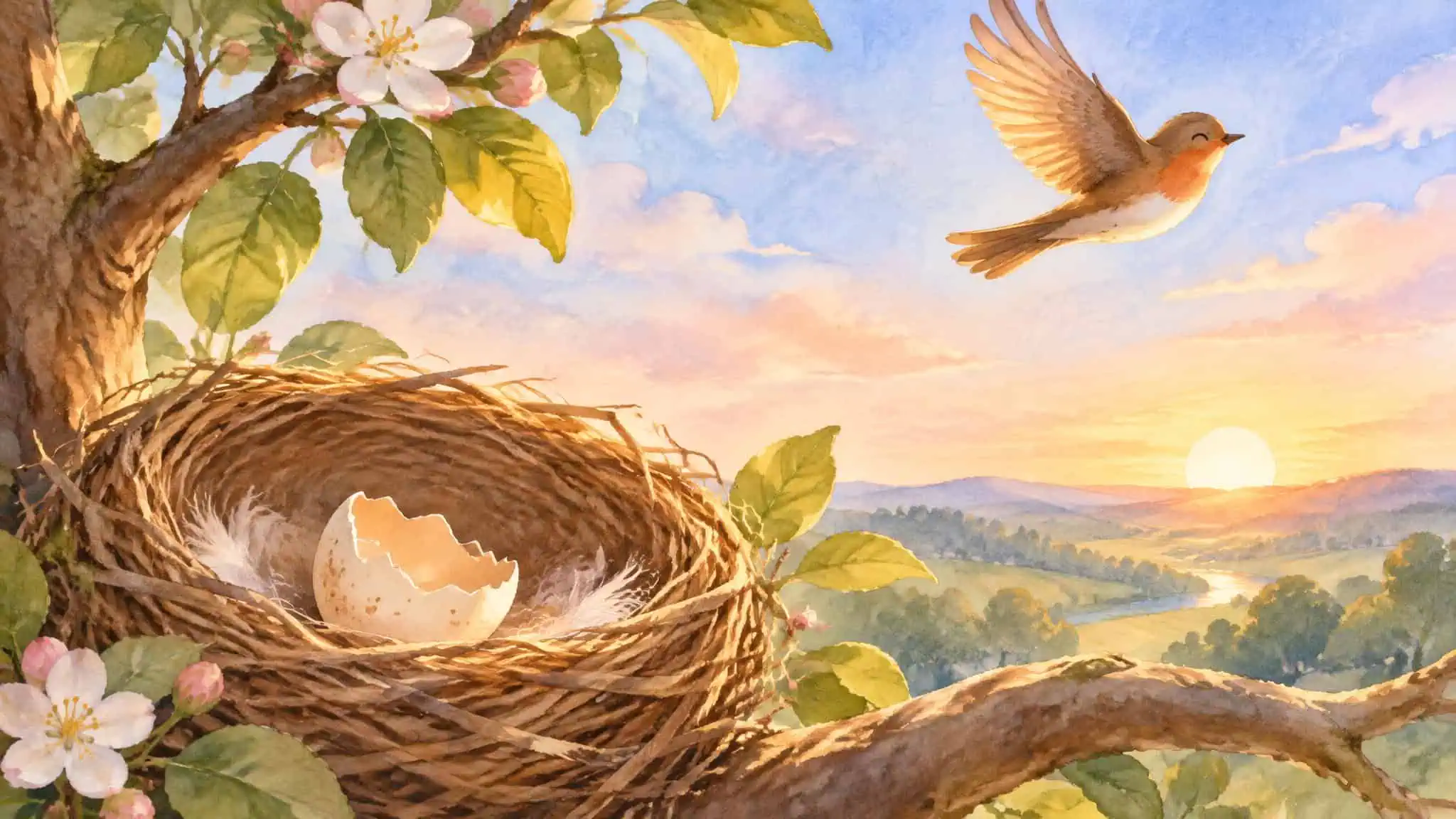
While she is gone, the egg jumps three times in a row, and out comes the baby bird asking, “Where is my mother?” He looks up and down without seeing her, decides he will go and look for her, and steps out of the tree, going down, down, down a long way because he can’t fly, though he can walk. Since he doesn’t know what his mother looks like, he walks right past her on the ground; as the Neenie’s Nest narrator points out from the inside cover, she’s right there wearing a little kerchief on her head and catching a worm, with a little bird behind the rocks.
The eight “Are you my mother?” encounters, in order
The baby bird in Are You My Mother? asks eight candidates in order: a kitten, a hen, a dog, a cow, a car, a boat, a plane, and the Snort. Every single one is wrong, and the encounters split cleanly into four animals that respond and four machines that can’t talk back. Across the first half, each animal turns him down in a different way (silence from the kitten, a flat refusal from the hen, self-identification from the dog, and an incredulous question from the cow), building a cumulative refrain that stacks each rejection before he starts running after vehicles.
The animals that answer: kitten, hen, dog, cow
- Kitten: He asks if the kitten is his mother, and the kitten just looks and looks without saying a thing.
- Hen: The hen answers with a flat “No,” kicking off the stacking refrain in which he notes that neither the kitten nor the hen is his mother before moving along. Between stops, he worries aloud that he has to find his mother, asking where she is and where she could be.
- Dog: The dog tells him plainly that he is not his mother and that he is a dog, expanding the refrain to rule out the kitten, the hen, and the dog in turn.
- Cow: The cow asks how she could be his mother (or how she can be his mother, in Neenie’s Nest) when she is a cow, pairing the dog and the cow alongside the kitten and the hen on his growing list of non-mothers.
At this low point, he wonders if he even had a mother (or asks himself “Do I have a mother?” in MovingStories), then resolves that he knows he did, he has to find her, and he will, he will.
The machines that won’t stop: car, boat, plane
At the fifth candidate, the baby bird stops walking and starts running. He spots a car, decides that old thing could not be his mother, and runs on. Next, he looks way, way down at a boat and calls out that there she is, but the boat doesn’t stop and goes on. Looking way, way up, he sees a big plane and calls out that here he is, mother, and the plane doesn’t stop either. His actual mother is the one character in the book he never asks.
The Snort: the scare that saves the baby bird
If your toddler or preschooler finds the Snort scary, a quick pre-briefing before the page turn fixes it: yes, telling your child ahead of time that the loud machine is actually the hero that carries the baby bird home turns the scare into suspense.
For the eighth and final candidate, the baby bird sees a big thing and runs right up to it, convinced this must be his mother and calling out to her that here he is. As the Neenie’s Nest narrator explains to young viewers, it’s a machine, not a bird. All the big thing says is a loud “SNORT!”
The baby bird immediately realizes she is not his mother, she is a snort, and he has to get out of there. He can’t get away. The Snort goes way, way up, lifting the baby bird up, up, up while the book asks where the Snort is going and the chick panics, asking what this Snort is going to do to him (or “do with me” in MovingStories and Mr Storytime) and begging to get out of there.
When the Snort finally comes to a stop, the exhausted chick asks where he is and says he wants to go home and wants his mother. Then something happens (or “something wonderful happened” in MovingStories): the machine that couldn’t talk becomes the only candidate that acts, setting the baby bird right back in the tree (or right in its nest, in Neenie’s Nest). The baby bird is home, and that up, up, up… right back in the tree arc acts as a built-in fear-and-reassurance valve.
How Are You My Mother? ends
Are You My Mother? ends with the mother bird returning to the tree just after the Snort sets the baby bird back in the nest, and the baby bird recognizing her by elimination. When she arrives, the mother bird asks her baby if he knows who she is, and he tells her yes, he knows who she is. He proves it by running down the entire list of candidates he ruled out along the way, telling her that she is not a kitten, not a hen, not a dog, not a cow, and not a boat or a plane or a snort (which Sean Ross reads with “nor” instead of “or”), before landing on the famous final line:
“said the baby bird. You are a bird and you are my mother”
There’s no drawn-out epilogue after that line. The book ends right on the reunion, where several video narrators simply add “The End” or say they hope you enjoyed it, and the Neenie’s Nest narrator points out how happy the baby bird and mama bird look up in that big, tall tree.
Why Are You My Mother? has lasted generations
The main idea of Are You My Mother? is recognition by elimination: a baby bird who doesn’t know what his mother looks like figures out who she is by ruling out everything she isn’t. Starting from that opening premise right after he hatches, the story uses a separation-and-reunion structure where every wrong guess teaches him a little more about what a mother bird isn’t.
The stacking “was not his mother” refrain after each encounter isn’t filler; it’s the rough draft of his final reunion speech, which is why all six YouTube adaptations preserve the ask-and-eliminate rhythm intact (MovingStories condenses only a few repetitions, and none of the six adds outside commentary). Even better, the baby bird never actually finds his mother on his own: he’s found and carried home.
That quiet twist is why the book has stayed in bedtime rotations for generations, much like other classic picture books that soothe separation anxiety. A small child listening to the story gets to watch the baby bird walk right past his mother, misread eight candidates in a row, and still end up back in his nest within the span of a single errand while his mother is out getting food. Home restores itself even when the kid gets every guess wrong.
How to read Are You My Mother? aloud
Reading Are You My Mother? aloud to a toddler or preschooler works best when the adult slows down at the repetitive refrain about each candidate not being his mother, giving the child a chance to shout no right before turning the page. Pausing there shifts a quiet bedtime read into an interactive call-and-response game that lets your child proudly spot why a cow isn’t a bird, while unique character voices for the four animals and lively sound effects for both the fall and the Snort bring out the physical humor. Those built-in breaks also offer easy moments to introduce early vocabulary words such as hatched alongside the story’s familiar animal and vehicle nouns.
Here at Tidbits of Experience, we know that 7:30 p.m. bedtime energy is a fragile thing, and a book with built-in participation does half the heavy lifting for you when a three-year-old has one last burst of wiggles.
Give each refusal its own voice
The first four candidates give you four distinct comedic beats if you change your delivery for each one:
- The kitten: Give it a flat, deadpan pause. Don’t say a word, just stare at the page for two seconds because the kitten just looked and looked.
- The hen: Deliver a brisk, clipped “No.”
- The dog: Use a friendly, matter-of-fact voice as he explains that he isn’t his mother, he’s a dog.
- The cow: Stretch the line into an incredulous, drawn-out question as she asks how she could be his mother when she is a cow.
Let the sound effects carry the motion between the dialogue. Bounce your cadence three times when the egg jumps three times in a row. Stretch out the tumble when he steps off the edge of the nest and falls further and further down, ending on a gentle plop at the bottom just as the Neenie’s Nest narrator models it. When you reach the eighth candidate, let out a sharp, booming snort, draw out your pacing as the machine lifts him higher and higher up, and then drop back to a calm bedtime tone once it places him safely back in the tree.
Turn the refrain into call-and-response
After the hen and the dog, slow down on the cumulative lines as the narrator checks off the kitten and the hen as non-mothers, and leave a beat of silence before you turn the page. By the third encounter, most toddlers and preschoolers catch the pattern and will yell “No!” the second the baby bird walks up to the cow or the car.
You can borrow a few co-reading moves from the Neenie’s Nest adaptation here too. Point out the mother bird in her kerchief catching a worm on the inside cover before you even start the story. Then, when the baby bird walks right past her on the ground, pause so your child can spot her and confirm that yes, that’s the mother bird from the cover. Ask “what do you think?” right before the baby bird questions a new animal, and pause at the cow to laugh about how the two of them don’t look anything alike.
The vocabulary moments worth pausing on
If you’re reading with a younger toddler who’s still building early word banks, the story’s repetition makes it a great pointing-and-naming book, much like practicing family words with the Finger Family song. Pause right when the baby bird emerges from the shell to teach the action word just as the Neenie’s Nest narrator models it: explain that the word is “hatched,” and the baby bird is hatched. From there, let your toddler point to and name the repeated nouns on each spread: kitten, hen, dog, cow, car, boat, and plane.
Reading it yourself vs. the YouTube read-alouds
Choosing between reading Are You My Mother? yourself and playing a YouTube read-aloud comes down to who controls the pauses: reading the book in person lets you wait for your child’s call-and-response answers, while the six YouTube adaptations deliver hands-free, full-narration consistency. Across YouTube, six independent channels (Sean Ross, Ms. Gravonski, MovingStories, Mr Storytime, Little Cozy Nook, and Neenie’s Nest) have produced separate read-alouds that preserve the exact same core plot and picture-book text while voicing every character. The difference is whether you want to stop on the inside-cover kerchief game and let your preschooler shout at the cow, or let an animated video or friendly host run from start to finish while you unload the dishwasher.
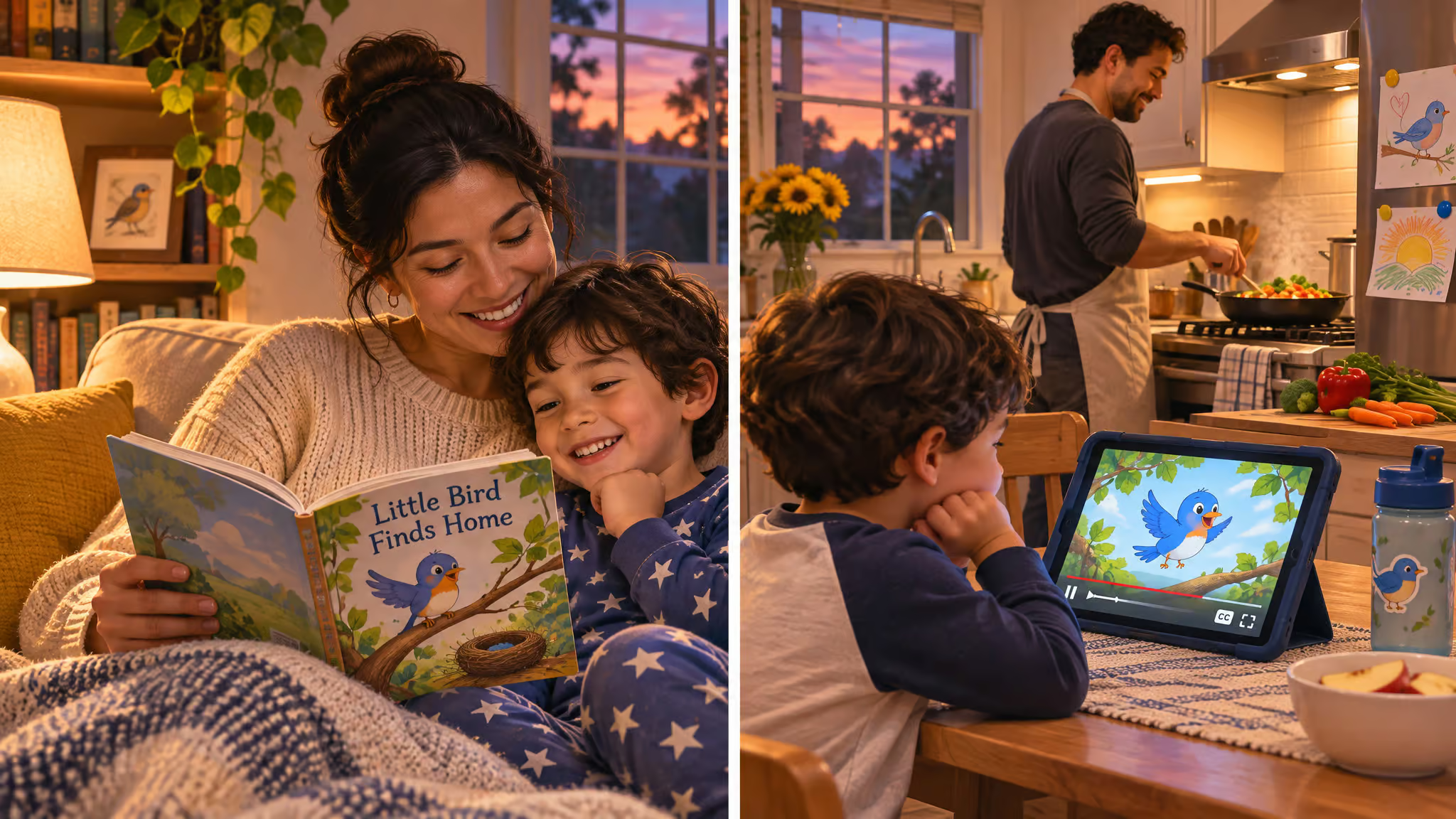
There’s no wrong pick here. At Tidbits of Experience, we treat the two options as tools for different parts of the day: your own voice wins at bedtime when you want the slow, cozy interaction, and a recorded video saves the afternoon when you need five minutes to get dinner into the oven.
The six read-aloud versions and why the words differ
When you search YouTube for the story, you aren’t looking at one video copied across six accounts; you’re choosing among six separate adaptations that package the same picture book in different teaching styles and carry tiny phrasing variations.
The six channels and their styles
If you’re picking a version for a wiggly three-year-old, the decisive difference is whether your kid needs visual motion, a friendly host, or interactive questions to stay settled:
- **MovingStories (`🐦 Are you my mother?
- Animated and Read aloud!`):** Best for a wiggly three-year-old whose eyes wander off still pages, because it adds animation to the read-aloud.
- Mr Storytime (
Are You My Mother | Mr Storytime | Read Aloud Book): Best for kids who like a familiar routine-building host persona; he opens by introducing himself as Mr Storytime and closes with a promise of new videos every week and a reminder to read, sing, and play every day. - Neenie’s Nest (
Are You My Mother): Best for chatty co-viewing; the narrator comments on the cover (pointing out a dog and a bird and doubting that’s the bird’s mother), mentions that birds come from eggs if you didn’t know, asks “what do you think?” along the way, and wraps up by asking kids to click the notification button, give a thumbs up so other kids find the channel, tell friends at school, and come back tomorrow. - Sean Ross (
Are You My Mother by P.D. Eastman, Story Book Read Through, Starring a Baby Bird): A calm, straight read-through with no host persona, ending simply with “hope you enjoyed.” - Ms. Gravonski (
Are You My Mother? Book | Read Aloud): A clean classroom-style read that opens with the title-page credit and closes by inviting viewers who enjoyed the story to subscribe for more. - Little Cozy Nook (
Are You My Mother? by PD Eastman | READ ALOUD for Kids): Framed gently for kids and families, signing off by restating the title Are You My Mother? and crediting author P.D. Eastman once more.
Why the wording changes between versions
If you remember a line slightly differently than the video you just clicked, you aren’t imagining things. Small wording splits show up across the retellings without changing a single plot beat:
- At the mother bird’s departure, MovingStories says the baby “will be hungry,” while the other five say he “will want to eat.”
- At the cow, five versions ask “How could I be your mother?”, while Neenie’s Nest asks “How can I be your mother?”
- During the Snort lift, MovingStories and Mr Storytime ask what the Snort is going to “do with me,” while the others say “do to me,” and MovingStories says “something wonderful happened” where the others say “something happened.”
Neither version is an error, which is great news if you’re retelling the story from memory in a dark bedroom: your kid cares about the rhythm and the voices, not whether you said “could” or “can.”
Reading it for Mother’s Day
Are You My Mother? is also a natural fit for Mother’s Day with toddlers and preschoolers. The Neenie’s Nest narrator even runs the book as seasonal Mother’s Day programming in the week leading up to Sunday, encouraging kids to make a special surprise for their mom. While showing the book’s front matter, the Neenie’s Nest narrator also points out a sweet detail printed inside: P.D. Eastman wrote the story to his own mother.
Can I read the whole book online for free?
The full text of Are You My Mother? is not legally available to read for free as a downloadable PDF or online book scan because P.D. Eastman’s picture book remains under copyright. Parents type “are you my mummy story pdf,” “online book,” or “full book” into search engines every night hoping to pull up the illustrated pages on a phone at bedtime, only to run into spammy links or broken previews. Instead of hunting for an unlicensed scan, you have four legitimate ways to get the complete English story right now: borrow a print or digital copy through your public library, buy the physical book or official ebook, stream one of the six free YouTube read-aloud adaptations, or read the complete beat-by-beat retelling on this page.
| Access route | Free to use tonight? | Official illustrations included? | Pauses for your child’s answers? |
|---|---|---|---|
| Public library print or digital lending | Yes (with library card and available copy) | Yes (full picture book) | Yes (self-paced reading) |
| Purchased print book or official ebook | No (requires purchase; prices may vary) | Yes (full picture book) | Yes (self-paced reading) |
| The 6 YouTube read-aloud adaptations | Yes (free to stream on YouTube) | Yes (shown on screen with voiced narration) | No (plays continuously unless you pause the video) |
| Complete retelling in this article | Yes (immediate on this page) | No (text-only story beats and lines) | Yes (you control the voices and timing) |
If you want the actual illustrations in your hands or on a tablet without spending a dime, your local public library is the best route. A library card gets you access to both the hardcover or board book on the shelf and licensed digital lending apps if a copy is checked in. If this is a book your toddler wants three nights a week, buying a print copy or official ebook from a major bookseller is worth it (prices may vary by format and retailer).
When bedtime is five minutes away and you don’t have the book in the house, skip the sketchy PDF sites. Queue up one of the six free YouTube read-aloud videos from Sean Ross, Ms. Gravonski, MovingStories, Mr Storytime, Little Cozy Nook, or Neenie’s Nest so your child can see the art and hear every character voiced, or dim the screen and perform the eight encounters yourself right from the story beats above.
Frequently Asked Questions
What happens at the end of Are You My Mother?
After the loud Snort machine lifts the frightened chick high into the air and sets him safely back inside his tree nest, the mother bird returns from her errand. The baby bird proves he recognizes her through elimination, declaring that she is not a kitten, hen, dog, cow, boat, plane, or snort—she is a bird and his mother.
What is the main idea of Are You My Mother?
The story centers on learning through elimination and soothing separation anxiety. Because the newborn chick has never seen his mother, each failed guess teaches him what she isn’t, and his eventual rescue by the Snort reassures young listeners that home comes back together within the span of a single errand.
How do I read Are You My Mother aloud to a toddler or preschooler?
Slow down during the stacking refrain where the narrator lists who wasn’t the mother, leaving a brief pause before turning the page so your child can shout “No!” Giving the four animals distinct voices—a silent stare for the kitten, a clipped refusal for the hen, a plain explanation for the dog, and a stretched-out question for the cow—turns a quiet story into an interactive game.
Where can I read the full Are You My Mother book online?
Because P.D. Eastman’s book remains under copyright, you won’t find a legal free PDF scan floating around online. To get the complete story with illustrations legally, you can borrow a print or digital edition through your local public library, purchase an official copy or ebook (prices may vary), or stream one of the six free YouTube read-aloud videos.