You’ve seen the ads, right? Wegovy costs an arm and a leg at the pharmacy, and then some telehealth site pops up offering “semaglutide” for a fraction of the price. And you pause, because your group chat is full of moms comparing notes on these exact drugs, and somebody’s cousin swears by the cheap version.
Here’s the honest answer to “are weight loss injections safe?”, it depends entirely on which one you’re actually buying. There are three different products sold under the same drug names: FDA-approved injections, compounded copies (custom-mixed by a pharmacy), and grey-market “research peptides” sold online. Each has a completely different risk profile. The approved drugs have an established safety record with known side effects and real monitoring.
The danger is the shortcuts around them: versions the FDA says go to market without review for safety, effectiveness, or quality. Let’s untangle it.
Key Takeaways
Four GLP-1s are FDA-approved for weight loss: liraglutide (Saxenda), semaglutide (Wegovy), tirzepatide (Zepbound), and orforglipron (Foundayo, approved in April 2026), and the approved versions are the ones with a real safety track record.
As of May 31, 2026, the FDA had logged 990 adverse event reports for compounded semaglutide and more than 730 for compounded tirzepatide, and those numbers are probably the floor, since reporting isn’t required everywhere.
The Medicare GLP-1 Bridge offers eligible Part D patients a $50 monthly copay through December 31, 2027, and there’s no single “safest” injection, safety depends on the product, your health history, and who’s monitoring you.
Table of Contents
Which weight loss injections are FDA-approved, and what they do
GLP-1 injections (short for glucagon-like peptide-1, a hormone your gut already makes) are considered safer than older weight-loss pills because they mimic something your body does naturally, they’ve been used for type 2 diabetes for about 20 years with an established safety record, and unlike the older stimulant-based drugs, they’re built for long-term use. In practice, they trigger insulin release, slow stomach emptying, and dial up fullness signals in your brain’s appetite centers, which is why they commonly produce 10-20% weight loss, while older stimulant drugs rarely get past 5% and aren’t recommended beyond three months.
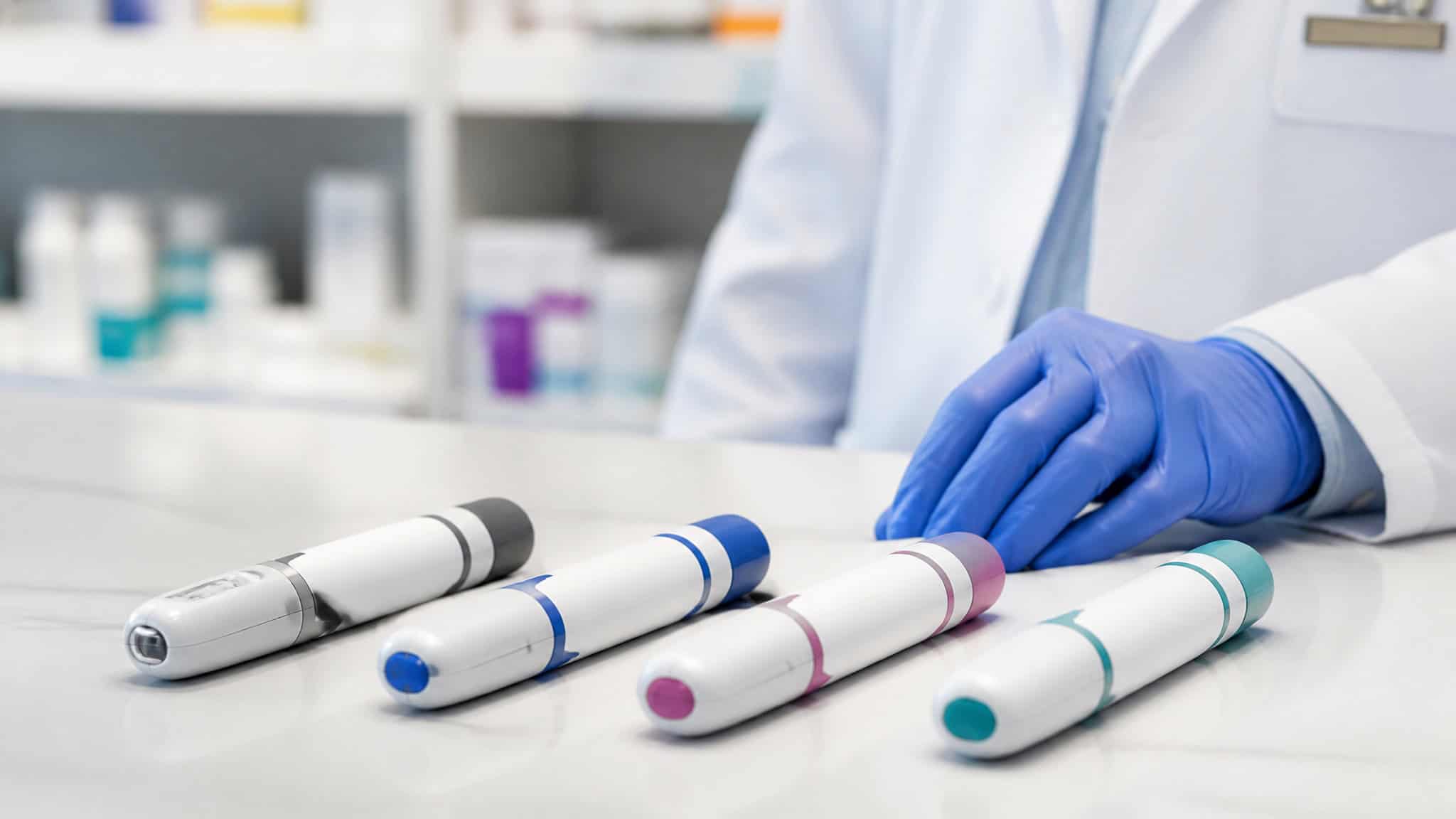
Four are FDA-approved for obesity treatment: liraglutide (Saxenda), semaglutide (Wegovy), tirzepatide (Zepbound), and orforglipron (Foundayo), which got approved in April 2026 under the FDA’s National Priority Voucher Program. Three come as injections, and two brands now have pill versions. Foundayo and oral Wegovy. So if you’re needle-averse, that’s worth knowing.
Here’s how they work, dishwasher-conversation version. Your small intestine already makes GLP-1 after you eat. The drug just does it more. That does four things: prompts your pancreas to release insulin (which lowers blood sugar), blocks glucagon (the hormone that tells your liver to dump more sugar into your blood), slows your stomach emptying, that’s the “I ate three bites and I’m full” effect, and talks to the parts of your brain that handle hunger, turning up fullness and turning down appetite. They were originally developed to treat type 2 diabetes, which is why the side effects tend to skew digestive.
Do they work? Yes, though the honest range is wide. Meta-analyses show about a 3-5% average weight loss after 6-12 months for the class as a whole, but that floor includes older agents. Semaglutide achieves up to 15% of total body weight, and tirzepatide topped 20% in trials, sometimes rivaling bariatric surgery.
GLP-1s commonly produce 10-20% loss, up to around 25% in the latest trials. For contrast, the older drugs, phentermine, topiramate, orlistat, often stimulants, rarely got people past 5% and typically weren’t recommended beyond three months. Their only real advantages are cost and access, which, fair. Studies also show better overall health on GLP-1s, and some suggest lower risk of heart attack and stroke.
There’s no single “safest” drug in the bunch, but the approved ones have all had someone check the homework.
Who should not take weight loss injections
GLP-1 injections aren’t safe for people with a personal or family history of medullary thyroid cancer or MEN2 syndrome (a rare inherited condition), a history of pancreatitis, gastroparesis (a stomach that empties too slowly), type 1 diabetes, severe kidney disease, or a severe allergy to GLP-1 drugs, and the thyroid one carries a black-box warning, which is the FDA’s most serious safety flag. That’s the first thing to hit, and it’s a real talk-to-your-doctor item, not a maybe.
The rest of the list, before you ask for a prescription:
- Pancreatitis history, acute or chronic, it’s a no-go.
- Gastroparesis, the drug already slows your stomach; this one compounds that.
- Type 1 diabetes, these are built for type 2 and weight management, not type 1.
- Diabetic retinopathy, a caution flag, especially with semaglutide specifically, which matters if you’re choosing between options.
- Prior bariatric surgery, needs extra thought.
- Pregnancy and breastfeeding, if you’re trying to conceive, you stop at least two months before starting.
On kidneys and hearts: severe kidney disease (eGFR under 15, your doctor knows this number, you don’t need to quiz yourself) is a contraindication, and there’s a documented case of dehydration-driven kidney injury in someone on one of these drugs. On the flip side, the class shows some evidence of reduced heart attack and stroke risk. If you have hypothyroidism and you’re wondering about safety, there’s no source-backed answer either way, that one’s an honest unknown, so bring it to your doctor rather than the internet.
Older adults deserve a specific mention: if someone has frailty or a history of heart attack or stroke, they may need extra nutritional and activity support while on these drugs to prevent sarcopenia (losing muscle mass and strength). That’s more support, not less treatment.
Side effects and how to manage them
The most common side effects of GLP-1 injections are nausea and vomiting, diarrhea, and constipation, and the reassuring part is they hit hardest when you start or bump up your dose, then usually improve. Translation: the rough patch is usually the beginning, and it tends to resurface at every dose increase before settling again. The basics that help: smaller, more frequent meals, stopping when you feel full, enough protein to protect your muscle, and at least two liters of water a day. (More on this in Side Effects of Weight Loss Injections (Ozempic and Others).)
Also on the list: dizziness, a faster heartbeat, infections, headaches, indigestion, and some temporary mild redness or itchiness at the injection site. Usually mild, usually short-lived.
Management, as your friend would tell it:
- Eat smaller, more frequent meals.
- Stop eating when you’re full, even if it’s two bites earlier than feels normal.
- Keep your protein up to protect muscle.
- Drink at least two liters of water a day, standard pharmacist hydration guidance.
Now the rare-but-serious stuff, calm register: pancreatitis (inflammation of the pancreas), medullary thyroid cancer, acute kidney injury, and worsening of diabetes-related retinopathy. These are rare, but you should know they exist. One more: GLP-1s don’t cause low blood sugar on their own, but the risk shows up when you combine them with other glucose-lowering drugs. And since these drugs slow stomach emptying, they can change how weight-based psychiatric medications get absorbed, one line, but worth remembering.
The compounded and counterfeit problem
Compounded semaglutide is not the same as FDA-approved Ozempic or Wegovy, and that’s the whole point: compounded versions skip the FDA’s pre-market review for safety, effectiveness, and quality entirely. Nobody verified them before they hit the market. Some also use “semaglutide sodium” or “semaglutide acetate”, salt forms that are actually different active ingredients than what’s in the approved drugs, and the FDA has no information on whether they behave the same in your body. There’s no known lawful basis for using them in compounding at all.
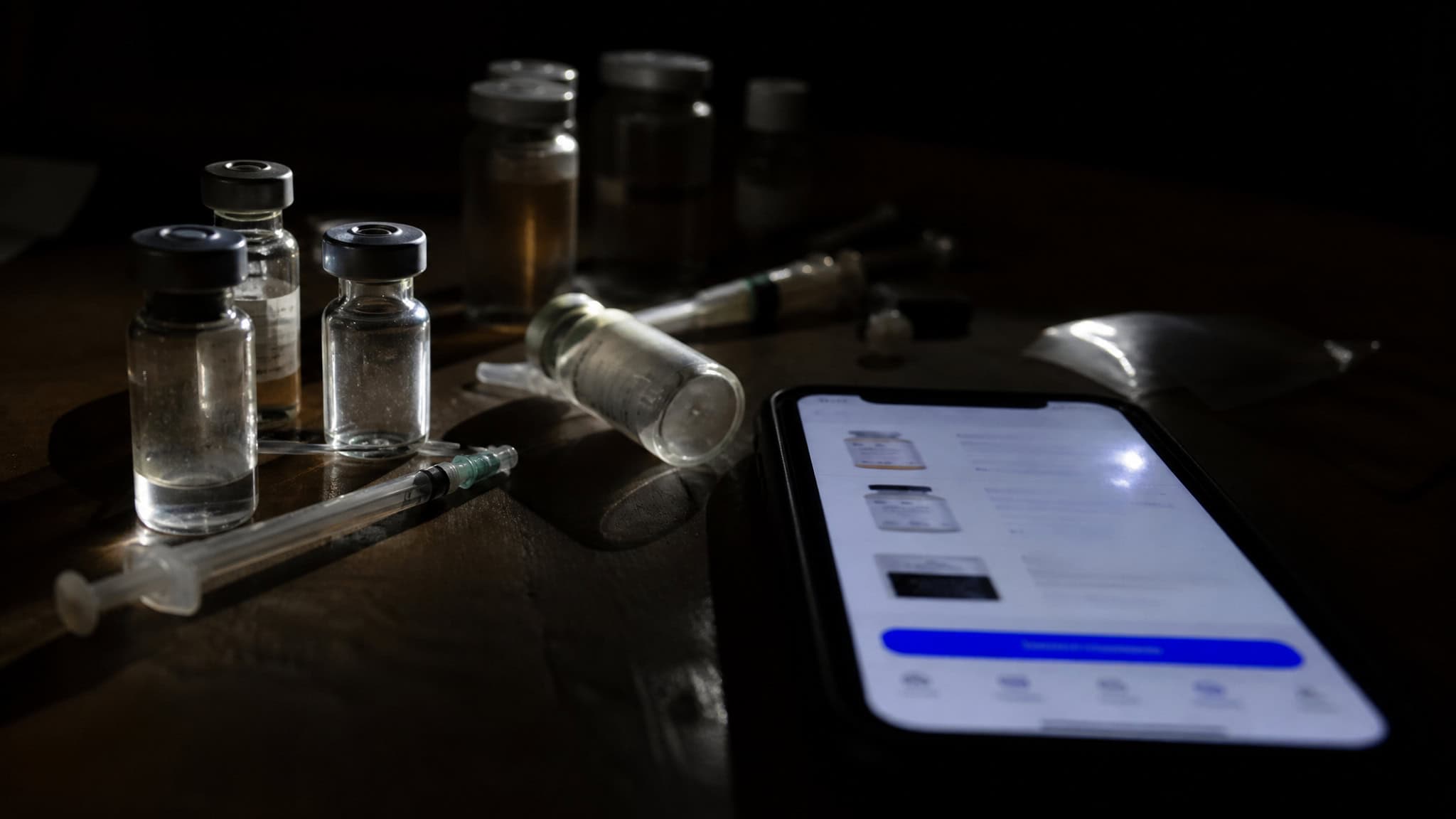
Same name on the label, different thing in the vial. As of May 22, 2025, the FDA outlawed mass production and sale of compounded GLP-1s anyway.
Red flag: Salt forms like semaglutide sodium aren’t the approved ingredient, and the FDA has no data on how they behave in your body.
Is tirzepatide safer than semaglutide? Honestly, nobody can crown a winner, head-to-head safety data is limited. Both share the same class contraindications, tirzepatide showed over 20% weight loss in trials, and compounded tirzepatide has logged more than 730 adverse event reports. Keep any comparison at the class level, because that’s where the evidence actually is.
Why do people buy these? Because they’re expensive and the approved versions aren’t accessible to everyone. It’s a cost problem, not a character flaw. But here’s what the FDA actually says about compounding: it’s a last resort, meant for when an approved drug genuinely can’t meet a medical need, an allergy to an ingredient, a dose that doesn’t exist off the shelf, or isn’t available, like during a shortage. Not for saving money.
Fairness beat: legitimate compounding is real. A licensed pharmacy can custom-make a drug for a specific patient with a prescription, and with properly compounded product using approved ingredients, the active peptide is identical even if other ingredients differ, so a true GLP-1 allergy persists no matter the source.
Then there’s the fraud, and this part is genuinely wild:
- Some fake labels name compounding pharmacies that don’t even exist.
- Others borrow the names of real, licensed pharmacies that had nothing to do with the product. So “a real pharmacy is on the label” proves nothing.
- Counterfeit Ozempic has been marketed in the U.S., fake product pretending to be the brand, possibly containing the wrong ingredient, too much, too little, or none at all, or something actively harmful. Selling it is illegal, and the FDA investigates reports.
- One documented consequence: a reaction to fraudulent compounded tirzepatide, redness, swelling, pain, a red lump at the injection site, from a product whose label named a pharmacy that never made it.
Dosing errors are another real issue. Compounded vials mean you’re measuring your own dose with a syringe, which is genuinely tricky math. Multiple adverse event reports are tied to it, some requiring hospitalization, and even healthcare professionals have miscalculated. Some errors come from going beyond approved dosing: more per dose, more often, faster escalation.
Too much feels like nausea, vomiting, diarrhea, stomach pain, constipation. The fix is one awkward phone call: confirm how you’re measuring and injecting with your provider or the compounder. Cheaper than a hospital visit.
The numbers, caveat first: adverse event reporting isn’t required everywhere, so these are probably the floor. As of May 31, 2026, there were 990 reports for compounded semaglutide and more than 730 for compounded tirzepatide. Many look like the approved drugs’ known side effects, and it’s often impossible to confirm the drug actually caused a given event. We don’t always know, and that’s the honest answer. In practice, the tell with sketchy product is packaging and labeling that doesn’t match what a state-licensed pharmacy would provide.
Why risky products are still being marketed
No, “research peptide” GLP-1 products sold online are not safe to use. Retatrutide and cagrilintide can’t legally be compounded under federal law, they’re not in any FDA-approved drug, and nobody has found them safe and effective for anything, they’re still being studied. The FDA has warned the companies selling research-labeled drugs directly to consumers.
So why are they still everywhere? Because of a timeline you’d only know if you lived through it:
- 2022 to 2024: Semaglutide and tirzepatide were in a nationwide shortage. If your pharmacy was mysteriously out, that’s why. During that window, the FDA let registered outsourcing facilities (special licensed facilities) make copies.
- May 22, 2025: After the shortage resolved, the FDA banned mass production and sale of compounded GLP-1s, allowing an exception only for individual prescriptions.
- February 2026: The FDA announced it would act against mass-marketed compounded products and the misleading “same as the real thing” claims. The agency has also identified areas of concern for compounded GLP-1 drugs, is working with state regulatory partners, and will continue communicating with compounders.
Today’s “compounded semaglutide” ads are shortage-era infrastructure outliving its legality. The demand behind them hasn’t cooled either: high-profile celebrity endorsements and pop-culture portrayals, the SNL Ozempic parody, Wired’s piece on Mounjaro, reflect how many people are using these drugs well beyond the medical reasons they were built for, and experts have urged caution about that kind of broad use.
The FDA has also been closing back doors. Import Alert 66-80 keeps GLP-1 raw ingredients with potential quality concerns out of the U.S. supply chain, with two caveats: it doesn’t apply to manufacturers that have passed FDA inspection, and it doesn’t restrict legal compounding. Targeted, not a blanket ban.
Enforcement has run the whole supply chain: warning letters to telehealth companies marketing unapproved retatrutide straight to consumers (if you’ve seen those ads, that’s who they went to), to distributors selling GLP-1 ingredients to compounders, and to the facilities repackaging the stuff. The FDA also monitors the internet for fraudulent and unapproved drugs and has sent letters telling sellers to stop illegally marketing semaglutide and tirzepatide online.
And then there’s the grey market: research peptides, powders, self-mixing kits, patches, drops, chewables, sold entirely outside the real supply chain. Nobody verified what’s in them. They could be contaminated, wrongly dosed, or a completely different substance. Some are labeled “for research purposes” or “not for human consumption” while being sold to humans with dosing instructions.
Research chemicals don’t come with a dosing schedule. That’s the tell. The ads often feature misspellings, grammar errors, and made-up professional societies, and the pitch leaves out who shouldn’t take the drug and what side effects look like. Products marketed as “gentler”, vitamin or microdose hybrids, have no clinical evidence behind them.
How to vet providers and handle medication safely
The prerequisite for buying weight loss injections from any telehealth service is a real prescription from a licensed doctor and a fill at a state-licensed pharmacy, and most telehealth services are legitimate; the failures happen with inadequate screening and follow-up. But How Do Weight Loss Injections Work? In plain terms, they act on appetite, blood sugar, and digestion, which is exactly why a doctor’s screening matters. The FDA keeps an actual red-flag checklist, and it’s screenshot material:
- They claim the compounded drug is “the same” as the FDA-approved one. It isn’t. That’s the whole point.
- The price is too good to be true. Look, these drugs are expensive, and a deal is tempting. But deep discounts are a classic warning sign.
- The medicine looks different than before or than pictured, the packaging is broken, or there are no instructions in the box.
- No licensed doctor actually screened you or prescribed before the meds arrived. If the intake was three questions and a credit card field, that’s a problem.
- No licensed doctor reachable with questions afterward. You deserve a human to ask. That’s not a luxury.
- Spelling errors on the label or a wrong pharmacy address. If the label reads like autocorrect wrote it, pause.
For sourcing, it’s two steps: get a real prescription from your doctor, fill it at a state-licensed pharmacy. (Licensed means someone’s checking on it.) The FDA’s BeSafeRx resource is the guide for buying prescription meds online without getting burned, bookmark it.
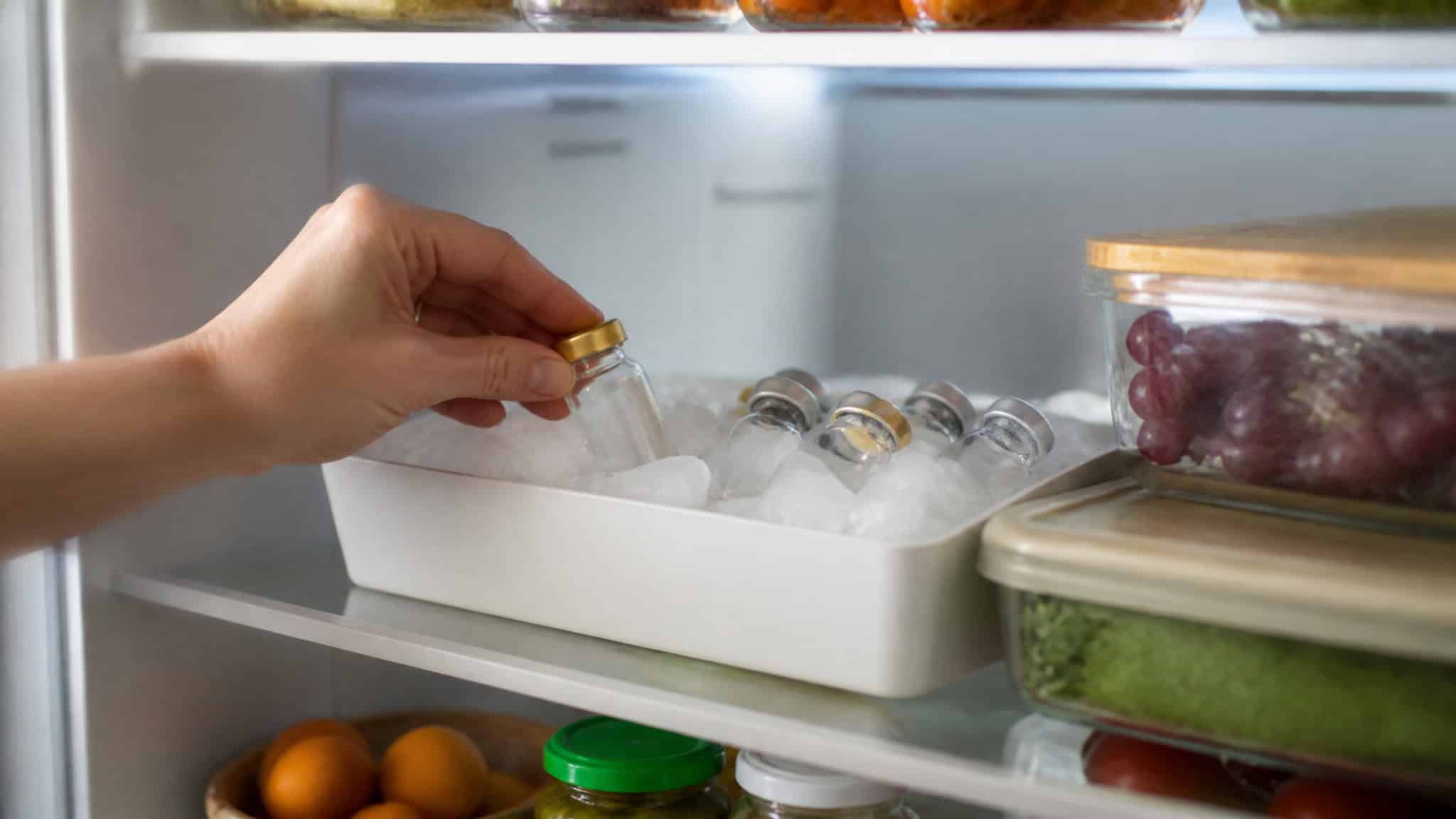
Handling, because this matters as much as sourcing: these injectables require refrigeration. It’s on the label. The FDA has received complaints about compounded GLP-1s showing up warm, or packed with flimsy, insufficient ice, so if that happened to you, you’re not imagining it. The call is: don’t use it, even though tossing expensive meds stings.
Multi-dose vials have their own rules:
- Use the vial within 28 days of first opening. Once it’s punctured, contamination risk climbs, like leftovers you don’t keep for a month.
- Throw out what’s left at day 28, even though it’s money in the trash.
- Use a new sterile needle and syringe for every single dose.
If something goes wrong, report it to the FDA’s MedWatch program:
Report a problem: MedWatch, online or fax 1-800-FDA-0178. Questions? druginfo@fda.hhs.gov or 855-543-3784.
And if you’re confused about your meds or what the label says, ask your doctor, and contact the compounder or telehealth platform you bought from. Nobody should feel dumb for asking. These are confusing meds.
When approved drugs become unsafe: the monitoring problem
Yes, published case reports show GLP-1 injections can contribute to disordered eating or dangerous appetite suppression, specifically when nobody is monitoring. That’s the contrarian heart of this whole article: the molecule is rarely the problem. The monitoring is. Even FDA-approved drugs become dangerous with unmonitored use. These are published case reports, explicitly not typical outcomes.
- A woman with a prior gastric bypass went on semaglutide and was eating only about 400 calories a day, losing another 20 pounds over 3 months. Her dietician flagged the loss of lean mass, that’s what good care looks like, and the drug was stopped. (She was also treated for OCD with fluoxetine; relevant context, not the headline.)
- A patient on 5 mg tirzepatide went 13 days consuming nothing except water and Diet Coke, losing 21 pounds. She described her plan as fasting for six days and eating one time a week. That’s alarming, not a hack, and it’s where the drug meets something deeper.
- A telemedicine patient got blind titration (dose increases without check-ins) and zero dietary counseling. She stopped feeling hungry or thirsty, barely drinking, while also taking a diuretic for blood pressure. Her creatinine jumped from 0.6 to 3.6 mg/dL and she was hospitalized for acute kidney injury. The lost thirst is the quiet danger; the diuretic is the lesson that your full medication list matters.
- Another patient’s excessive fullness dropped intake to 300-350 calories a day. And two patients with Bardet-Biedl syndrome on tirzepatide plus setmelanotide lost 15% of their body weight but needed dose reductions for severe food aversion (under 800 calories a day) and counseling to accept hunger between weekly doses as normal.
What the clinicians recommend: screen for disordered eating before and during treatment (SCOFF, a five-question screen, plus the EDE-Q or the Binge Eating Scale), watch for excessive appetite suppression, which can mimic ARFID (avoidant/restrictive food intake disorder, a real eating disorder, not picky eating), avoid maximal dosing, provide nutritional counseling up front, and build a team: medical, psychological, dietary. And one grounding beat: even ACE inhibitors and denosumab needed dose-adjustment systems after launch. New powerful drugs always require monitoring to catch the problems. Related reading: Mounjaro Weight Loss Injections: What You Need to Know.

Long-term safety, psychiatric questions, and stopping
Are GLP-1 weight loss drugs safe long-term? The honest answer is: depends what you mean by long-term. There’s about 20 years of diabetes use with an established safety record, but tolerability beyond 2 years of weight-loss use is unknown, and you can’t just extrapolate the diabetes data to the higher doses used for obesity. The long-term picture is still being written.
On the psychiatric front, the research and real-world samples show no clear association with depression or suicidal ideation, genuine reassurance for anyone who’s read scary headlines. Hypoglycemia is only a risk when combined with other glucose-lowering drugs. And yes, the slowed-stomach-emptying effect can alter levels of weight-based psychiatric medications, worth repeating for anyone managing mental health meds.
Now the part that just sucks, and there’s no hack for it: about two-thirds of lost weight comes back within a year of stopping, because the hunger and cravings return when the drug isn’t holding them down. That’s not a willpower failure. The drug was doing a job, and when it stops, the job stops. Practically, that means staying on the drug long-term. And whether tapering or maintenance dosing could soften that is a question the research doesn’t answer yet.
Cost, access, and why the risky market exists
Weight loss injections are expensive, insurance coverage is inconsistent, and Medicare Part D doesn’t cover GLP-1s for weight loss, but the one concrete affordable option right now is the Medicare GLP-1 Bridge, which gets eligible Part D patients a $50 monthly copay, running July 1, 2026 through December 31, 2027.
That’s the empathy part of this story. The grey market exists because the front door is locked. It’s a price-tag problem, not a willpower problem, and consumer warnings without access fixes leave the demand fully intact. Coverage varies wildly between plans, so it’s worth actually checking yours; the sticker price isn’t the whole story.
If you or a parent is on Medicare, the Bridge is worth checking if you qualify, ask your provider and check the CMS website. Two clicks of effort for potentially real savings. It’s temporary and currently active, so the window is now.
The bigger picture, briefly: there’s push for the FTC to enforce against ads that leave out risk information or mislead people about FDA approval, the same misleading ads you’ve been scrolling past. There’s an eight-principle Obesity Bill of Rights, and the Treat and Reduce Obesity Act to expand Medicare access to comprehensive obesity treatment. Not a rally. Just the landscape. And the last word on outcomes: GLP-1s deliver the best results when paired with good nutrition, physical activity, and behavior changes, the drug is one part of the plan, not the whole plan.
There’s also no source-backed answer on safety for people with hypothyroidism specifically, that’s a bring-it-to-your-doctor question, not an internet one. Same with the kidney and heart questions: severe kidney disease is a hard contraindication, but the class shows some reduced heart attack and stroke risk, so those situations need an individual conversation, not a blanket rule.
The bottom line
There’s no single safest weight loss injection, because safety depends on three things: which product tier you’re actually getting (approved, compounded, or grey-market), your personal health history, and who’s supervising the treatment. The approved options. Saxenda, Wegovy, Zepbound, Foundayo, each have documented efficacy ranges and shared contraindications, and no head-to-head safety data crowns a winner.
The one-sentence verdict: approved injections are generally safe under medical supervision, with known side effects; compounded and grey-market versions carry risks that nobody reviewed before selling them to you; and who’s watching your intake matters as much as which drug you take. For buying medicine online safely, start with the FDA’s BeSafeRx guide, and if something goes wrong, MedWatch is where you report it.
People Also ask
What is the downside of taking weight loss injections?
The most common downsides are digestive: nausea, vomiting, diarrhea, and constipation, usually worst at the start and at every dose increase before settling. Rare but serious risks include pancreatitis, medullary thyroid cancer, acute kidney injury, and worsening diabetic retinopathy. And there’s a practical one people skip: the drugs slow stomach emptying, which can change how other weight-based medications get absorbed.
Do you regain weight after stopping Ozempic?
Yes — about two-thirds of lost weight typically comes back within a year of stopping, because hunger and cravings return once the drug isn’t suppressing them. That’s physiology, not a willpower failure. It’s why these drugs are built for long-term use, and whether tapering or maintenance dosing could soften the rebound is still an open research question.
What is the safest shot to take to lose weight?
There’s no single safest injection — head-to-head safety data between semaglutide (Wegovy) and tirzepatide (Zepbound) is limited, so nobody can crown a winner. What’s verifiably safer is the product tier: FDA-approved options like Saxenda, Wegovy, Zepbound, and Foundayo have reviewed safety data, while compounded and grey-market versions skip that review entirely. Your health history and who’s monitoring you matter as much as the drug itself.
How long can you stay on weight loss injections?
These drugs are built for long-term use, and staying on them is often necessary since weight tends to return when you stop. There’s about 20 years of safety data from type 2 diabetes use, though tolerability beyond two years of weight-loss use specifically is still unknown, and you can’t fully extrapolate the diabetes data to the higher obesity doses. Long-term use is a keep-talking-to-your-doctor situation, not a hard stop date.
Are GLP-1 weight loss drugs safe to take long-term?
There’s a solid safety record from roughly 20 years of GLP-1 use in type 2 diabetes, but the honest answer for weight-loss use is that tolerability beyond two years is unknown. The higher doses used for obesity can’t be assumed to behave identically to diabetes doses. Research shows no clear association with depression or suicidal ideation, which is genuine reassurance, but the long-term picture is still being written.
Who should not take GLP-1 injections for weight loss?
They’re off the table for people with a personal or family history of medullary thyroid cancer or MEN2 syndrome, a history of pancreatitis, gastroparesis, type 1 diabetes, severe kidney disease, or a severe GLP-1 allergy — the thyroid risk carries a black-box warning, the FDA’s most serious flag. Other cautions include diabetic retinopathy (especially with semaglutide), prior bariatric surgery, and pregnancy or breastfeeding, with a stop of at least two months before trying to conceive.
How can I spot red flags when buying weight loss injections from a telehealth company?
The big ones: claims that a compounded drug is ‘the same’ as the FDA-approved version, prices too good to be true, no licensed doctor screening you before meds arrive or reachable afterward, spelling errors or a wrong pharmacy address on the label, and medicine that looks different than pictured or arrives warm with insufficient ice. Legitimate means a real prescription filled at a state-licensed pharmacy — the FDA’s BeSafeRx guide covers buying meds online safely.
Is tirzepatide safer than semaglutide?
Honestly, nobody knows — head-to-head safety data is limited, so the comparison stays at the class level. Both share the same contraindications (thyroid cancer history, pancreatitis, gastroparetic stomach, and so on), tirzepatide showed over 20% weight loss in trials versus up to 15% for semaglutide, and compounded tirzepatide has logged more than 730 adverse event reports. Efficacy differences are documented; a safety winner isn’t.
Why are compounded GLP-1s still being sold if the FDA banned them?
The FDA banned mass production and sale of compounded GLP-1s on May 22, 2025, after the 2022–2024 shortage that had temporarily allowed them ended. Today’s ads are shortage-era infrastructure outliving its legality — compounding is now only lawful as a last resort for individual prescriptions when an approved drug genuinely can’t meet a medical need, not for saving money. The FDA announced in February 2026 it would act against mass-marketed compounded products and their ‘same as the real thing’ claims.