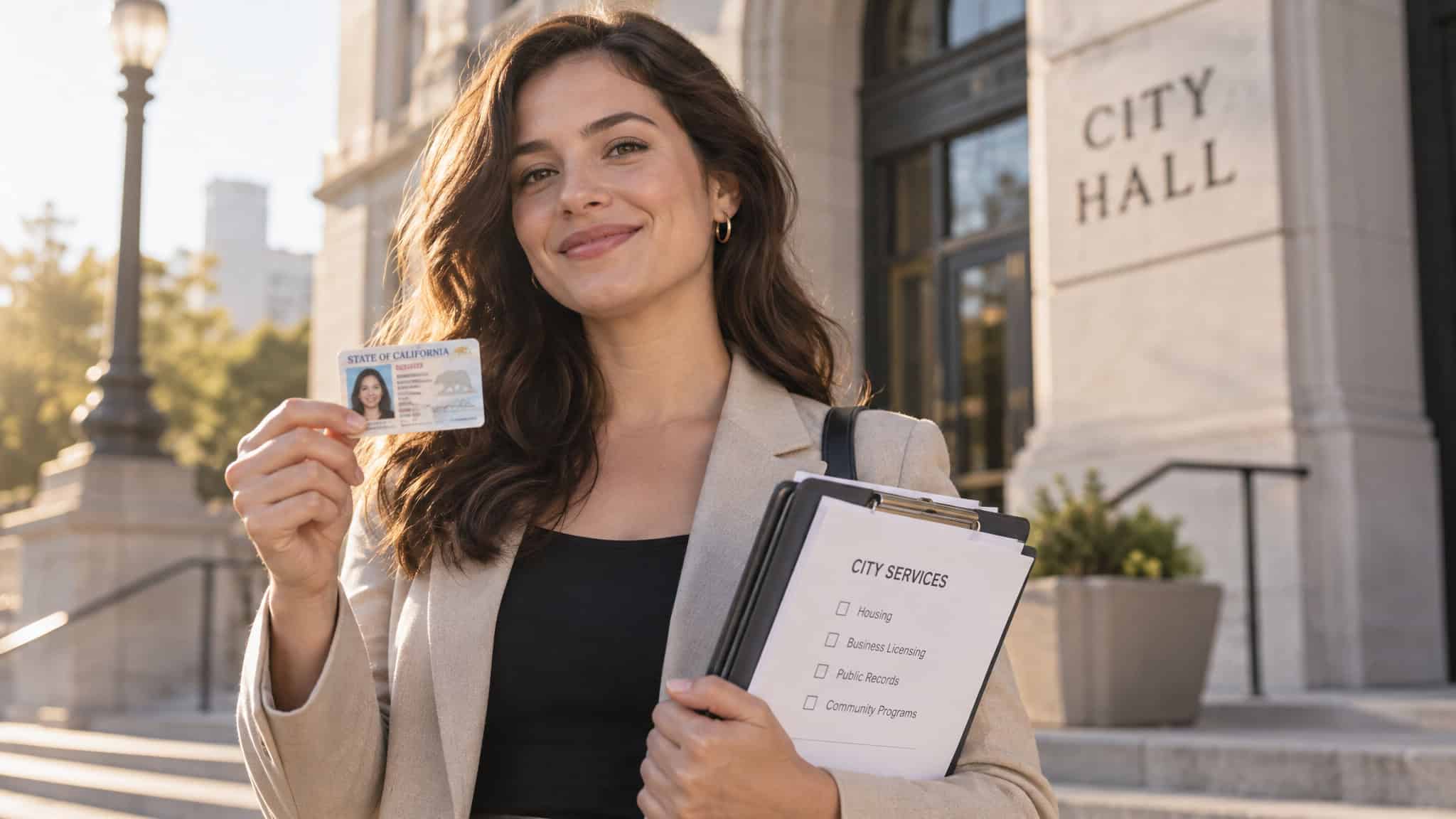
The internet’s version of this answer is “be 18 and have an ID.” The reality is a notarized application that asks for your stage name, the nicknames that go with it, five years of addresses, and a set of fingerprints taken at the police station. Those are two very different jobs, and only one of them is real.
Here’s the honest answer: there’s no degree, no national rulebook, and no single list of qualifications. What actually stands between you and a stage is a patchwork, and it comes in three layers. The first layer is the law everywhere or almost everywhere: you have to be at least 18 and show a government photo ID, and no formal education is required anywhere. The second layer depends entirely on where you live.
Some cities and states require an entertainer license, fingerprints, a background screening, even mandated training before you can legally work. Florida decided in 2024 that the age floor itself moves to 21 statewide, so the same question gets a different answer two states apart. The third layer is what clubs want: fitness, stage presence, the ability to sell a conversation. None of that has a regulatory paper trail anywhere, which is exactly why so many articles about it are half made up.
The trick, and honestly the first thing I’d tell anyone to check, is sorting whatever requirement you’ve just heard about into the right layer. Is it law, is it local law, or is it just the club’s preference dressed up as a rule? This article sorts out the big ones: age, licensing, criminal records, mandatory training, house fees, and what a club owes you in return. Want the fuller path from curious to first shift? The beginner’s guide to becoming a stripper covers the audition and lifestyle side.
Key Takeaways
The universal legal floor is 18 with a valid government photo ID and no education requirement, but Florida raised its statewide minimum to 21 effective July 1, 2024, and Jacksonville did the same at the city level.
Some cities require an actual entertainer license: Ashland, Missouri charges $100/year, requires a notarized application with your Social Security number, stage names, fingerprints, and a police photo, and bars applicants with certain convictions in the last five years (felonies) or two years (misdemeanors).
Washington requires state-facilitated “Know Your Rights” training through the Department of Labor and Industries before you can get or renew your license, and it’s the only state in this record that caps house fees (the lesser of $150 or 30% of collections per eight-hour shift) and mandates panic buttons, keypad-secured dressing rooms, and a customer violence blocklist.
Table of Contents
The short answer: legal minimums vs. club expectations
Legally, you need to be at least 18 with a valid government photo ID, and that’s where the universal requirements end. No state requires a diploma, a class, or a resume. The second tier is jurisdictional: some cities and states add entertainer licenses, fingerprinting, background screening, or mandated training, and some don’t require any of it. The third tier is everything clubs claim to want: fitness, stage presence, sales ability, house rules.
Here’s the honest part: no regulatory source specifies audition criteria anywhere, so any generic skill list you’ve read was invented by whoever wrote it. In some cities, the paper trail is real enough that your stage name is literally a field on a notarized government application. Everything below sorts these layers out one at a time.
How old do you have to be? The age-floor patchwork
There’s no single national age, but 18 is the common floor, and alcohol is what moves it.
The baseline and the alcohol variable
The same venue can legally have an 18 floor when it’s dry and a 21 floor when it’s wet, because alcohol service raises the bar. Washington wrote this into statute: 18 to be on the premises, 21 where alcohol is served. Before that, the split lived in Liquor and Cannabis Board rulemaking; the substitute bill moved it into law itself. Nobody under 18 is allowed on the premises at all.
Where 21 is the flat minimum
Florida went further. HB 7063/SB 796 bans anyone under 21 from working in an adult entertainment establishment statewide, effective July 1, 2024. Jacksonville separately raised its dancer minimum from 18 to 21 under Mayor Lenny Curry. The answer can change at the city line even within one state. Florida’s Beverage Law is its own lane: vendors can’t employ anyone under 18, with narrow exceptions like an age-17 professional entertainer who isn’t in school, but no exception ever permits a minor to perform adult-entertainment nudity.
One detail worth knowing about Florida: employers must verify age with one of a few specific documents: a driver’s license, a state ID card, a passport, or a U.S. Uniformed Services ID, and there’s no defense for not knowing someone’s age or being lied to about it. The criminal risk sits on the employer, which is exactly why clubs check IDs like their freedom depends on it.
The under-21 ban under fire: Florida’s court fight
No, an 18-to-20-year-old cannot legally work as a dancer in Florida as of July 1, 2024, though the rule is under an unresolved First Amendment challenge, so the ground could shift.
The timeline is quick: the bill passed the Legislature in March 2024, Gov. DeSantis signed it in May, and it took effect July 1. The penalties are steep, and the sources don’t fully agree on how steep: employing or allowing a dancer under 21 to perform nude is characterized as a second-degree felony in one source and as knowing employment punishable as a first-degree misdemeanor in another, so I’m giving you both rather than picking one.
In July 2024, Cafe Risque, Sinsations, a dancer named Serenity Michelle Bushey (barred because she’s under 21), and Exotic Fantasies, which is a retail store with no dancers at all, sued through First Amendment attorney Gary Edinger. Attorney General Ashley Moody’s office responded with a 35-page motion to dismiss before U.S. District Judge Allen Winsor. The state frames the ban as narrowly tailored anti-trafficking protection and points to bikini bars as alternative venues. The plaintiffs counter that no less-burdensome alternatives were considered and no credible evidence links clubs to trafficking.
Precedent so far runs the state’s way: Jane Doe I v. Landry (5th Cir. 2018), Valadez v. Paxton, DC Operating v. Paxton, and Wacko’s Too v. City of Jacksonville all upheld age restrictions.
The case isn’t decided, so nobody can honestly tell you how it ends.
Do you need a license? Municipal entertainer licensing, worked end-to-end
It depends entirely on where you live: some cities require a literal government license to dance, and many require nothing at all. Ashland, Missouri is one city that does, and it’s a useful worked example precisely because it’s not a standard; it’s proof of how specific local rules get.
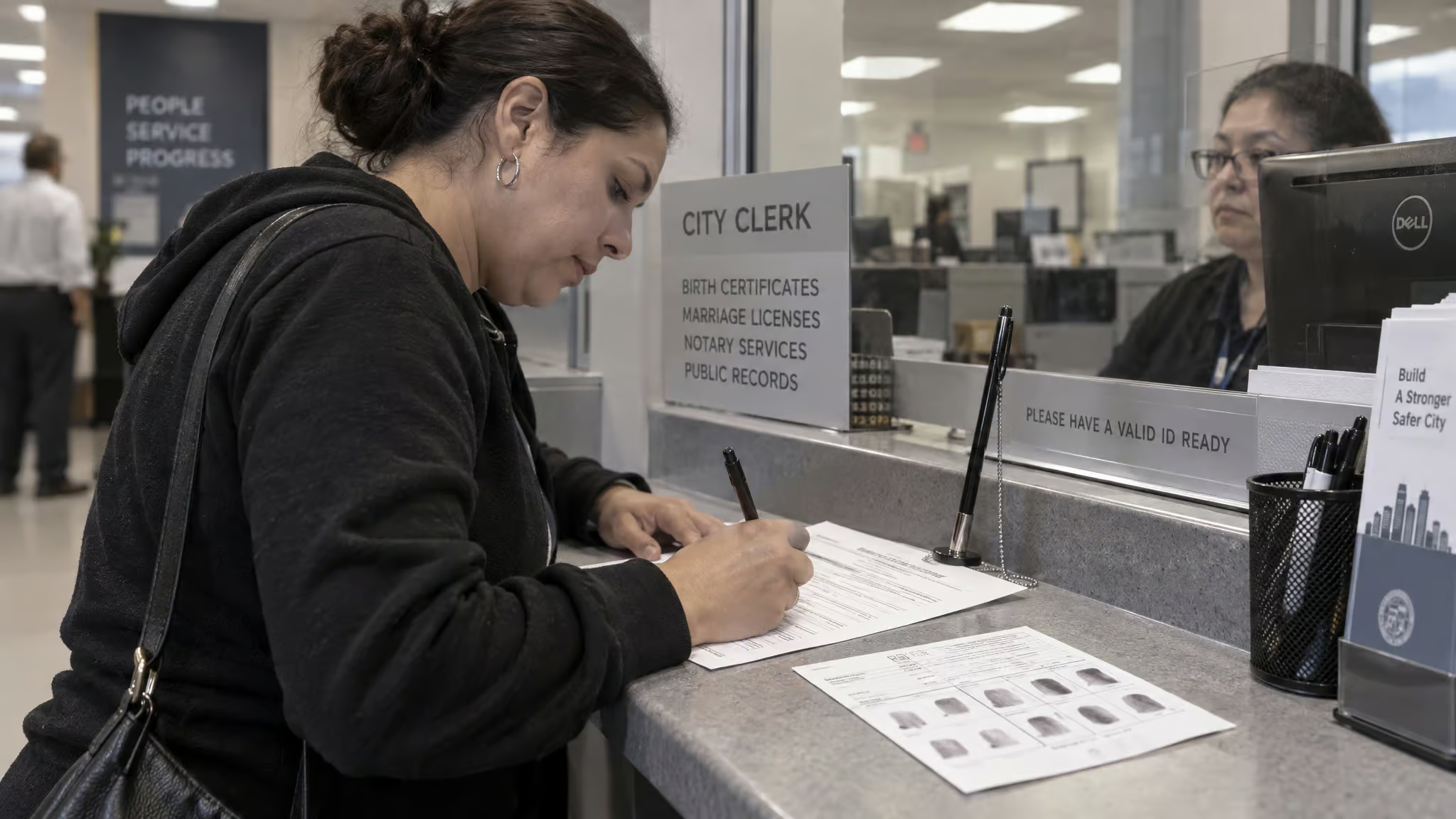
What the application actually demands
In Ashland, you file a notarized application with the City Clerk. It asks for your name, address, phone, date and place of birth, Social Security number, your stage names and the nicknames attached to them, five years of residences, three years of work history, your intended workplaces, and a sworn oath. The police department takes your fingerprints and photograph. You don’t need an “intent to hire” statement from a licensed business, and applying without one changes nothing, which means you can apply before you have a job lined up.
Fees, terms, and renewals
The entertainer license runs $100 a year, next to $500 for a business, $250 for a manager, and $50 for a server. The license year runs July 1 through June 30, renewals get filed June 15 to 30, and licenses are nonrefundable, nontransferable, and tied to a specific location. The Police Chief investigates and reports within ten working days, then the Board of Aldermen approves or denies within 45 days, and a denial can be reviewed by a court.
Ashland’s license calendar, at a glance
Entertainer license: $100/year. License year: July 1 to June 30. Renewal window: June 15 to 30. Licenses are nonrefundable, nontransferable, and location-specific.
Working before approval
The law doesn’t stop at the club owner: in Ashland it’s unlawful both to run an unlicensed adult entertainment business and to knowingly work in one. And if the license isn’t posted on the wall, that itself can count as evidence of a violation (that’s what “prima facie” means: on its face, enough to establish the point unless you rebut it). The practical move is to check your city clerk’s office or police department before you work a single shift, not after. In most places, that office is the answer to “where do I even find this stuff out.”
Criminal record, health checks, and geography: the disqualification screens
Yes, you can work with a criminal record, a record isn’t an automatic bar, at least not in Ashland’s example, where the disqualifications are time-limited windows rather than blanket bans. Ashland rejects applicants with qualifying felonies in the last five years, or misdemeanors and ordinance violations in the last two years involving sexual offenses, prostitution, pornography, indecent exposure, or controlled substances. A license revocation or suspension in any city within the past five years also disqualifies you. That’s one city’s rule, not a universal standard, so check with your own city clerk before you count on it.
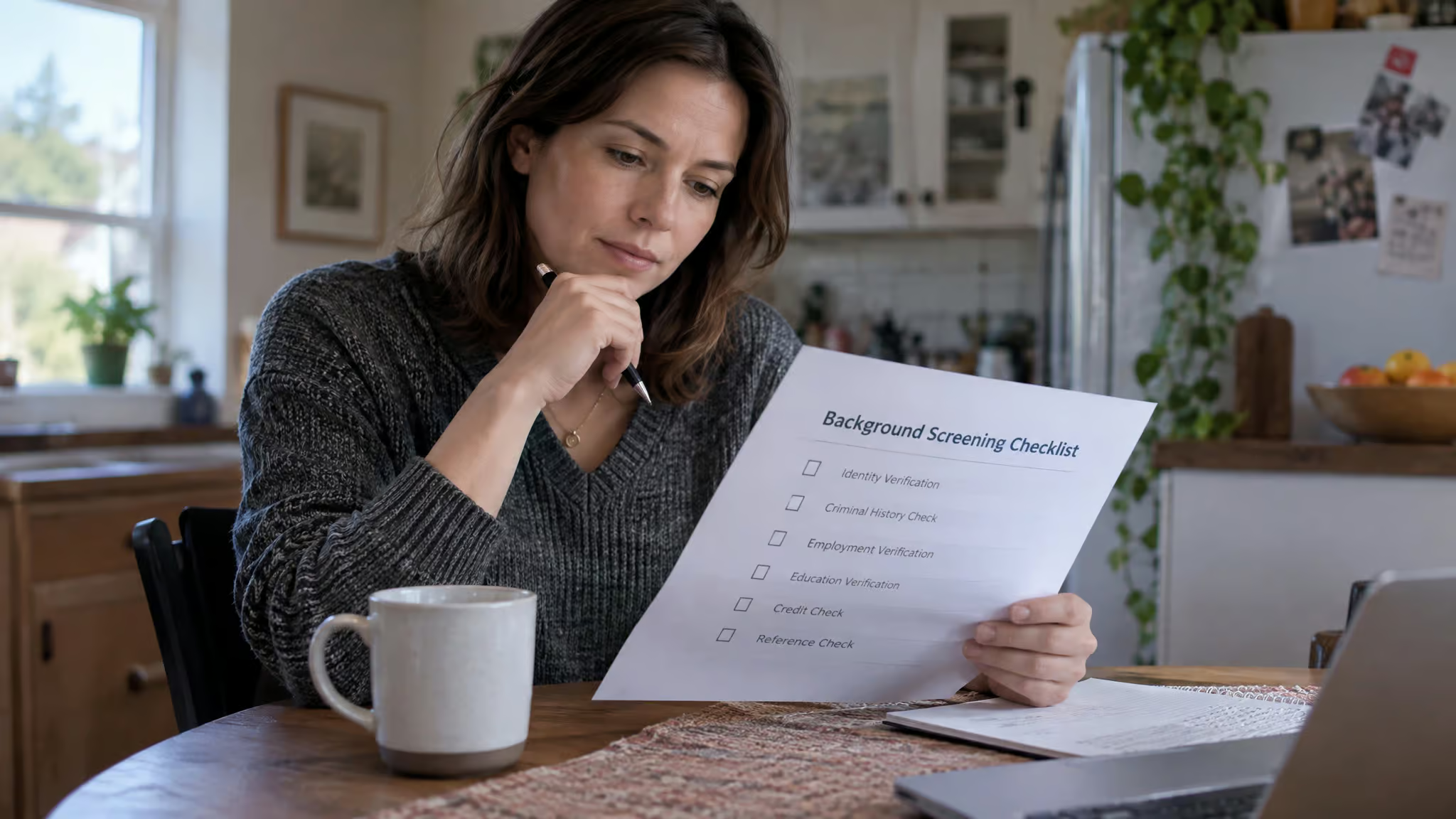
How lookback windows work
Ashland bars applicants with qualifying felonies within the last five years, or misdemeanors and ordinance violations within the last two years involving sexual offenses, prostitution, pornography, indecent exposure, or controlled substances. A prior license revocation or suspension in any city within five years is itself disqualifying, which is worth sitting with: your licensing history follows you across jurisdictions. Health certificates exist only for some venue categories. Bath house and body painting studio workers need a physician’s certificate from an exam within 90 days.
Dancers don’t. If someone told you a health check is a universal requirement, that’s the listicle talking.
When geography is the disqualifier
Ashland also denies licenses outright if the premises sit within 1,500 feet of a school, church, public park, or licensed child care, or within 1,000 feet of another adult business or residentially zoned property. Read that again from your side of the counter: zoning, not your credentials, can quietly mean no legal job exists nearby at all. All of this is one city’s rules, not a national pattern, but it shows how far the “requirements” question can reach past anything about you.
Mandatory training: the credential most articles miss
In Washington, yes: completing state-facilitated training is legally required before you can get or renew the license that lets you work. It’s called “Know Your Rights” training, and it runs through the Department of Labor and Industries (L&I). Your local government won’t issue or renew an adult entertainer license without proof of completion. Training and licensing form one chain, not two separate chores. Think of it like a food handler’s card, minus the euphemism.
The four mandated topics: your rights and responsibilities, including employee vs. independent contractor status; how to report on-the-job injuries, covering sexual and physical abuse along with sexual harassment; the financial side of the profession; and human trafficking risk. The training is built by qualified professionals, translated where practicable for non-English speakers, and L&I may require annual reporting down the line.
The deadlines: the later of January 1, 2025, or 30 days after hiring for prerecorded training, 120 days for live training. The origin, in two sentences: EHB 1756, enacted in 2019, wrote sector-specific safety rules and convened the Adult Entertainer Advisory Committee, which reported to the Legislature in 2020. And the trend note: Jacksonville also mandates sex-trafficking training for dancers, so this credential tier is spreading.
Washington training deadlines
Prerecorded training: due by the later of January 1, 2025 or 30 days after hiring. Live training: 120 days after hiring. Proof of completion is required to get the license and to renew it.
What clubs actually look for: the informal, unaccountable layer
What clubs want beyond the law is entirely informal: fitness, stage presence, sales ability, reliability. No regulatory source specifies audition criteria anywhere, so any generic skill list you’ve read was invented, full stop. That absence is the point, there’s nothing to fill in.
The only documented house expectations are legal conduct floors: no touching, carry your ID card, posted rules. A common pattern, described here as a composite rather than any specific club, is that first-timers expect auditions to screen for dance skill, but in practice they mostly gauge reliability and composure around customers, a reality that comes up early in any candid beginner’s guide to becoming a stripper. That’s because clubs charge for shift access, so scheduling is the real gate, not your pole work.
Supporters testified that conditions varied by manager and by the skin color of the dancer. That’s testimony, stated plainly, and it points at the real lesson for anyone entering this work. The discretionary layer is the least accountable part of the job, the piece that never appears in any realistic earnings breakdown, and it’s where unequal treatment and leverage problems take root.
Pay-to-dance: the hidden financial qualification
Yes, many dancers pay the club to work, and in most places those fees are completely unregulated. Washington is the exception that shows what fair terms look like, which is why it gets the most space here.
What a shift can cost you
Supporters of the Washington bill testified that dancers pay to work: $120 for a single shift was the example given. They also testified that a dancer can end up owing the club money when earnings fall short, or when she calls in sick. That’s testimony, not established fact everywhere, but it’s the concrete number that makes the fee debate real. Imagine finishing a slow night and owing the house.
The same testimony tied high fees, attributed partly to clubs lacking alcohol revenue, to financial exploitation, abuse, and discrimination that shifted from manager to manager and differed by the dancer’s skin color. It also described Washington clubs as more dangerous, with higher fees, than clubs in Oregon, Wisconsin, and Texas. That’s an attributed comparison from people who testified, not a measurement, but it tells you what dancers themselves said the stakes were.
Washington’s statutory benchmark
Here’s the proof and the practical gift. Washington defines a leasing fee as what the club charges you to entertain there or use private performance areas, and it caps it: per eight-hour period, the lesser of $150 or 30 percent of total collections, with a separate 30 percent cap on private performance area collections. The dollar threshold gets adjusted for inflation every 10 years. Fees have to sit in a written contract for a finite period of at least three months, with 10 days’ advance written notice of termination or non-renewal. And the prohibited list reads like a list of wins: no carrying forward unpaid balances, no interest or late fees, no no-show fees, and no controlling what you charge beyond uniform base charges stated in the contract, which don’t cap higher charges.
| Fee term | Washington law | Most states |
|---|---|---|
| Cap per 8-hour shift | Yes (lesser of $150 or 30% of collections) | No cap in the record |
| Written fee contract required | Yes (minimum 3 months) | No |
| Notice before ending or not renewing fees | Yes (10 days’ written notice) | No |
| Carrying forward unpaid balances | No (prohibited) | Not prohibited in the record |
| Interest, late fees, no-show fees | No (all prohibited) | Not prohibited in the record |
| Unlawfully collected fees | Treated as a wage claim | No equivalent remedy in the record |
The honest caveat: outside Washington, house fees can be debt you go negative on, with no cap, no contract, and no notice. The sharpest move you can make is getting the club’s written fee terms before you judge the money. If the numbers don’t work, the earnings math in the realistic breakdown of what dancers make will look very different once fees come off the top.
Getting paid: contractor status and the wage-law remedy
In Washington, an illegally collected fee is legally a wage dispute: amounts unlawfully collected from an entertainer must be paid out as wages under the Wage Payment Act, which means an enforceable claim, not a complaint to a manager. The legal premise that lets clubs charge fees at all is contractor classification, and employee versus independent contractor status is literally a mandated training topic there. Clubs may set uniform base charges in the contract, but they can’t dictate your pricing above them.
What the club owes you: vetting a venue against a statutory checklist
The vetting cuts both ways: in Washington, the club has to qualify too. The sector-specific workplace safety rules, part of WISHA (the Washington Industrial Safety and Health Act, the state’s version of workplace safety law) since 2019 via EHB 1756, require panic buttons in designated locations, usable if an entertainer has been harmed, is at risk, or another emergency happens in her presence. They require keypad-secured dressing and locker rooms, cleaning supplies at all stage performance areas, and entrance signage directing customers to etiquette resources. Yes, the bar for basic decency is literally posted on the door.
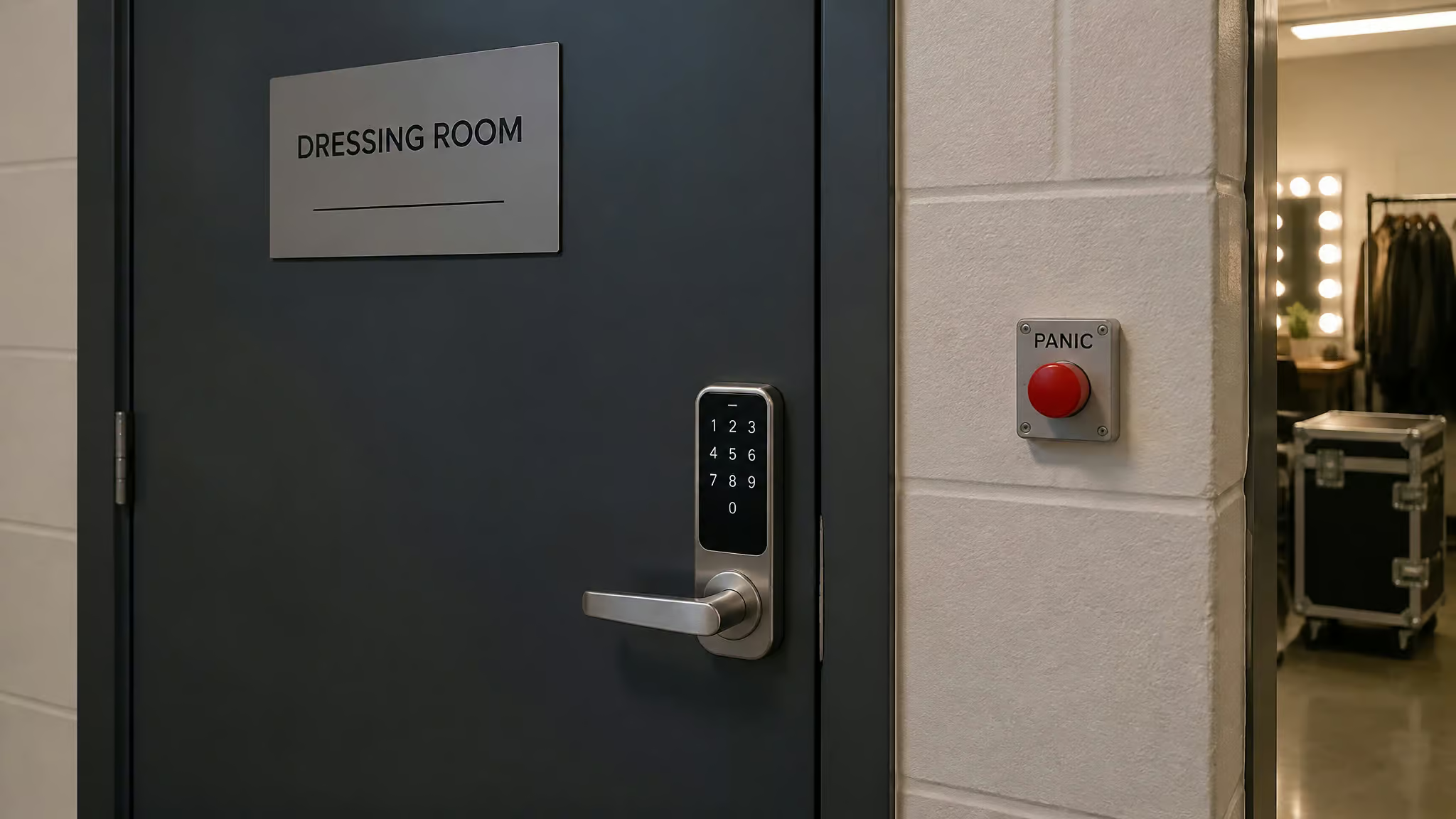
The customer blocklist is the part that changes lives: it documents accusations of customer violence, keeps customer identifying information at least five years, and triggers a ban of not less than three years when an accusation comes with a sworn penalty-of-perjury statement or other evidence. Clubs under common ownership must share the information and decline admission, so the ban follows the person across related venues. A substitute bill would add tracking of trafficking accusations while dropping the annual blocklist reports to L&I; that’s a change to note, not a verdict to hand down. On staffing: at least one dedicated security person during operating hours, security as a primary duty from 9 a.m. to 9 p.m. and no other duties from 9 p.m. to 9 a.m., with L&I able to require more based on size, layout, patron volume, cameras and panic buttons, and incident history.
Outside Washington, none of this is law. So the checklist becomes audition questions rather than entitlements: do you have panic buttons, who holds them, what’s your process when a customer crosses a line? The absence of any lawful baseline elsewhere is itself worth noticing.
Conduct rules on stage: a moving legal line
What you may lawfully do on stage is contested terrain, not a fixed condition of the job. One pole: Ashland regulates gratuity placement down to the inch, with stage-affixed tip boxes, or off stage and clothed hand payment or a leg garter worn four or more inches beneath the lowest point of the pubic area, on stages elevated at least two feet, with no touching or fondling. The other pole: Washington bars state and local enforcement against an entertainer just for touching her own body during a performance, regardless of payment or gratuities, and restricts proximity rules when there’s no inappropriate contact. The substitute bill swapped “sexual contact” for a defined “inappropriate contact,” and some opposition argues preemption, meaning the state rule overrides local ones, strips local protections and hands club owners more power. The line moves; check it where you are.
Earnings and career questions: what the record can and cannot tell you
The honest answer on money runs through costs, not income, because no sourced earnings figures exist anywhere in this record. The only concrete dollar numbers are costs: $120 per shift in testimony, $100 a year for an entertainer license, $500 for the business license. So the question of whether dancing pays has no single answer until you account for fee structure: net pay, not gross, decides viability, and two dancers in the same club can take home very different amounts depending on house-fee terms.
The testimony on both sides is real. Supporters credit dancing with flexibility and pay: supporting families, funding college and grad school, staying available as caregivers. Opponents describe a dangerous, exploitative industry. Both are attributed testimony, not measurement.
And the trafficking rationale driving age bans is itself disputed: Florida’s law cites its third-in-the-nation rank for reported trafficking cases and age 17 as a typical entry age, while the plaintiffs say no credible evidence links clubs to trafficking. Survivor-led responses like Re Threaded, founded by Kristen Keene, which gives trafficking survivors jobs and fresh starts through business, strike at trafficking’s profitability through employment instead. Everyone in this paragraph gets attributed, because none of it is settled.
Washington vs. Florida: two states, two different qualification regimes
The same question produces a training-and-license pathway in Washington and a hard 21 gate with criminal exposure in Florida.
| Requirement | Washington | Florida |
|---|---|---|
| Minimum age | 18 (21 where alcohol is served) | 21 flat, statewide, effective July 1, 2024 |
| License | Yes, issued by local government | No entertainer license regime in the record |
| Mandated training | Yes, “Know Your Rights” through L&I, proof required to get and renew the license | No training regime in the record; strict ID verification with no ignorance-of-age defense |
| Fee protections | Yes, statutory caps, written contracts, wage-claim remedy | Not in the record |
| Safety mandates | Yes, panic buttons, blocklist, keypad dressing rooms, security staffing | Not in the record |
Neither state is the national rule; together they bracket the range. The sharpest first step is looking up your own jurisdiction’s ordinance, and your city clerk’s office is usually where that search starts. Then ask the club you’re considering for its written fee terms before you commit to anything. That’s the whole sorting habit in two moves: find the law where you actually live, and get the club’s real terms where you’d actually work.
Frequently Asked Questions
How much money can a striper make?
There are no reliable, sourced earnings figures for dancers, so honest answers run through costs instead of income. The concrete numbers that exist are expenses: house fees around $120 per shift in testimony before Washington lawmakers, $100 a year for an entertainer license in cities that require one, and similar overheads. Net pay, not gross, decides viability — two dancers in the same club can take home very different amounts depending on fee terms.
What qualifications do you need to be a dancer?
Legally, the universal floor is being at least 18 with a valid government photo ID, and no formal education is required anywhere. Beyond that, requirements are a patchwork: some cities and states add entertainer licenses, fingerprinting, background screening, or mandated training, while many require none of it. Club expectations like fitness, stage presence, and sales ability are informal and appear in no regulatory source.
Do dancers make good money?
It depends on fee structure more than anything else. In most states, house fees are completely unregulated — no cap, no written contract, no notice — and dancers testified they can end up owing the club when earnings fall short or they call in sick. Washington is the exception, capping fees at the lesser of $150 or 30% of collections per eight-hour shift, which shows how much the fee terms shape take-home pay.
Do strippers pay to work at clubs and how much are house fees?
Yes, many dancers pay the club for shift access, and in most places those fees are completely unregulated. Testimony before Washington lawmakers cited $120 for a single shift, and described dancers owing the house when earnings fell short. Washington caps leasing fees at the lesser of $150 or 30% of collections per eight-hour shift, requires written fee contracts of at least three months, and treats unlawfully collected fees as wage claims — protections that exist almost nowhere else.
What documents do you need to start stripping at a club?
At minimum, a valid government photo ID proving you’re at least 18 — and in Florida, employers must verify age with specific documents like a driver’s license, state ID, passport, or U.S. Uniformed Services ID, with no defense for being lied to about someone’s age. Where a license is required, expect more: notarized applications, Social Security numbers, fingerprints, and police photos. Ask your city clerk’s office what applies where you live.
Why did Florida raise the stripping age to 21, and can it be challenged?
Florida’s law frames the ban as narrowly tailored anti-trafficking protection, citing the state’s third-in-the-nation rank for reported trafficking cases and age 17 as a typical entry age. Plaintiffs — including clubs and a dancer barred because she’s under 21 — sued on First Amendment grounds in July 2024, arguing no credible evidence links clubs to trafficking. Precedent so far has upheld age restrictions, but the case is unresolved, so the ground could shift.