
Transforming your bathroom from a chaotic family zone into a functional, relaxing space requires the right professional. As a busy parent, you know that a home project gone wrong isn’t just an inconvenience; it’s a major disruption to your family’s life. Choosing the wrong contractor can turn your dream renovation into a nightmare of delays and surprise costs.
Asking a few key questions upfront can save you headaches and protect your investment. Think of this as your pre-hire checklist to find a trustworthy partner for your project.
Key Takeaways
Verify Credentials: Always confirm a contractor’s license and insurance (Liability and Workers’ Comp) directly with the state board and provider to protect your home and finances.
Prioritize Experience: Look for established professionals with at least five years of business experience and a portfolio of recent, verifiable references.
Demand Detailed Estimates: Avoid vague quotes; ensure you receive an itemized proposal that covers labor, materials, permits, and a clear process for handling “change orders.”
Manage the Timeline: A master schedule and early ordering of long-lead items (like vanities and tile) are essential to minimizing disruption to family life.
Secure a Fair Payment Plan: Never pay in full upfront—instead, tie payments to specific project milestones and retain the final 10–20% until you are fully satisfied.
Table of Contents
Are You Licensed and Insured?
This is the most important question you can ask. A legitimate contractor must carry the proper credentials, and this isn’t something to just take their word for. These documents protect you, your home, and the workers on the project.
- State License: This proves the contractor has met your state’s requirements for competency and knowledge of building codes. You can verify a license number on your state’s contractor licensing board website, like the Contractors State License Board (CSLB) in California.
- General Liability Insurance: This covers property damage if an accident happens during the job. Professionals often carry coverage between $1 million and $2 million to protect your home from unforeseen events.
- Workers’ Compensation Insurance: This protects you from liability if a worker gets injured on your property. Without it, you could be held financially responsible for medical bills.
Ask for a copy of their “Certificate of Insurance” and don’t be shy about calling the insurance provider to confirm the policy is active.
How Long Have You Been in Business?
Experience is a great indicator of reliability. While new businesses need a start, a complex bathroom project is a tough training ground. Look for established remodeling bathroom contractors who have been in business for at least five years.
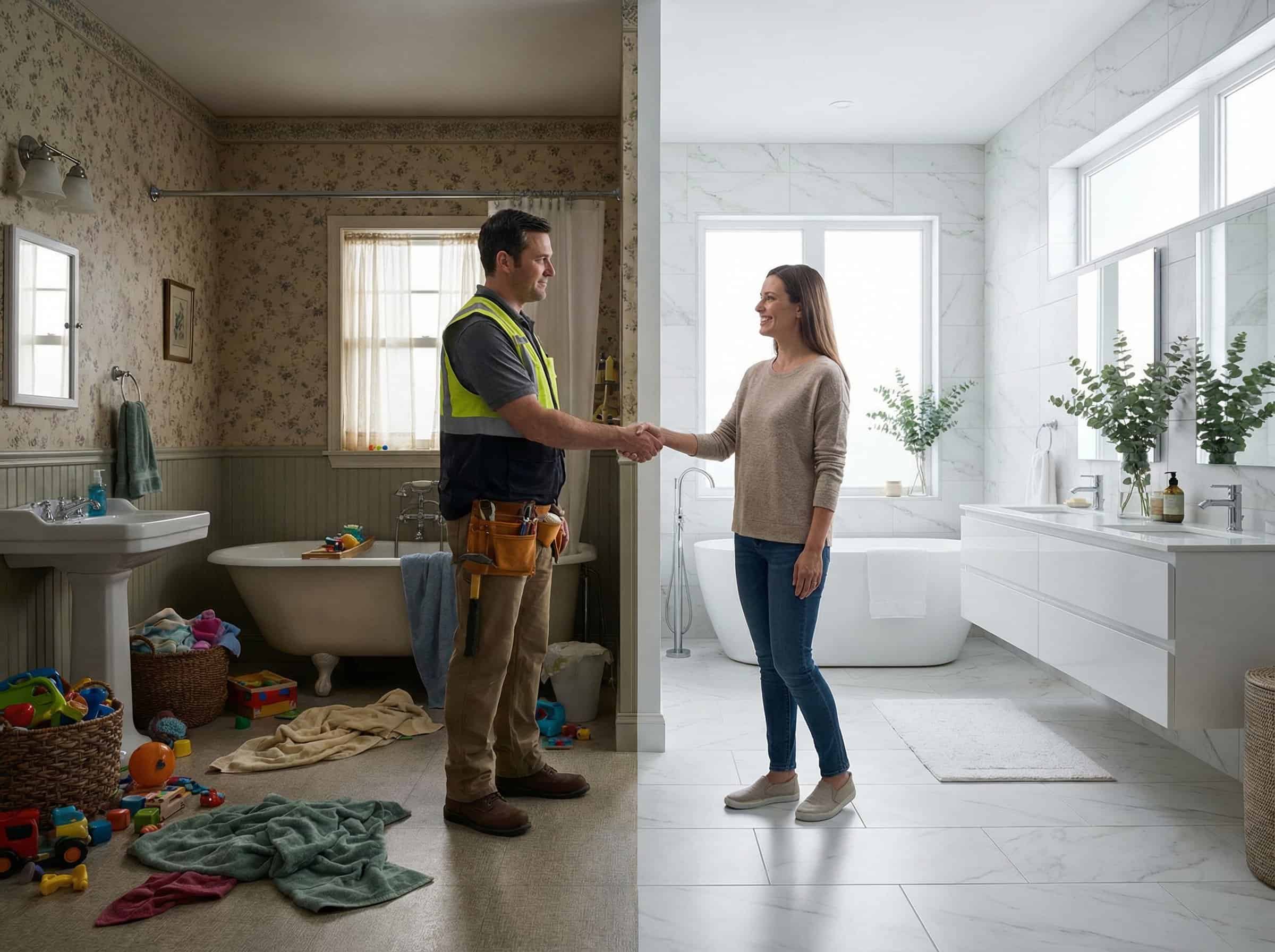
Longevity suggests they have a stable business, a solid reputation, and have successfully navigated project challenges. This experience often translates to more accurate timelines and budgets, which is crucial for a busy family.
Can You Provide References from Recent Projects?
A confident contractor will be happy to share references. Ask specifically for contacts from projects completed in the last year. While checking their portfolio and online reviews on sites like Google or Houzz is a good start, speaking directly with past clients gives you unfiltered insight.
Here are a few smart questions to ask their references:
- How did the team communicate about progress and problems?
- Was the project completed on time and on budget?
- How did they handle daily cleanup and minimize disruption to your home?
- Would you hire them again for another project?
What’s Your Approach to the Project Timeline?
A bathroom remodel can make life chaotic, so a realistic timeline is essential. While a simple cosmetic refresh might take two to four weeks, a full gut renovation often takes six to ten weeks from the start of demolition. Be wary of anyone promising an unusually fast turnaround, as this could be a sign of cut corners.
Pro Tip: Ask about “lead times.” Custom items like vanities or special-order tile can take 6-10 weeks to arrive. A good contractor will order these materials well in advance to prevent delays once work begins.
Who Will Actually Be Doing the Work?
It’s common for general contractors to use a mix of their own employees and trusted subcontractors for specialized tasks like plumbing and electrical work. This is a normal practice, but you should know who will be in your home each day.
Ask who your main point of contact or project manager will be. Having one person to call with questions or concerns streamlines communication and keeps the project running smoothly.
How Do You Handle Permits and Inspections?
Any project that involves moving plumbing, changing electrical wiring, or altering the structure of a room typically requires a permit. A professional contractor should manage this entire process for you, from filing the initial application to scheduling the final inspection.
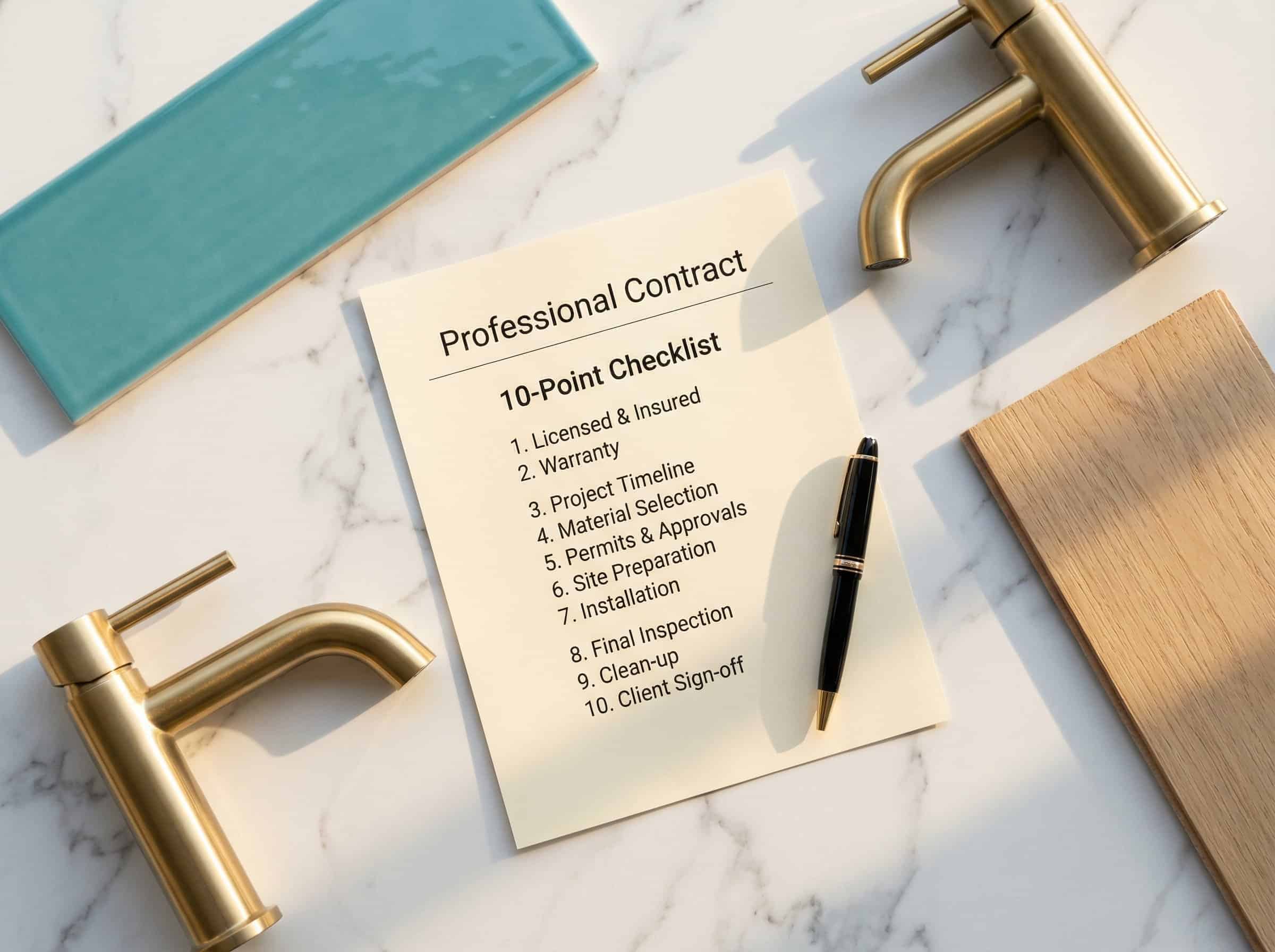
Skipping permits can cause major issues, especially when you decide to sell your home. Make sure the cost and management of permits are clearly outlined in your contract.
What’s Included in Your Estimate?
A vague, one-page estimate is a red flag. You need a detailed, itemized proposal that breaks down all the costs so there are no surprises. A transparent estimate is a sign of a professional contractor.
Ensure the estimate clearly specifies costs for:
- Labor and materials
- Permit fees
- Demolition and debris removal
- Specific fixtures and finishes (or a clear “allowance” budget for them)
How Do You Handle Changes and Unexpected Issues?
Even with careful planning, surprises can happen. It’s common to find issues like hidden water damage or outdated plumbing once the walls are opened up. A good contractor has a plan for this.
Professionals use a document called a “Change Order.” If an unexpected issue arises, they should stop work, explain the problem, and provide you with a written change order that details the additional costs and time required. They should not proceed until you have approved and signed it.
It’s wise to set aside a contingency fund of 15-20% of the total project cost to cover these potential surprises.
What’s Your Payment Schedule?
Never pay for the entire project upfront. A typical payment schedule ties payments to the completion of specific project milestones. This protects both you and the contractor.
A common structure looks like this:
- 10-30% Deposit: Paid at contract signing to secure your spot and order materials. (Note: Some states, like California, limit deposits to 10% or $1,000).
- Progress Payments: Several payments (e.g., 30-40%) made after key phases are finished, such as demolition, rough-in plumbing, or tiling.
- Final Payment: The last 10-20% is paid only after the project is 100% complete and you are fully satisfied with the work.
What Does Your Warranty Cover?
A quality contractor stands behind their work with a written warranty. It’s important to understanding warranty terms, as there are typically two different types of coverage.
| Type of Warranty | What It Covers | Typical Length |
| Workmanship Warranty | Covers errors in the installation and labor. This is provided by the contractor. | 1 to 2 years is common, though some offer longer. |
| Material Warranty | Covers defects in the products themselves, like a faucet or tile. This is provided by the product manufacturer. | Varies widely, from a few years to a lifetime. |
Ensure your contract clearly states the length and terms of the workmanship warranty. This gives you recourse if a problem related to installation appears after the final payment.
Hiring the right bathroom contractor turns a stressful process into an exciting home improvement project. By asking these questions, you gather the information needed to make a confident choice for your family. The right partner brings professionalism, expertise, and peace of mind, which are invaluable when creating the bathroom you’ve always wanted.