
As a parent, you have a lot to protect every time you get behind the wheel. Without the right safeguards, an unexpected event on the road can quickly turn into a financial burden, a legal hassle, and a source of constant stress.
Understanding how to protect your car, yourself, and your wallet allows you to drive with confidence. This guide will walk you through practical strategies, whether you’re a new driver or have been navigating school runs for years.
Key Takeaways
Beyond Basic Liability: Mandatory insurance often isn’t enough. Full family protection requires considering Uninsured/Underinsured Motorist (UIM) coverage (crucial since 1 in 7 drivers is uninsured), Comprehensive coverage for non-collision events, and GAP insurance for new car loans.
The “45-Day Rule” for Policy Reviews: Don’t let your policy auto-renew blindly. Set a reminder to review your coverage 45 days before renewal or immediately following major life changes like moving, adding a teen driver, or changing your commute.
Smart Claims Management: If an accident occurs, use mobile apps for speed, document the scene thoroughly, and never admit fault at the scene. Stick to the facts and let insurance companies determine liability to protect your claim.
Defensive Driving is the Best Insurance: Reduce accident risk by eliminating backseat distractions before driving and utilizing the “Three-Second Rule” to maintain safe following distances.
Preparation is Key: Financial security should be paired with physical readiness. Maintain a family-focused emergency kit (first aid, snacks, tools) and robust roadside assistance to handle breakdowns or unexpected stops safely.
Table of Contents
Understanding the Role of Car Coverage

Think of car insurance as more than just a legal requirement. It’s a financial safety net for your family. While basic liability coverage is mandatory, it often isn’t enough to handle the costs of a serious accident.
The Insurance Research Council noted in a 2023 report that about one in seven drivers is uninsured. If one of them hits you, you could be left with the bill unless you have the right protection.
Here are a few key types of coverage to consider for your family’s protection:
- Collision Coverage: This pays to repair or replace your car after an accident with another vehicle or object, regardless of who is at fault.
- Comprehensive Coverage: This handles damage from non-collision events, like theft, falling objects, or hitting a deer. It’s the coverage for life’s unexpected moments.
- Uninsured/Underinsured Motorist (UIM): This is crucial protection that covers your medical bills and car repairs if you’re hit by a driver with little or no insurance.
- GAP Insurance: If you have a loan on a new car, this coverage pays the difference between the car’s value and what you still owe if it’s totaled. It prevents you from paying for a car you can no longer drive.
Sometimes, financial issues come from the agreements themselves. If you believe you were affected by mis sold car finance, it’s important to understand your rights by reviewing all your documentation carefully. For broader consumer finance issues in the U.S., the Consumer Financial Protection Bureau (CFPB) is a valuable resource. Another helpful resource for assessing your options is Reclaim247, which guides individuals through financial agreements related to car ownership.
Reviewing Your Policy Regularly
Your life isn’t static, and your car insurance policy shouldn’t be either. Major family milestones are perfect times to check if your coverage still fits your needs. A policy that was perfect five years ago might leave you exposed today.
Set a calendar reminder to review your policy at least 45 days before its renewal date each year. This gives you plenty of time to shop around and make changes without feeling rushed.
Consider these common life changes for parents that should trigger a policy review:
- Adding a Teen Driver: This is one of the biggest changes. Adding a teen can increase rates significantly, so it’s the perfect time to look for discounts, like for good grades.
- Buying a New Car: Upgrading to a safer family SUV or minivan could actually lower your premium. Features like automatic emergency braking and blind-spot monitoring are often rewarded by insurers.
- Moving to a New Home: Your ZIP code has a major impact on your insurance rates. A move from the city to the suburbs could result in savings.
- Changing Your Commute: If you start working from home, your lower mileage could qualify you for a discount. Many insurers, like Progressive with its Snapshot program, offer telematics programs that reward less frequent and safer driving.
Preparing for the Claims Process
An accident is stressful, especially with kids in the car. Knowing the claims process ahead of time helps you stay calm and focused when you need it most. The moments after an incident are critical for a smooth claim.
Many major insurance companies, including GEICO and Allstate, have mobile apps that let you start a claim and upload photos directly from the scene. This can speed up the process significantly.
Pro-Tip: Never admit fault at the scene of an accident. Stick to the facts when talking to the other driver and the police. Let the insurance companies determine liability.
Here are the immediate steps you should take:
- Ensure Everyone is Safe: Check on your passengers and the occupants of the other vehicle. Move to a safe location away from traffic if possible.
- Call 911: Report the accident and any injuries. A police report is an essential document for your insurance claim.
- Gather Information: Exchange names, contact information, and insurance details with the other driver. Get the names and numbers of any witnesses.
- Document Everything: Take photos of both cars, the license plates, the accident scene, and any visible damage or injuries.
- Contact Your Insurer: Start the claims process as soon as possible, while the details are still fresh in your mind.
Everyday Driving Habits That Reduce Risk
The best insurance policy is an accident that never happens. Developing safe, defensive driving habits is your first line of defense in protecting your family on the road.
According to the National Highway Traffic Safety Administration (NHTSA), distracted driving is a leading cause of accidents. For parents, distractions often come from the back seat. Prepare drinks, snacks, and entertainment before you start driving to keep your focus on the road.
Practice these defensive driving techniques:
- Follow the Three-Second Rule: When the vehicle ahead of you passes a fixed object, it should take you at least three seconds to pass the same object. This gives you enough time to react.
- Always Scan Ahead: Look 15-20 seconds down the road to anticipate potential hazards, like brake lights or someone about to pull out.
- Be Aware of Blind Spots: Know your own car’s blind spots and be mindful of other drivers’ blind spots. Avoid lingering where they can’t see you.
For a deeper dive, consider an online defensive driving course from an organization like the National Safety Council (NSC). Completing one may even earn you a discount on your insurance.
Smart Budgeting for Protection
Protecting your family is a top priority, but it has to fit within your budget. While it’s tempting to choose the cheapest policy, this can expose you to huge financial risks if you’re underinsured.
The key is to find the right balance between your short-term premium costs and your long-term financial security. A slightly higher premium now could save you tens of thousands of dollars later.
Use free online tools from sites like The Zebra or NerdWallet to compare quotes from multiple insurers at once. This ensures you’re not overpaying for the coverage you need. Also, always ask about discounts. Bundling your auto and home insurance policies can often save you up to 25%.
Knowing When It’s Time to Make a Change
Don’t let your insurance policy sit on autopilot for years. Your family’s needs change, and your coverage should evolve too. Feeling like you have the wrong plan is a good reason to explore your options.
Certain moments are perfect reminders that it’s time to shop for a new policy. You don’t want to keep a policy that no longer fits your life.
Look out for these signs that you might need a change:
- Your commute has significantly changed, either longer or shorter.
- You’ve bundled policies after buying a home.
- Your credit score has improved, which can lead to lower rates.
- You simply feel your current provider’s customer service or rates are no longer competitive.
By taking matters into your own hands you will feel more secure about your driving future.
Navigating Unforeseen Circumstances
The open road is unpredictable. A sudden storm, a flat tire, or a surprise breakdown can happen to anyone. While you can’t control everything, you can prepare for it.
This is where comprehensive coverage and roadside assistance become so important. Plans from providers like AAA or those added to your insurance policy can be a lifesaver when you’re stranded with your family.
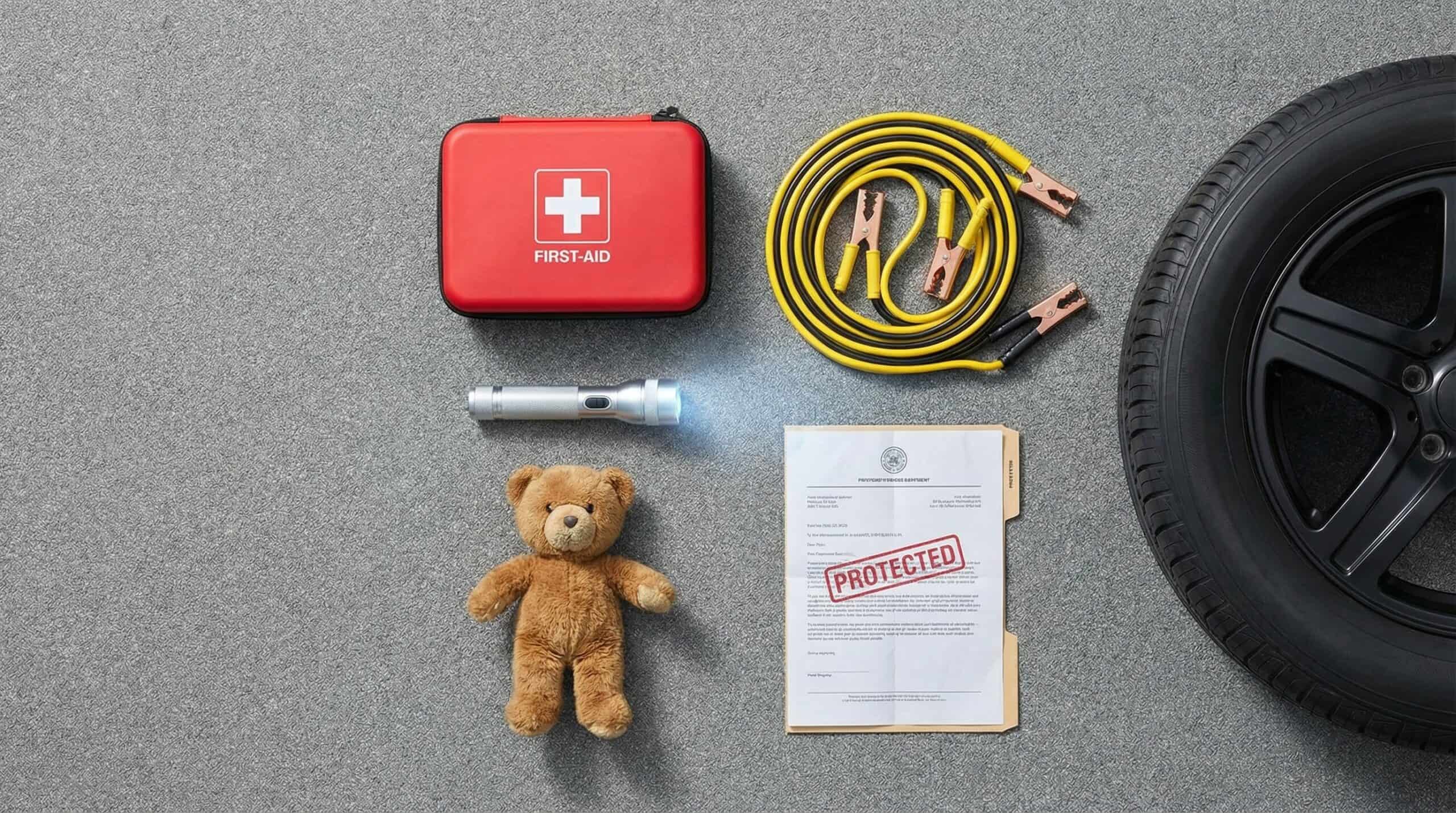
Create a family-focused emergency kit and keep it in your trunk:
- First-aid kit with bandages and antiseptic wipes.
- Non-perishable snacks and bottled water.
- A portable phone charger or power bank.
- Flashlight, jumper cables, and basic tools.
- Extra diapers, wipes, and a blanket if you have little ones.
Knowing your policy’s limits and having a safety net allows you to drive with peace of mind. When you’re prepared, you can handle whatever comes your way.
Driving safely and having the right financial foundation can make owning a car an enjoyable part of family life. By understanding your options, reviewing your coverage yearly, and preparing for life’s changes, you’ll have one less thing to worry about on the open road.