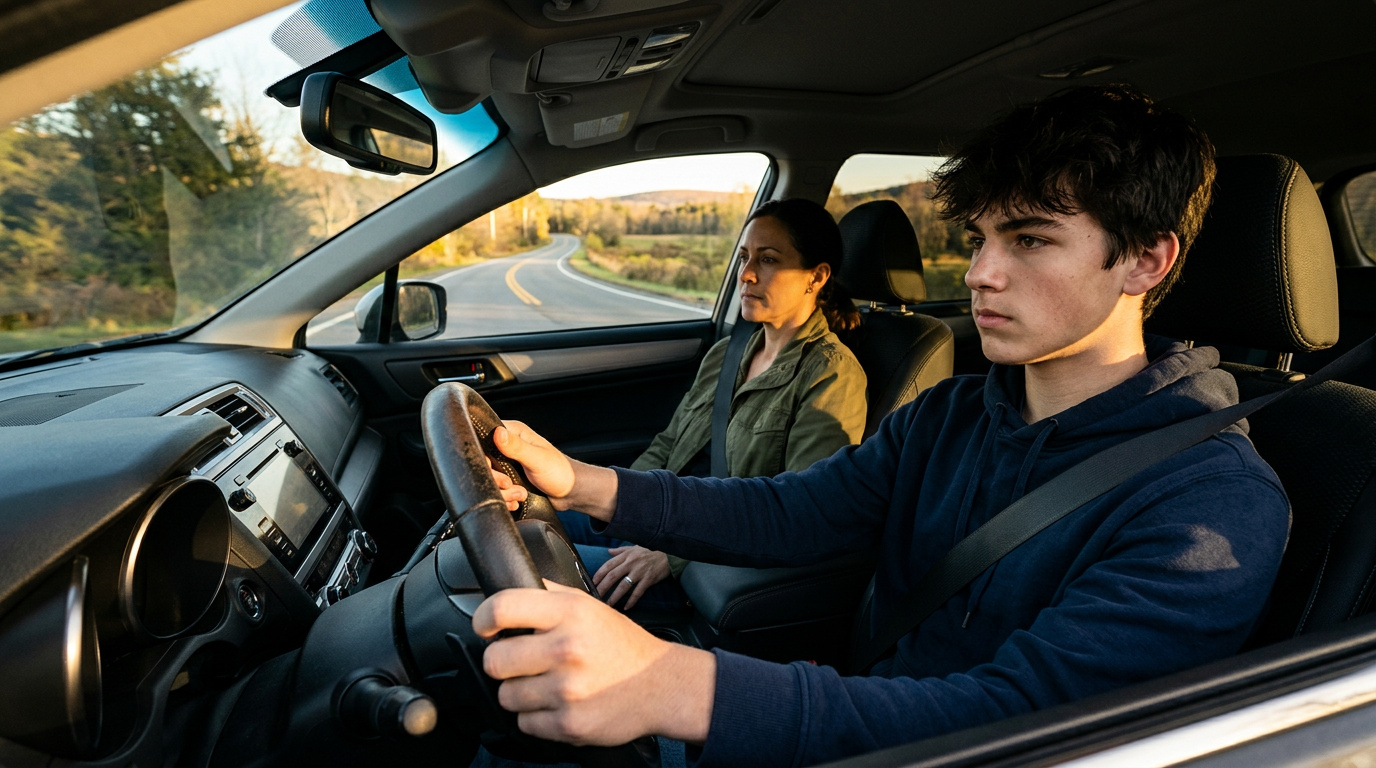
My kids have gotten a little older, and we’re helping them learn to drive right now, in addition to the instructor they’re working with. Managing their transition from being a passenger to taking control of a machine is a massive shift for our household. We hired a professional to handle the baseline mechanics, but the daily reality of Nevada teen learner’s permit regulations falls squarely on us as parents. Managing the daily school commute is our responsibility now.
I wanted to give them real-world practice, but I constantly worried about risking fines or delaying their official licensing. A first-time curfew or distraction violation typically carries a fine of up to $250. Furthermore, these infractions can trigger an automatic six-month suspension or delay in earning a full, unrestricted license. Most parents eventually hit this logistical wall and ask a highly specific question: can you drive to school with a permit in Nevada?
The short answer is yes, but only under incredibly rigid conditions. Permit laws in the Silver State are not just bureaucratic suggestions. They dictate exactly how, when, and with whom your teen can operate a vehicle. Merely holding that plastic card does not automatically legalize the Tuesday morning drop-off. If you toss your teen the keys without fully understanding the required environmental, supervisory, and legal parameters, you expose your family to unexpected liabilities.
Before you back out of the driveway, the first state rule requires a fundamental shift in how you behave in the passenger seat.
Table of Contents
Adult supervision and the legal duty of active override
Adult supervision is the physical and mental readiness to intervene and assume physical control of a moving vehicle during an emergency. The law establishes a hard baseline for this role. The supervisor sitting beside the teen must be a licensed adult who is at least twenty one years old. Furthermore, they must possess a minimum of one year of driving experience.
You cannot treat this time as a chance to relax while your kid chauffeurs you to the grocery store. Passive riding is illegal. The supervising adult must be completely alert and capable of taking control if a sudden hazard appears. You cannot sleep. You cannot check your email.
We often view ourselves as legal chaperones during these drives. The reality is that the state views the adult passenger as the driver of last resort. Reframing adult supervision as a requirement for active override changes exactly how you sit, watch, and react in the car.
“The reality is that the state views the adult passenger as the driver of last resort.”
Navigating vehicle liability and insurance
This legal framing has immediate financial implications for your family. If an accident occurs on the way to school and you were distracted in the passenger seat, you share the legal responsibility. Your auto insurance provider will look closely at the circumstances of the crash.
- Call your insurance agent before your teen starts practicing.
- Verify that your specific policy covers a permitted driver operating your primary family vehicle.
- Review whether a parent failing to act as a proper co-pilot jeopardizes your coverage limits.
Treating the passenger seat like an emergency control station is exhausting for busy parents. But protecting your auto insurance coverage for young drivers requires strictly honoring this legal duty. Once you are mentally locked in as a co-pilot, the next step involves engineering the physical space around your teen.
Engineering a quiet environment against distractions
Distracted driving is a physical, visual, and mental hazard. Nevada law aggressively targets all three by tightly controlling the interior of the car. The state enforces a strict zero tolerance policy for electronics.
You might assume that keeping both hands on the wheel is enough. It isn’t. Activating a hands free device is treated as a severe cognitive distraction equal to physical texting. Nevada’s permit laws actively construct an isolated bubble for the driver because they recognize that voice-commanding a playlist or answering a Bluetooth call pulls vital processing power away from the road.
This environment extends to who is sitting behind you. While other passengers are generally permitted during the supervised permit phase, the precise Nevada rule dictates that restricted drivers cannot transport non-family passengers under age 18 for the first six months. Even when legally allowed, filling the back seat is a terrible idea.
Prioritizing social convenience over a quiet environment is highly discouraged by professional instructors for a very practical reason. Back seat conversations inevitably pull the driver’s attention away from the windshield, leading to entirely avoidable traffic mistakes.
The temptation to give friends a ride to school is strong. Denying that request causes friction. I tell my own kids that the back seat remains mostly empty because learning to process street signs, pedestrians, and erratic commuters requires complete mental silence. The statistics surrounding distracted driving fatalities validate this rigid standard.
Navigating the daily commute safely requires locking down the interior of the vehicle first. After that, you have to follow the rigid time limits dictating when your teen is legally permitted outside.
Curfew exemptions and the reality of daytime school commutes
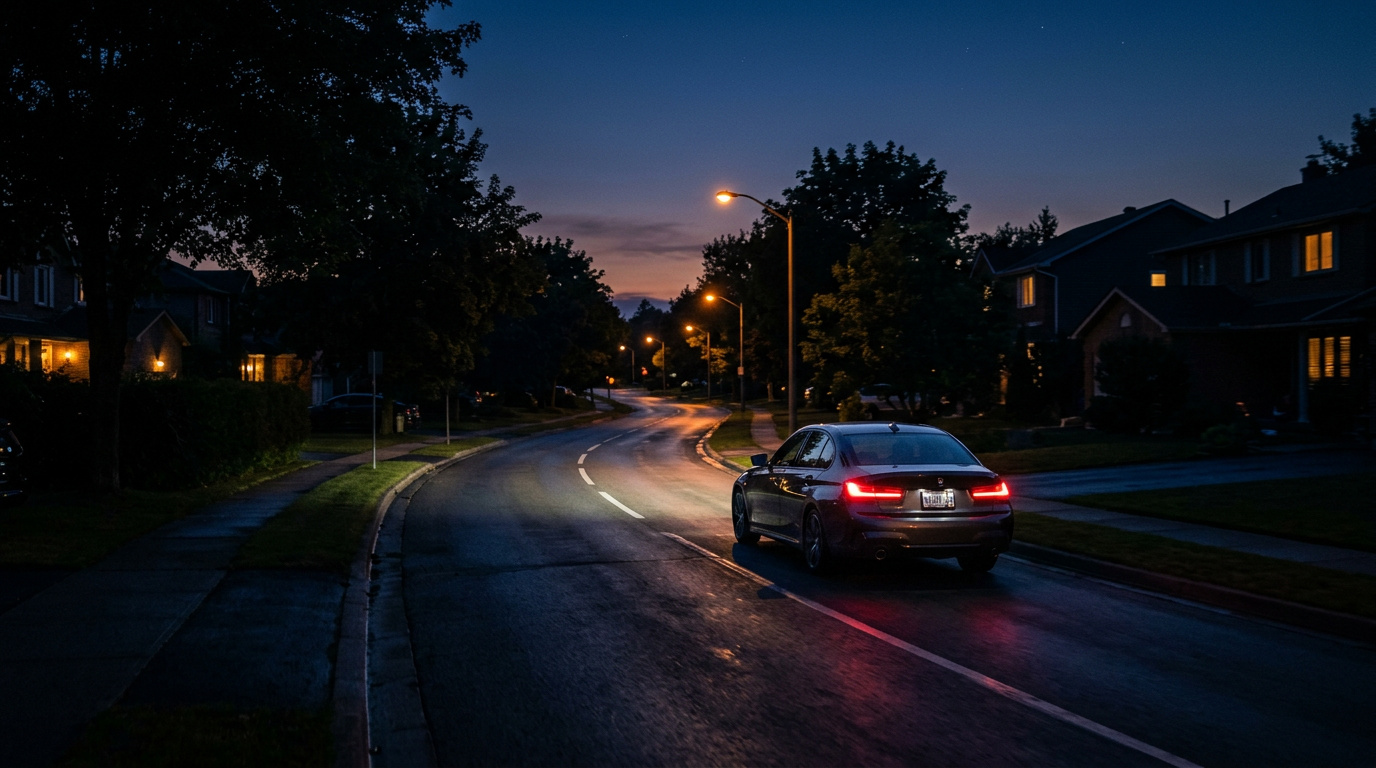
A nighttime curfew is a legally enforced driving restriction designed to keep inexperienced drivers off the road during the hours most associated with poor visibility and fatigue. The baseline law strictly prohibits beginners from driving between the hours of ten at night and five in the morning.
Biologically, a teenager’s reaction time plummets late at night. The curfew directly attacks the environmental hazards that cause the most fatal accidents for young learners.
Daytime school commutes obviously fall outside this curfew, but winter extracurriculars often push the drive home deep into the evening limits.
Defining a school sanctioned event
A school sanctioned event is official, documented programming directly supervised by educational staff that requires a student’s attendance. Navigating past the 10 PM limit requires strict adherence to the rules. The law provides exceptions for traveling for work or a school sanctioned event.
You cannot just tell an officer that the marching band ran late. Earning curfew exemptions requires physical, documented proof inside the vehicle.
Your teen must carry a physical note printed on official letterhead from their employer or the school administration explaining the late hours. A conversational excuse fails every time. Keep a folder in the glovebox specifically for these documents. If the physical note is missing, the exemption does not exist.
When local ordinances override the state
The baseline state rules act as a floor, not a ceiling. Driving through different municipalities on a long commute complicates the legality of your trip. Parents must remember that while the Silver State sets the baseline, strict local ordinances often dictate the immediate reality on the ground.
Some counties enforce tighter nighttime limits. Certain neighborhoods impose stricter passenger caps for permitted drivers, even when an adult is present. You must verify the specific local traffic laws for the exact route your teen takes to school. Check specific county DMV or local law enforcement portals, such as those for Clark County or Washoe County, to directly review these neighborhood-level driving limits. Assuming state law protects you from a municipal ticket is a costly mistake.
Mastering these daily logistical friction points is what eventually allows your teenager to graduate from their permit entirely.
Practice milestones and the restricted driver license phase
A practice milestone is a specific hour-count or skill requirement that serves to transition a driver toward independence through gradual exposure to complex risks. The permit phase forces newcomers to encounter dangerous weather, heavy traffic, and highway merging in small, heavily supervised doses.
We log these hours meticulously because they prove the teen is ready for the final physical evaluation. The DMV examiner will require the student to demonstrate absolute mastery of parking, turning, and navigating through busy city streets without hesitation.
Passing this test feels like reaching the finish line. It isn’t.
Graduating to a restricted driver license does not grant immediate, total freedom to rule the roads at midnight. The restriction legally mandates ongoing oversight for several more months.
They can drive alone to school, but they cannot ferry their friends around town. They face persistent curfews. The overarching goal is a bridging phase. The state trusts them to commute, but still blocks them from the high-risk environments of late-night cruising and crowded cars.
Building a foundation for independent travel
Teaching a younger person to drive is an exercise in managed anxiety. We rely on the driving instructor to teach the exact turning radius and mirror placement, but the relentless daily repetition falls on the parents.
The strictness of the permit phase is a deliberate pedagogical tool. The curfews, the passenger limits, and the absolute ban on mobile devices exist to protect your teenager from their own overconfidence while their brain learns to quickly categorize real-world hazards. It buys them safe time to mature.
Take the time to actually call your insurance provider today. Map out the municipal driving laws along your morning school route. Most importantly, accept your stressful, essential role as an active co-pilot, ready to grab the wheel. Putting in this heavily regulated practice time now will ultimately build a solid foundation for many years of safe travel.
Frequently Asked Questions
Can my teen drive to school in Nevada with just a learner’s permit?
Yes, but only if accompanied by a fully alert, licensed adult who is at least 21 years old and has a minimum of one year of driving experience. You cannot just toss them the keys for a solo Tuesday morning drop-off until they officially graduate to a restricted license.
What is the legal duty of ‘active override’ for parents in the passenger seat?
Nevada treats the supervising adult as the driver of last resort, meaning you must be physically and mentally prepared to take control of the vehicle during an emergency. Passive riding, sleeping, or checking emails while your teen drives is illegal and jeopardizes both your safety and your auto insurance coverage.
Are permitted drivers allowed to use hands-free devices or Bluetooth for calls and music?
Absolutely not. Nevada enforces a zero-tolerance policy for all electronics during the permit phase, treating voice commands as a severe cognitive distraction equal to physical texting. The state actively mandates an isolated, tech-free bubble so beginners can dedicate their full processing power to watching the road.
How does a teen legally drive home if a school event or work runs past the curfew limit?
To legally bypass the state’s 10 PM to 5 AM curfew, the driver must carry physical proof of a school-sanctioned event or employment. This requires a documented note printed on official letterhead kept inside the vehicle, as a conversational excuse to an officer will fail every time.
Do strict local city traffic laws override Nevada’s baseline state permit regulations?
Yes, state rules act as a baseline, but local municipalities can enforce much stricter regulations on the ground. Certain neighborhoods and counties impose tighter nighttime curfews or stricter passenger caps, making it vital to verify the specific ordinances along your teen’s actual commute.
Why does my teen still face passenger restrictions after passing their DMV road test?
Passing the physical evaluation only grants a restricted driver’s license, which functions as a transitional bridge rather than a free pass. The state grants them the independence to safely commute solo to school, but deliberately blocks them from the high-risk environments of late-night cruising and ferrying friends.