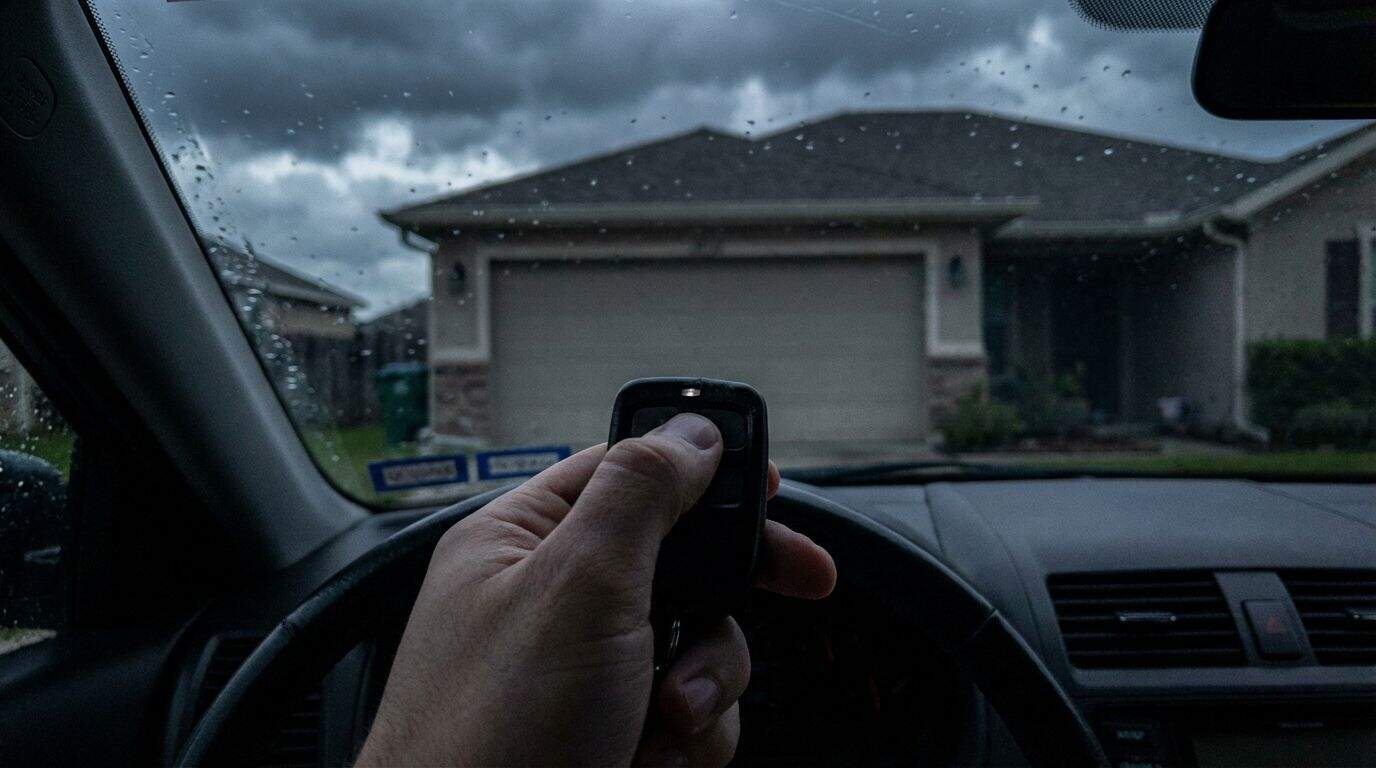
Have you ever pulled into your driveway, hit the remote button, and… nothing happened? I’ve been there. Stuck outside because the garage door opener decided to quit right in the middle of a power outage.
It is frustrating, and honestly, it can be a little scary if you don’t know the drill. But here is the good news: I discovered that getting that door open is much easier than it looks. Most systems have a simple emergency release cord designed exactly for this moment.
You don’t need to be a mechanic to do this.
I’m going to walk you through the exact steps I use to get back inside quickly and safely. So take a deep breath, and let’s get that door open together.
Key Takeaways
Check the springs first: Before pulling the release cord, look at the big springs above the door. If you see a gap in the coils (indicating a break), do not pull the cord; the door could crash down due to its weight (often 150+ lbs).
Clear the track: Ensure the area is free of obstructions like bikes or bins. Even a small item can derail the door when you are moving it by hand.
Locate the red cord: Find the red emergency release cord hanging from the center rail (trolley). A firm pull straight down disconnects the motor for safe manual operation.
Lift with your legs: Use the handle at the bottom of the door. Lift slowly and evenly to avoid back strain and keep your fingers away from the section joints (pinch points).
Re-engage correctly: To reconnect after the power returns, pull the cord back toward the opener and run the remote. The trolley will click back into place automatically.
Table of Contents
How do I ensure safety before opening my garage door manually?
I always pause and do a quick safety check before I even touch the garage door opener. It might seem like a small step, but it is the most important one.
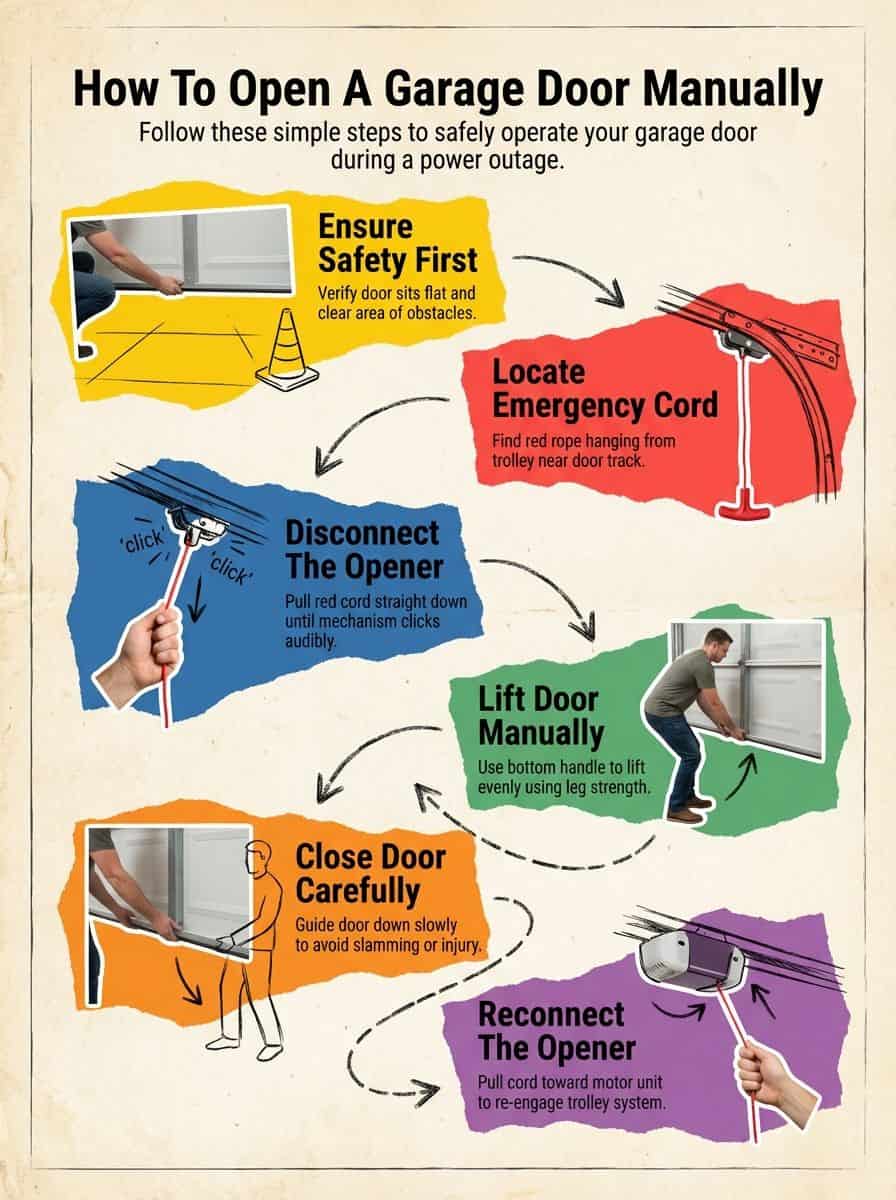
According to the U.S. Consumer Product Safety Commission (CPSC), thousands of injuries happen every year involving garage doors. The door is the heaviest moving object in most homes, often weighing between 130 and 350 pounds depending on the material. If the springs are broken, that entire weight is dead weight, and you do not want to be under it.
How can I confirm the door is fully closed before starting?
I make sure the garage door sits flat against the ground. There should be no daylight showing underneath.
If the door is stuck partially open, I never pull the release cord. Disengaging the opener on a partially open door with a broken spring can cause it to slam shut instantly. Gravity takes over, and it moves fast.
“If it rattles like a loose tooth, it isn’t down yet,” my neighbor Sally once joked after her door nearly came crashing down last winter in Michigan. She was right.
I give the bottom handle a gentle push. If it feels solid against the floor, I know I am good to go. If the automatic opener usually shows a green light when locked, I check that too. If I have any doubts, or if the door is stuck halfway up, I call a professional. For those tricky situations, I have used a garage door repair service to handle the heavy lifting safely.
What should I check to clear the surrounding area of obstructions?
I do a quick scan of the floor. You would be amazed at what ends up in the path of the door.
I look for:
- Loose items: Rakes, brooms, or sports gear that might have fallen.
- Track obstructions: I check the vertical metal tracks on the sides. A broom handle leaning against the track can jam the rollers.
- Safety sensors: Even though the power is out, I make sure the Safe-T-Beams (on Genie models) or Protector System sensors (on LiftMaster models) aren’t physically blocked or bent.
Once, I found my neighbor’s folding chair wedged right under the edge. If I hadn’t moved it, I would have struggled to lift the door evenly. I also check that no cars are parked too close. I need enough room to stand and lift without bumping into a bumper.
Locating the manual release mechanism
Now that I know it is safe, I look up. There is a red rope hanging near the center rail of my garage door system. That is my ticket inside.
The mechanism it connects to is called the trolley carriage. It travels back and forth along the rail to open and close the door. When the power is out, the carriage holds onto the chain or belt drive tight. The rope is there to break that hold.
Where can I find the red emergency release cord?
I spot the red emergency release cord hanging from the trolley, usually near the front of the garage door opener rail. Federal safety standards (specifically UL 325) require this cord to be red so it is easy to see in an emergency.
It typically has a red handle or a knob at the end. It hangs down about arm’s length, or sometimes a bit higher.
Look for a bold splash of red right above your head—that’s your lifeline out.
If you have high ceilings and the cord was cut short by a previous owner (which happens!), you might need a step stool to reach it. I keep a sturdy Rubbermaid step stool nearby just in case.
For more tips on handling household fixes quickly, learn how to perform manual operations fast, or visit our page on DIY home projects for beginners.
How is the emergency release cord connected to the opener’s trolley?
The red cord is tied to a small, spring-loaded lever on the opener’s carriage. It is a simple mechanical link.
Here is how it works:

| Position | What It Means | Visual Clue |
|---|---|---|
| Connected | The door is locked to the motor. | The lever is horizontal or angled up. |
| Disconnected | The door is free to move by hand. | The lever is pulled down (often vertical). |
When I pull the cord, it flips that lever. This disconnects the “inner trolley” (attached to the chain/belt) from the “outer trolley” (attached to the door arm). It sounds technical, but it really just means the door is now free to move on its own.
How do I disconnect the garage door opener?
I grab the red handle. I don’t need to hang on it like a jungle gym; a sharp, firm tug is all it takes.
How do I pull the emergency release cord downward correctly?
I stand directly under the cord to get a good angle. If I pull it sideways, it might not release, or I could damage the lever.
I firmly grip the handle and pull straight down. It usually requires about 20 to 30 pounds of force. It shouldn’t be a struggle. If it feels stuck, I verify again that the door is not binding on the tracks.
Once I feel it release, I let go. I don’t keep pulling. This keeps me safe and ensures I don’t accidentally damage the garage door safety sensors or the rail. You can see replacement parts here: garage door safety sensors.
A smooth downward pull on the emergency release sets you free from waiting on electricity.
What does the click sound mean when disconnecting the opener?
I listen for a distinct “click” or “snap.” That sound is music to my ears.
It means the spring-loaded pin inside the trolley has retracted. The door is now in manual mode. If I try to lift the door and it won’t budge, I probably didn’t pull hard enough to trigger that click.
On some modern openers, like the newer LiftMaster or Chamberlain models, you might not see a light flash on the unit itself when you do this manually. The click is your best confirmation. If I hear strange noises or grinding, I stop immediately.
How do I open the garage door manually?
Now for the workout—but it shouldn’t be a heavy one. A properly balanced garage door should feel relatively light, around 10 to 15 pounds of lift force, thanks to the springs doing the work.
How do I use the handle at the bottom of the door?
I find the lift handle installed on the bottom panel inside the door. Most doors have a step plate or a cut-out handle here.
Warning: I never, ever put my fingers between the door panels (the section joints). Pros call these “pinch points” for a reason. They are the number one cause of finger injuries with garage doors.
I grab the handle firmly with both hands. This keeps the door level as it rises. If I lift from just one side, the door can twist in the track and jam, which is a huge headache to fix.
What is the best way to lift the door slowly and evenly?
I plant my feet shoulder-width apart. I bend my knees and lift with my legs, not my back. As I lift, I guide the door straight up.
I have a specific technique for this:
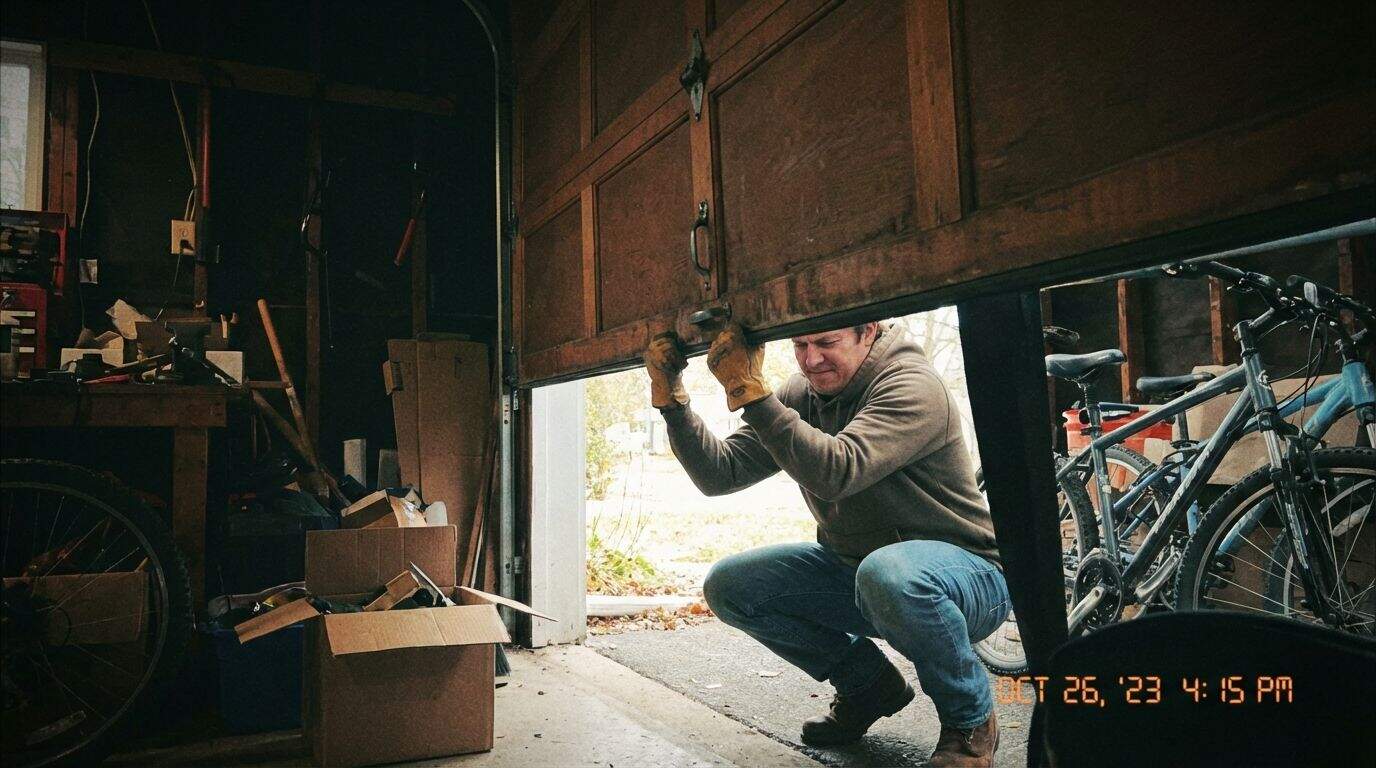
- The Initial Lift: I lift the door to about waist height.
- The Balance Check: I pause for a second. The door should stay there. If it slides back down rapidly, the springs are weak.
- The Follow-Through: I continue pushing it up until it is fully open and rests against the stop bolts.
If the door feels incredibly heavy—like I am lifting hundreds of pounds—I stop. That means a spring is broken. I let the door close and call a pro. It is not worth the risk of a back injury.
How do I re-engage the garage door opener?
Once the power is back on (or I am done with my manual errands), I need to reconnect the door so the remote will work again. It is easier than the first part.
How can I close the door manually after use?
I grab the handle again and guide the door down. I do not let it free-fall.
Gravity makes the door want to accelerate, so I hold back slightly to control the speed. I bring it all the way down until it seals against the floor. I check that the bottom weather seal is flat against the concrete to keep rain and mice out.
I never walk away leaving the door unsecured in manual mode. Since the electric lock is off, anyone could lift it from the outside. I always re-engage it immediately or use a manual side-lock (slide bolt) if I have to leave it disconnected overnight.
How do I pull the emergency cord back to reconnect the opener?
To reconnect, I look at that lever on the trolley again.
I pull the red cord toward the garage door opener motor (away from the door). This usually flips the lever back up to the “engaged” position. Some units, like Genie screw drives, just require you to push the lever up manually.
Then comes the magic trick: I press the button on my remote.
The motor will run, and the chain will travel along the rail until it finds the carriage. You will hear a loud CLICK as it locks back in. I watch the door move up and down once completely to make sure everything is synced up.
How Will Manual Garage Door Operation Change in 2025?
Mechanically, the way I open a garage door manually hasn’t changed much. The red cord and the trolley system are still the industry standard.
However, technology is changing when I need to do this. Thanks to laws like California SB-969, which passed a few years ago, most new garage door openers installed in California (and increasingly across the US) now come with battery backups. Brands like Ryobi and Chamberlain include these batteries so the opener still works for 24-48 hours during a power outage.
If you have a newer model installed in 2024 or 2025, you might not need to pull the red cord at all. But if you do, the steps remain exactly the same as they were in 2017. Gravity and springs work the same way they always have!
People Also Ask
What should I do first if my garage door won’t open with the remote?
I always check the GFCI outlet on the garage wall first, because a tripped button there cuts power to the opener instantly. If the outlet is fine, grab a flashlight and locate the red manual release cord hanging from the center rail.
How do I safely pull the manual release on my garage door?
You must make sure the door is fully closed before pulling the cord, as a broken spring could cause an open door to crash down on you. Once the area is safe, pull the red handle straight down until you feel the mechanism disconnect.
Can I lift any type of garage entry by hand after pulling the release cord?
If your springs are balanced correctly, the door will feel light and easily stay open around waist height without you holding it.
After opening my carport entrance by hand, how do I lock things up again?
To reconnect the system, I pull the emergency cord toward the door opening to reset the spring clip. Then, I simply press the remote button, and the trolley clicks back into place automatically.
References
https://www.overheaddoors.com/blog/how-to-open-garage-door-manually-after-power-outage/
https://kitsapgaragedoor.com/blog/how-to-manually-open-garage-door/ (2025-01-24)
https://www.garagedoorspokane.com/how-to-reset-garage-door (2016-01-20)
https://www.justanswer.com/home-improvement/prc4z-try-program-remote-garage-door-opener.html
https://hollywoodcrawford.com/blog/what-to-do-when-your-garage-door-opener-is-clicking/ (2025-05-21)
https://harmonyinspection.com/5-tips-to-manually-open-your-garage-door-safely/ (2025-08-21)
https://agdiowa.com/blog/how-to-release-reset-your-garage-doors-emergency-cord/
https://topprogaragedoor.com/how-to-open-a-garage-door-manually/ (2025-06-13)